


If this is how 2026 is going to go, we’re going to need some off-ramps. Choose your own adventure:
Embrace the rage in Diyarbakır’s therapeutic new ‘House of Anger’
Elevate above it in ‘Opium Black Castle’ and let the fog do the rest
In this week’s recap:
Turkey promotes stability, dialogue in Iran
Aleppo clashes shake trust in peace talks
Domestic and diplomatic wraps
Storm throws caution sign to the wind
Also from us this week:
Gelecek MP Kani Torun on how the Aleppo clashes impact Turkey’s peace process
Kaya Genç came on the podcast for a health check on journalism in Turkey
Diego Cupolo on party transfers and the renewed push for constitutional amendments
Since demonstrations began on Dec. 28 in Iran, at least 2,000 protesters have died and at least 10,000 are in jail as ‘de facto’ curfews and internet blackouts continue.
Viewed from Ankara, where the priority is regional stability, several government officials have voiced opposition to foreign intervention in Iran while promoting deescalation through dialogue.
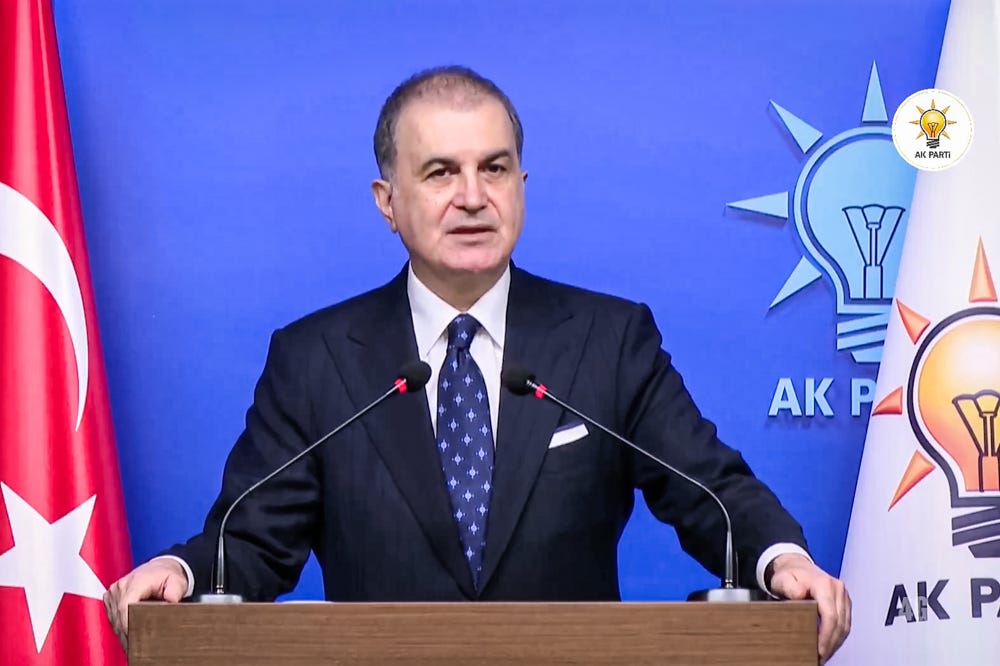
“We foresee that external interventions, especially initiatives arising from Israel’s provocation, will lead to greater crises and hardships,” AKP spox Ömer Çelik said Tuesday. “We emphasize the importance of stability in Iran to prevent the region from being dragged into further chaos.”
Turkish FM Hakan Fidan echoed the stance in a press conference today (Jan 15). This comes as US Pres. Trump threatens military action, and some US base personnel have been advised to leave Al Udeid Air Base in Qatar, according to Reuters.
The concerns for Turkey are varied, ranging from potential Kurdish minority movements to Israeli maneuvers that would tip the regional balance and also mass migration, though recent developments have not triggered major movements along Turkey’s eastern border,
Gönül Tol, a senior fellow at the Middle East Institute, previously wrote Ankara favors stability in Iran because:
“Turkey is already grappling with the consequences of chaos in Syria and Iraq, which have brought waves of refugees, cross-border threats, and economic strain. A destabilized Iran would magnify these problems just as Erdoğan faces mounting domestic pressures ahead of the 2028 elections.”
Likewise, Henri Barkey, an adjunct senior fellow at the Council on Foreign Relations, wrote this week that Ankara seeks to avoid escalation, but asked:
“If Iran’s regime topples, would Turkey welcome its replacement by a new pro-Western government?”
Barkey then posed such a development could present Ankara with a “new rival”.
“Hence,” he continued. “Spokesperson Çelik’s remarks could be reflecting at least the Turkish government’s wish that Iranians do indeed resolve their problems themselves and perhaps change little.”
Another widely shared narrative is that a government collapse in Tehran would leave Turkey as Israel’s sole rival in the region, essentially requiring both nations to compete for military superiority.
“If Iran weakens and ceases to be a rival for Israel, Turkey will emerge as the only country in the region capable of balancing Israel,” Oytun Orhan, Levant studies coordinator at ORSAM, told DW.
Analysis: To get a better sense of what all this means for Ankara, I spoke to Borzou Daragahi, a long-time international correspondent and author of the Badlands newsletter, who is based in Istanbul and has reported extensively from Iran.
Daragahi dismissed Turkish nationalist rhetoric about potential uprisings among Azeri minority groups in Iran.
“They’re the overclass, why would they break away … with Baku … when they could have Iran?” he asked.
That said, Daragahi maintained the protests have paused for now, but “there will be another round, definitely,” all of which does not sit well with the Turkish government.
“Turkey very well understands … that regime change is a really ugly business [and] that it will take years for the regime to come down.”
He continued, saying an escalation could prompt near-civil war conditions in parts of Iran, including Kurdish population centers, which have been “restless and agitating for some kind of autonomy for decades.”
“The legitimate struggle of the Iranian people is being hijacked for a geopolitical agenda and Turkey sees that happening,” Daragahi said, referring to multiple outside actors, including Israel.
He concluded that a “modus vivendi” has been achieved between Tehran and Ankara, and “any change has traditionally been for the worse … It took a lot to achieve the [current] situation despite competing and conflicting interests.”
Conflicting priorities: Aleppo clashes shake trust in peace talks
