


Forty-one years after the release of Cheri Cheri Lady, the song’s original muse was spotted at an undisclosed Newroz celebration.
In this week’s recap:
Turkey-Israel rivalry heats up again
Migration and mediation top Ankara’s war response
New messaging on the PKK peace talks
Domestic and diplomatic wraps
Fat cats find a home in Turkish parliament
Also from us this week:
Diego Cupolo and Emily Rice Johnson answered reader mail on Recap radio
The good news is that regional warfare mostly excluded Turkey this week—apart from a drone strike on a Turkish tanker in the Black Sea this morning and a stray naval drone washing up in Ordu Saturday.
The bad news is that Turkey remains highly exposed to regional instability as a growing rhetorical spat with Israel deepens anxieties.
As recap readers know, Israel-Turkey relations relapsed after Oct. 7 and the war in Gaza. In more recent weeks, leaders in both countries have exchanged threats, giving rise to phrases like “Turkey is the next Iran,” which it’s not, as Bobby Ghosh and most other analysts argue.
Still, the words are real even if AI-generated videos aren’t helping the situation.
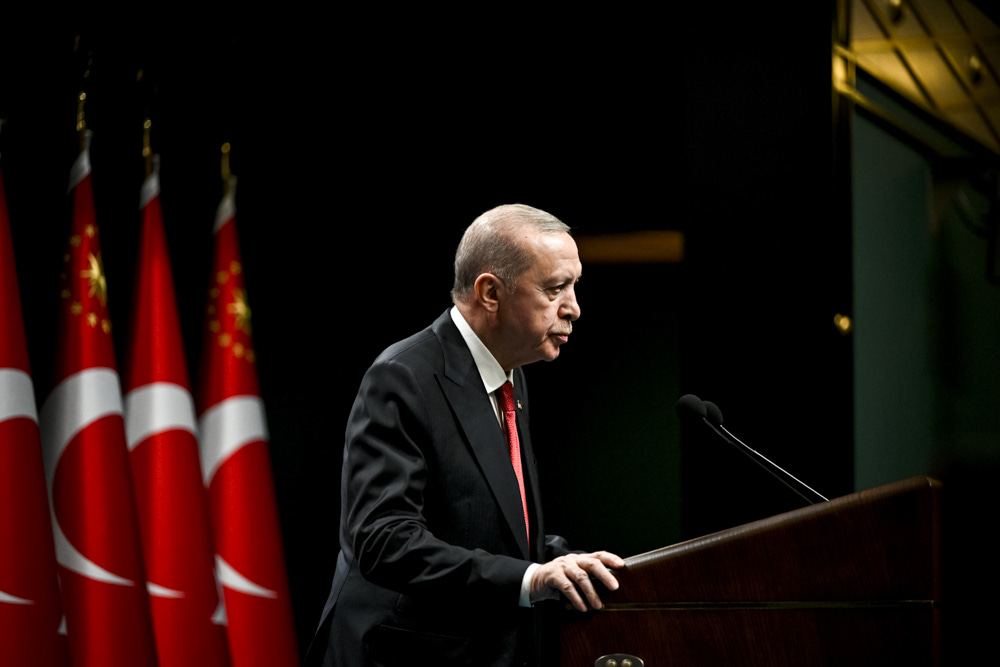
What happened: Speaking on the first day of Eid al-Fitr Friday, Pres. Erdoğan said: “[May God,] in the name of his glorious name ‘Al-Kahhar’ [The Subduer] utterly destroy Israel.”
He added, “This Zionist Israel, as is known, has massacred hundreds, thousands of people … I have no doubt that it will pay the price for this.”
It’s nothing new for long-time Turkey watchers. Last Eid, Erdoğan shared a similar message and, in April 2024, he called for the utter destruction of “these Zionists, starting with Netanyahu.”
This may help explain Israel PM Netanyahu’s recent remarks about creating a “hexagon of alliances” to counter the “emerging radical Sunni axis,” which is understood to include Turkey. But the story goes back further and could extend much longer into the future.
Analysis: The Israeli sense that Erdoğan is “implacably anti-Israel” goes back to 2009, the year of the “one-minute” spat at Davos, explained Howard Eissenstat, Laurentian associate professor at St. Lawrence University.
Eissenstat, who published a new analysis on the Turkey-Israel rivalry, told Turkey recap that messaging on both sides is mostly for “domestic consumption” but underlined “the stories we tell ourselves matter.”
“In this case, we run the risk that Israeli and Turkish officials are cementing the idea that they are natural rivals in a zero sum game for power in the region,” he said.
“I don’t envision Israel and Turkey intentionally entering armed conflict,” Eissenstat continued. “But in the long term, we have two powers that see themselves as defining the region that have manifestly demonstrated their willingness to project power beyond their borders.”
He added that if both nations continue to see each other as rivals rather than partners, “then that points to a direction of potential conflict. And it could be indirect, it could be direct. For example, we already see the potential for proxy conflict in places like Syria.”
Regional reper-concussions: Migration and mediation top Ankara war response
