
We expected backlash when Ramadan-themed programs hit public schools this year. We didn’t expect this dance video.
In this week’s recap:
Turkey’s airspace violated again, NATO boosts defenses
Calculations on Kurdish ground forces
Istanbul municipality corruption trial underway
Domestic and diplomatic wraps
Anti-war Sánchez sparks Turkey-Spain meme flood
Also from us:
Help us prepare our first Q&A podcast: Submit any question about Turkey or Turkey recap by replying to this email or through this form
Ezgi Başaran discussed how the Iran war impacts the Turkey-PKK peace talks on Recap radio
“S-400” was trending on social media in Ankara this morning, meaning it’s high time for air defense systems — as South Korea found out this week.
And while it may never be the right time to test the Russian-made missiles that caused a rift between Turkey and its allies, the Iran war has confirmed the Daft Punk maxim: Turkey is NATO after all.
What happened: NATO defense systems were deployed and strengthened in Turkey this week as the Iran war continues and a second missile was intercepted in approach of Turkish airspace Monday.
Some debris landed in Gaziantep without injury or damage, according to Turkey’s Defense Ministry. Falling fragments were also reported in Diyarbakır, also without injury, though with less details.
Like the first incident on March 4, this week’s missile may have targeted assets used by NATO forces in Turkey, namely the Incirlik air base in Adana and the Kürecik radar station in Malatya.
In response, NATO deployed a Patriot missile interceptor system in Malatya, the Turkish Defense Ministry announced Tuesday, following a NATO spox Allison Hart statement on X reading: “NATO stands firm in its readiness to defend all Allies against any threat.”
Prior to Monday’s missile incident, the US State Department ordered non-emergency US government employees and their family members to leave the Adana Consulate “out of an abundance of caution.”
Reactions: Turkish FM Fidan, who has worked to deescalate the conflict through diplomatic contacts with Iran, said the airspace violation was “unacceptable” in a phone call with Iranian FM Abbas Araghchi Monday.
For his part, Araghchi denied the missiles directed at Turkey airspace originated from Iran and said he would investigate the issue, according to Anadolu Agency.
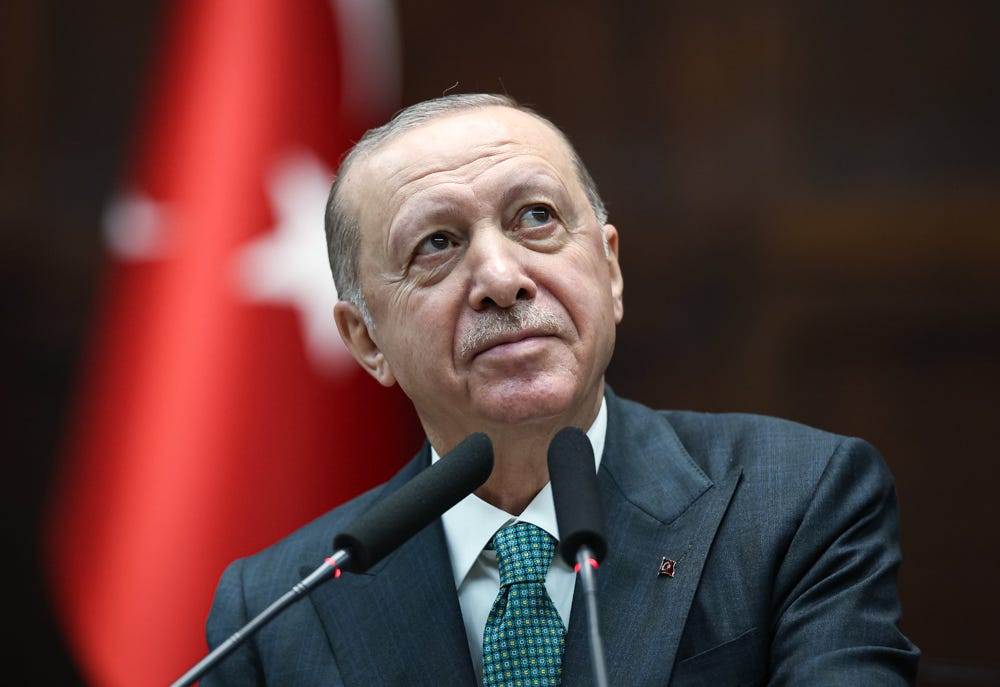
Speaking to AKP lawmakers Wednesday, Pres. Erdoğan said Ankara continued efforts to reach diplomatic solutions through contact with Iran, the US and regional nations.
“This war must be stopped before it escalates and completely engulfs the region in flames,” Erdoğan said. “If diplomacy is given a chance, it is quite possible to achieve this.”
Analysis: Gönül Tol, director of the Turkey program at the Middle East Institute, outlined four major concerns for Ankara in her latest analysis of the Iran conflict. Speaking to Turkey recap Wednesday, she said Turkish officials expect the war to “drag on for months” despite US Pres. Trump’s statements suggesting the end is near.
Tol said her sources in Ankara believe the attacks may create a “more belligerent, more militaristic regime” in Iran and that neither the US nor Israel have “achieved their aims in the war.”
The outcome is a “belt of chaos stretching from Syria to Afghanistan,” the sources said, which Tol characterized as a “grave danger and threat if you’re sitting in Ankara.”
Asked how Turkey’s government might be calibrating to fast-paced developments in its neighborhood, Tol responded: “I think they are banking on the prospect that Trump’s and Netanyahu’s goals might diverge.”
She added the mid-term question remains whether Israel can sustain the war without the current level of US involvement, stating there is potential for a protracted, low-intensity conflict across the region.
“All it takes is for Iran or Iranian proxies to just launch a drone or missile to disrupt traffic in the Strait of Hormuz. So, even a low-intensity conflict is going to be problematic,” Told said.
The Kurdish quest qualm: Calculations on Kurdish ground forces
We expected backlash when Ramadan-themed programs hit public schools this year. We didn’t expect this dance video.
In this week’s recap:
Turkey’s airspace violated again, NATO boosts defenses
Calculations on Kurdish ground forces
Istanbul municipality corruption trial underway
Domestic and diplomatic wraps
Anti-war Sánchez sparks Turkey-Spain meme flood
Also from us:
Help us prepare our first Q&A podcast: Submit any question about Turkey or Turkey recap by replying to this email or through this form
Ezgi Başaran discussed how the Iran war impacts the Turkey-PKK peace talks on Recap radio
“S-400” was trending on social media in Ankara this morning, meaning it’s high time for air defense systems — as South Korea found out this week.
And while it may never be the right time to test the Russian-made missiles that caused a rift between Turkey and its allies, the Iran war has confirmed the Daft Punk maxim: Turkey is NATO after all.
What happened: NATO defense systems were deployed and strengthened in Turkey this week as the Iran war continues and a second missile was intercepted in approach of Turkish airspace Monday.
Some debris landed in Gaziantep without injury or damage, according to Turkey’s Defense Ministry. Falling fragments were also reported in Diyarbakır, also without injury, though with less details.
Like the first incident on March 4, this week’s missile may have targeted assets used by NATO forces in Turkey, namely the Incirlik air base in Adana and the Kürecik radar station in Malatya.
In response, NATO deployed a Patriot missile interceptor system in Malatya, the Turkish Defense Ministry announced Tuesday, following a NATO spox Allison Hart statement on X reading: “NATO stands firm in its readiness to defend all Allies against any threat.”
Prior to Monday’s missile incident, the US State Department ordered non-emergency US government employees and their family members to leave the Adana Consulate “out of an abundance of caution.”
Reactions: Turkish FM Fidan, who has worked to deescalate the conflict through diplomatic contacts with Iran, said the airspace violation was “unacceptable” in a phone call with Iranian FM Abbas Araghchi Monday.
For his part, Araghchi denied the missiles directed at Turkey airspace originated from Iran and said he would investigate the issue, according to Anadolu Agency.
Speaking to AKP lawmakers Wednesday, Pres. Erdoğan said Ankara continued efforts to reach diplomatic solutions through contact with Iran, the US and regional nations.
“This war must be stopped before it escalates and completely engulfs the region in flames,” Erdoğan said. “If diplomacy is given a chance, it is quite possible to achieve this.”
Analysis: Gönül Tol, director of the Turkey program at the Middle East Institute, outlined four major concerns for Ankara in her latest analysis of the Iran conflict. Speaking to Turkey recap Wednesday, she said Turkish officials expect the war to “drag on for months” despite US Pres. Trump’s statements suggesting the end is near.
Tol said her sources in Ankara believe the attacks may create a “more belligerent, more militaristic regime” in Iran and that neither the US nor Israel have “achieved their aims in the war.”
The outcome is a “belt of chaos stretching from Syria to Afghanistan,” the sources said, which Tol characterized as a “grave danger and threat if you’re sitting in Ankara.”
Asked how Turkey’s government might be calibrating to fast-paced developments in its neighborhood, Tol responded: “I think they are banking on the prospect that Trump’s and Netanyahu’s goals might diverge.”
She added the mid-term question remains whether Israel can sustain the war without the current level of US involvement, stating there is potential for a protracted, low-intensity conflict across the region.
“All it takes is for Iran or Iranian proxies to just launch a drone or missile to disrupt traffic in the Strait of Hormuz. So, even a low-intensity conflict is going to be problematic,” Told said.
The Kurdish quest qualm: Calculations on Kurdish ground forces
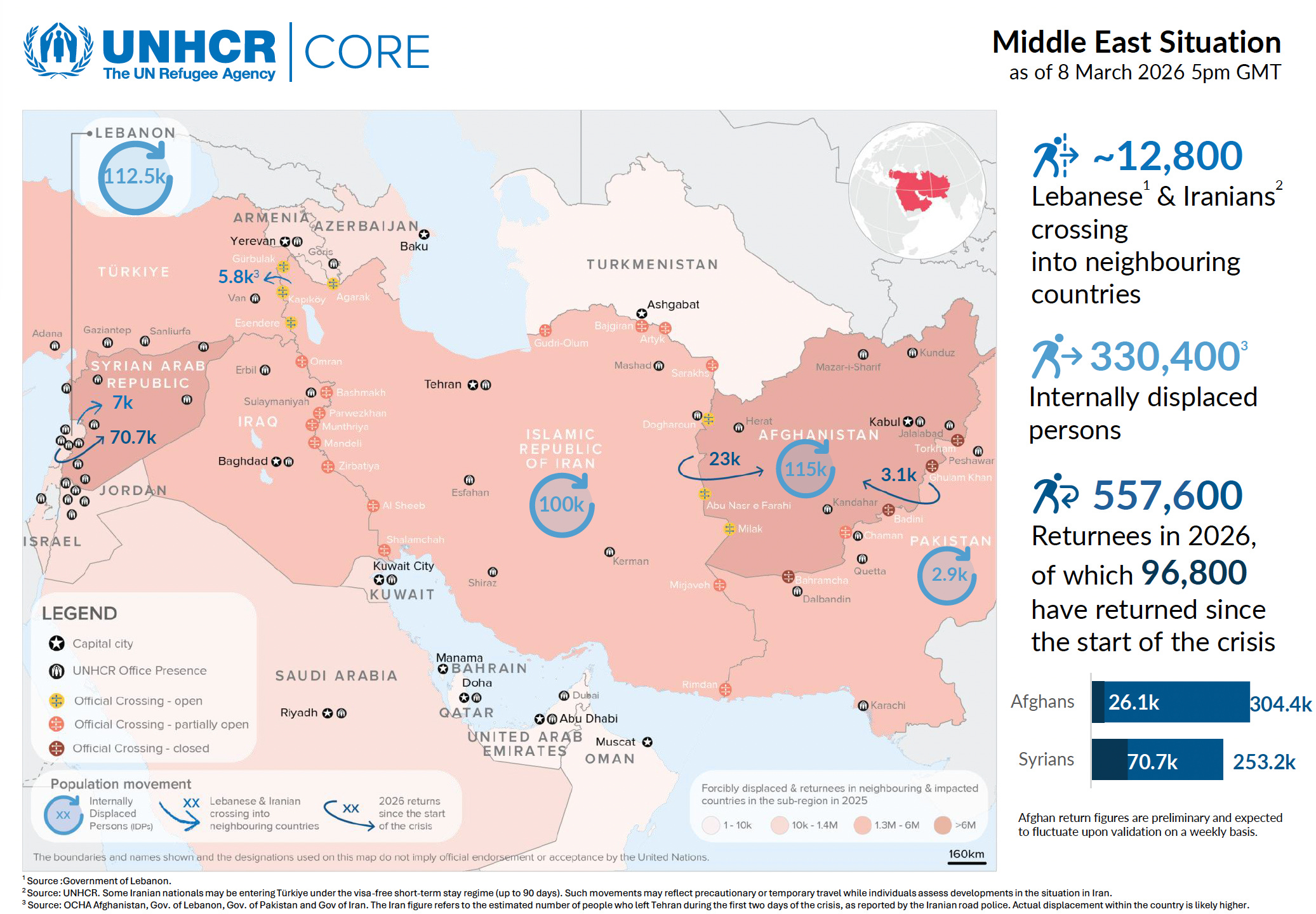
Last week, reports the US and Israel were considering a Kurdish ground offensive against the Iranian regime sparked international debate and regional concern.
Since then, Kurdish groups in neither Iran nor Iraq appear to have launched attacks with foreign backing. The former generally don’t want to send forces to a “slaughterhouse” and the latter generally don’t want to draw Iraqi Kurdistan further into the war — though Kurdish areas on both sides of the border have been bombed regularly in recent days.
Analytical discourse: In a helpful commentary on all this, the Atlantic Council’s Yerevan Saeed wrote that in the event of a Kurdish ground operation:
“Tehran could also use the specter of separatism to rally Persian nationalism, split the opposition, and frame the war as foreign-backed dismemberment rather than domestic revolt, giving itself a justification for mass arrests and violence against Kurds inside Iran.”
He noted Kurdish forces might “pin down” Iranian security forces, opening up room for unarmed protesters in major cities, but such an operation would still require foreign support and the negative connotations associated with it.
Additionally, he argued “any cross-border operations from Iraq “raise the stakes for Iraq’s Kurdistan Region”, which can be easily targeted with missile and drone strikes by Iran, adding:
“Turkey presents a second concern. Ankara has long treated armed Kurdish movements across the region as linked security threats because of their ties to the terrorist-designated PKK, even when the groups differ.”
Tactical discourse: Regarding how a Kurdish offensive might impact developments on the ground, Atlantic Council’s Nate Swanson bluntly stated: “While it could bog down and kill a few more Iranian soldiers, it is highly unlikely to have a meaningful impact on the battlefield.”
Likewise, the Council on Foreign Relations’ Henri Barkey wrote an analysis of Iranian Kurds’ military capacity, arguing:
“Iran’s Kurds … have much less experience participating in armed actions than Kurdish groups based in Iraq and Syria, and it is unclear how much support they might receive from these other groups.”
Echoing Saeed on the potential Turkish reaction, Barkey wrote:
“Given its sensitivity to its own domestic Kurdish issue, Turkey will attempt to influence the outcome in Iran.”
Political discourse: Among the many groups and sub-divisions of Kurdish forces, serveral have spoken to media outlets. Highlights include some are “ready to fight” but only with some mix of US support, a US-enforced no-fly zone and/or US ground operation in Iran.
In response to all the above, MHP chair Devlet Bahçeli pushed back in his parliamentary group speech Tuesday, stating:
“The Kurds will not, and should not, act as mercenaries for any force that is testing the waters to deploy our Kurdish brothers and planning to collapse Iran from within.”
Peace process discourse: Apart from short-to-mid-term security considerations, a longer-term concern in Ankara is the continuation of the PKK peace process, which could be disrupted by a US-Israeli alliance with Kurdish groups against Iran.
On this point, MEI’s Gönül Tol told Turkey recap she was expecting Erdoğan to call early elections — potentially this year — which would require him to continue the peace process in a way that maintains support from both pro-Kurdish DEM Party supporters and nationalist MHP supporters.
“If Turkey’s going to hold early elections, I’m not sure whether Erdoğan will be willing to rock the boat,” Tol said.
“So, I think his best strategy could be to do enough not to end the process, but not too much so he doesn’t alienate the nationalists, right? And that’s a delicate balance, but Erdoğan is a master of walking those fine lines.”
In other diplomatic news:
Cypriot defenses boosted, too. European nations, including Greece, sent ships, air defense systems and military equipment to the Republic of Cyprus after attempted drone attacks on British air bases there. In true Brooklyn fashion, Italy also sent a “frigate-about-it.”
To upgrade security in northern Cyprus, Turkey sent six F-16 jets and air defense systems Monday. AKP spox Ömer Çelik said the step was not “taken against anyone”. RoC Pres. Nikos Christodoulides thought otherwise, saying: “There is a significant amount of occupation force and equipment in the occupied territories” of Cyprus.
Next East Med rivalry to watch: Greece to look at small-scale nuclear development for power generation, PM says
CHP crackdown: Istanbul municipality corruption trial underway
After nearly a year in prison, CHP Istanbul Mayor Ekrem Imamoğlu issued his first statement Tuesday (full text here) for a wide-spanning corruption trial into the Istanbul municipality.
The hearings began Monday and are expected to take months as the indictment is nearly 4,000 pages and there are about 400 defendants. Regardless, most CHP officials and supporters have characterized the case as one more government attempt to keep Imamoğlu in prison and off the ballot in Turkey’s next presidential elections.
“Let me put it plainly. In Turkey, what is happening is not a trial in the normal sense of the word. It is not a legal process but a political one,” CHP chair Özgür Özel told Reuters, adding the judges handling the case have been tasked “not with conducting a fair trial but with delivering the decision that Erdoğan wants.”
The trial is ongoing, complex and best followed through Stüdyo recap, where our Turkish team is covering key developments as they come.
Sustained pressure: Also this week, new investigations were launched against Özel and another Imamoğlu X account. On Tuesday, 36 new suspects were also detained in an investigation linked to the CHP-run Manavgat Municipality.
A CHP source told Turkey recap, “The mood is very low in the party” adding they felt “hopeless” about the Istanbul municipality case.
To explain the situation, the source referenced an old Turkish idiom: “Kadıyı kadıya mı şikayet edeceksin?“ Meaning: Are you going to complain about the judge to the judge?
“Every single municipality in Turkey has corruption because that’s the system,” the source told Turkey recap. “No party can escape it and they are using this to purge Imamoğlu as a viable candidate for this country.”
“How many files did they hide or ignore about Melih Gokçek?” the source asked, referring to the former Ankara Mayor best remembered for erecting robot statues and opening Wonderland Eurasia.
In other domestic news:
Kulis: Where is Turkish intel chief Ibrahim Kalın? The spymaster has been laying low through much of the current conflict. When asked about his whereabouts, well-connected parliamentary staff told Turkey recap that Kalın is in a “feud” with Fidan at the moment.
According to sources in Turkish ministries, Kalın and Fidan are advising Erdoğan to take opposite courses of action on various policy files. The pair are currently locked in a competition for influence and power.
“The gap between them is immense now,” a source told Turkey recap.
MHP deputy resigns, reason unclear. MHP’s Aksaray MP Ramazan Kaşlı announced his resignation after being referred to a disciplinary committee for “behavior inconsistent with party principles.” He said an explanation would be made public soon, but at the time of writing, opposition media is mainly highlighting a 2024 speech as a possible reason.
Entre dos almas: Anti-war Sánchez sparks Turkey-Spain meme flood
And Spain’s PM Pedro Sánchez said “No to war” last week, denying US forces access to Spanish bases for attacks on Iran. The defiant move drew praise in Turkey, where “a wave of affection for Spain” swept the internet and football stadiums.
The phrase “no Spanish man will remain bald” trended online with images of a long-haired Andrés Iniesta. Here’s a thread of memes to get a sense of the affection that prompted one Spaniard to ask: “What is this?”
The answer is a love that Turkey’s Ministry of Defense can’t hide. Same goes for the resemblance between Spain’s Justice Minister Turkish sharpshooter Yusuf Dikeç.
In response, Sánchez sent greetings to the Turkish community on X, or what we like to call a Spanish lullaby. Elsewhere:
If you’re still confused about the Iran war’s regional implications, this meme video illustrates it with pyro techniques.
Three men disguised themselves as women to commit robbery in Sivas and were arrested anyway.
Sound systems were recently banned in cars, leading at least one person to repurpose his car speakers for a home theater.
An Uşak school principal was dismissed for investigating female teachers who did not add emojis to a WhatsApp message for International Women’s Day.
Finally, here’s a real headline: “Want to take a shower without being interrupted by missiles? There’s an app for that” … and US Amb. to Israel Mike Huckabee approves.
Speed reads
Turkey invests in foreign legion to deliver LA Olympics gold (AFP)
Turkey asks Britain’s MI6 to step up protection of Syria’s Sharaa, sources say; Ankara denies report (Reuters)
Kurdish leader Salih Muslim dies at 75 (Bianet)
Numan Kurtulmuş: Legal steps in the peace process are expected after Ramadan (NTV)
Man arrested after fire damages 18th-century Tophane fountain (HDN)
Eskişehir prison delays release of political prisoners (Bianet)
Cem Ozdemir, Germany’s Turkish-heritage political star (AFP)
Weekend reads
What Turkey Wants in Iran
Analyst Sinan Ülgen writes: “ In the coming weeks, Turkey’s state and intelligence resources are likely to focus on identifying and contacting key players within Iran who [can lead the nation]. Then, when the time is right, Turkey could seek to connect these figures to relevant international players, setting the stage for an early and sustainable agreement to end the conflict.” (Project Syndicate)
Turkey Has Two Key Interests in the Iran Conflict
Former Amb. Alper Coşkun writes: “From Ankara’s perspective, an escalation that destabilizes Iran while further polarizing the Middle East would be detrimental to regional interests. While serving Israel’s strategic preference of regional fragmentation, it would undermine Turkey’s strategy of regional consolidation through a patchwork of alliances and rings of collaboration around shared economic, political, and security interests.” (Carnegie)
Kurds, the Iran War, and Türkiye’s Strategy of Preventive Stabilization
Analysts Seren Selvin Korkmaz and Riccardo Gasco write the US-Iran confrontation presents Turkey with risks and opportunities: “The risk lies in becoming entangled in a widening conflict whose spillover effects could destabilize Türkiye’s already fragile domestic environment. The opportunity, however, is to position Türkiye as a stabilizing intermediary in a rapidly fragmenting regional order.” (Istanpol)
Deep Dive: The CIA’s Kurdish gambit and the war game with Iran
Analyst Yunus Abakay writes: “When intelligence agencies leak information, it is rarely accidental. The CIA’s recent disclosure of US involvement with Iranian Kurdish factions as a potential tool to pressure Iran, therefore, demands scrutiny … a well-timed leak is not a breach; it is a weapon.” (Amwaj)
The Growing Alignment of Turkey and Saudi Arabia
Analyst Emil Avdaliani writes: “The ongoing [Turkey-Saudi-Pakistani] alignment should not be mistaken for a formal alliance in the making. It rests on a convergence of interests – regional stability, autonomy from great-power constraints -- and offers mutually beneficial economic opportunities; it is pragmatic and not ideological.” (CACI)
IPC-Turkey Social Psychological Well-Being Report
Researchers Nebi Sümer and Zafer Yenal write their study “characterizes Turkey’s current state as an ‘inefficient regime of unhappiness’ … [in which] dissatisfaction is internalized or channeled into individual exit strategies, especially the desire to emigrate, rather than into collective improvement channels.” (IPC)
Week ahead
Mar 12 The Foundation for Defense of Democracies hosts a webinar titled “Between Ally and Adversary: Turkey’s Strategic Calculus in the Iran War” at 1600 UTC
Mar 13 The Istanbul Policy Center hosts an in-person event titled “Countering Insurgency/Terrorism: Severing the Ties Between Non-State Armed Actors & Their Constituency” at 1100 TRT in Istanbul
Mar 18 Stockholm University’s Institute for Turkish Studies (SUITS) hosts a webinar titled “Book Launch for Reuben Silverman: The Rise and Fall of Turkey’s Democrat Party” at 1100 UTC
Mar 18 The European Consortium for Political Research hosts a webinar titled “Turkey and the Making of Europe’s Security Architecture” at 1500 UTC
Mar 19 Public holiday: Ramazan bayramı
Mar 19 CHP holds a rally in Saraçhane, Istanbul
Turkey recap is an independent, reader-supported newsletter that helps people make sense of the fast-paced Turkey news cycle. Contact us: info@turkeyrecap.com.
Subscribe here on Substack (or on Patreon for discount options). Paid subscribers get full access to our recaps, reports, members-only chat and news tracking tools.
We are an affiliate of the Global Forum for Media Development and aim to produce balanced news that strengthens local media by supporting journalists in Turkey.
Diego Cupolo, Editor-in-chief
Emily Rice Johnson, Deputy editor
Ceren Bayar, Parliament correspondent
Yıldız Yazıcıoğlu, Parliament correspondent
Günsu Durak, Stüdyo recap editor
Demet Şöhret, Social media and content manager


