


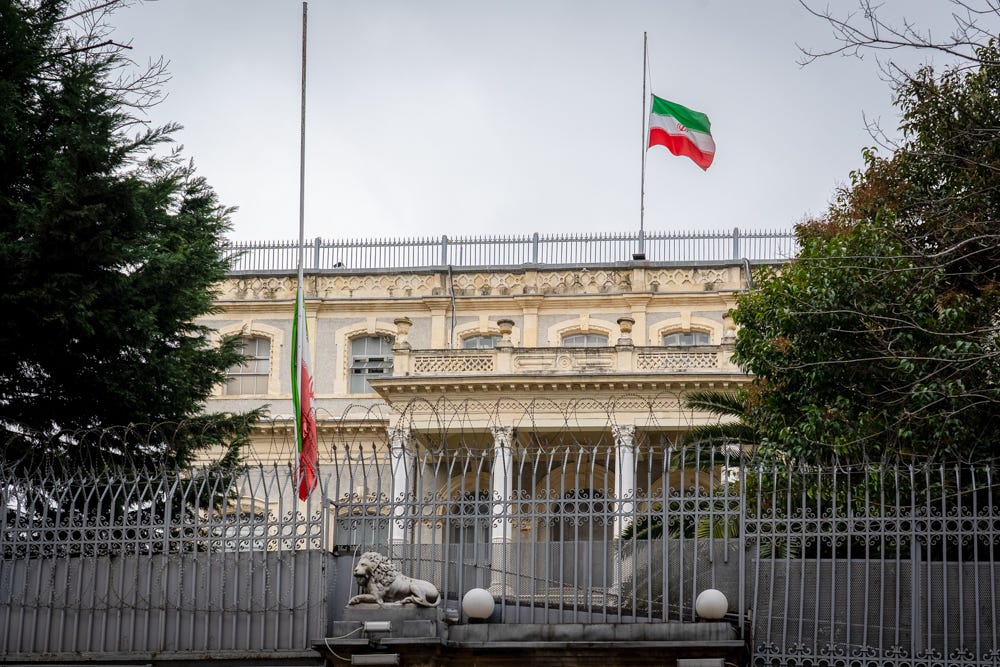
ISTANBUL—US and Israeli attacks on Iran continue in full force. With the death of Iran’s Supreme Leader, Ayatollah Ali Khamenei, the war has spread across the region.
So far, at least 12 countries have been bombed, and one Iranian missile approaching Turkish airspace was intercepted over Hatay shortly before the publication of this article.
Still, the situation in Turkey remains relatively calm. Unlike in the Gulf, the Iranian regime has so far spared the NATO air base in Incirlik and the early-warning radar system in Kürecik.
Iranian dissidents living in Turkey have mixed feelings about the war. Many were overjoyed that Khamenei, who ruled the Islamic Republic with an iron fist since 1989, was killed. But they are also worried for their family and friends living under bombardment. Views differ widely on what should come next, even if the regime is changed.
Muted celebrations
There were no mass celebrations in Turkey following Khamenei’s death. Turkish authorities have banned all Iranian opposition gatherings since the protests in January.
On Sunday evening, in a street off Taksim Square, a small group of young Iranians gathered in a cafe. The loud giggles from inside gave away how they felt. They sat around a table drinking tea and sharing sweets, their eyes glued to their phones.
“I cried when I heard that Khamenei was killed – cried with joy,” said Reza, a student in his 30s. “We have been waiting for this since my childhood. We waited for the US and Israel to attack. No one likes war, but there was nothing else to be done. We tried to achieve change with protests, but they shot the protesters.”
As a gay man, Reza could not have lived freely in Tehran. He moved to Turkey and is now optimistic. “For the transition, we need someone like Reza Pahlavi to lead us to democracy,” he added, referring to the exiled son of Iran’s last Shah.
Only one bar in Taksim frequented by Iranians appeared to be open that night. Inside, an elderly DJ played classic Iranian pop and Michael Jackson under old-fashioned disco lights. The walls were decorated with Zoroastrian symbols. The few people inside were busier checking the news than celebrating.
“People have stopped coming to have fun since the January crackdown. We’re all very worried,” said a man working there.
A new refugee wave?
In 2025, almost 100,000 Iranians were registered as living in Turkey. This does not include those whose residence permits expired but stayed in the country. Iranians do not require tourist visas to enter, and Iranian visits to Turkey reached a record 3.2 million in 2024.
As the US mobilized its forces, the Turkish government strongly lobbied against a war through all possible channels. The view in Ankara is that regime change could destabilize Iran, leading to a new immigration wave and allowing groups like the Kurdistan Free Life Party (PJAK) — an affiliate of the Kurdistan Workers’ Party (PKK) — to gain a foothold.
In January, local and international reports indicated the Turkish government was preparing plans for a buffer zone inside Iranian territory. The goal would be to contain mass migration within Iran’s borders. Such a move would mark a stark shift from the open-door policy Ankara held during the Syrian civil war.
In late February, Forbes reported that Turkey was preparing to send troops across the border. The Presidency’s Directorate of Communications called these claims false, stating that Turkey “upholds respect for the territorial integrity and sovereignty of neighboring countries.”
“There is a possibility that a new wave of migration might be triggered, and this could pose a serious challenge for Turkey,” said Arif Keskin, an Iranian Azerbaijani sociologist and political scientist working in Turkey.
“There are a significant number of Afghans and other foreigners in Iran,” Keskin told Turkey recap. “Iran once said there are 3.5 million – perhaps more. Now it will become difficult for them to live there. It’s not just that, Iranians are also currently leaving Tehran because of the war.”
Keskin noted that Turkey would not and should not allow a large number of refugees into the country. But he conceded that turning away ethnic Turks from Iran would be difficult for Ankara. There are 10 to 25 million Azerbaijanis living in Iran, roughly a quarter of the population.
The 560 km-long border with Iran is now mostly sealed by concrete walls, deep trenches and “smart” towers equipped with thermal cameras.
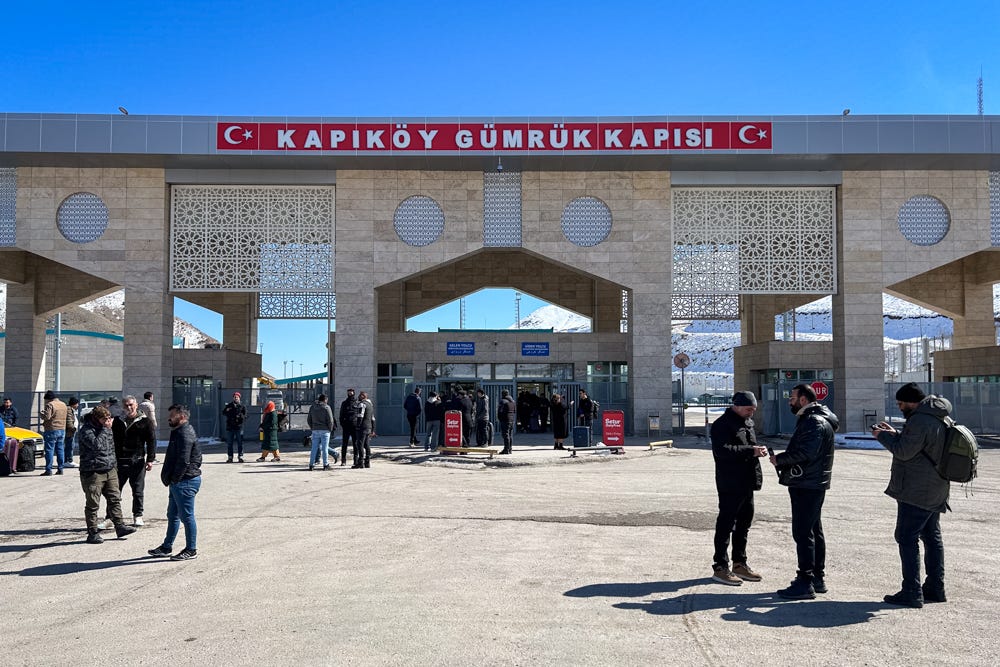
At the Kapıköy border crossing in Van, the situation remains calm. Traffic has returned to normal levels—a few hundred people a day. Those leaving tend to have families or citizenship elsewhere. There have yet to be signs of a major influx.
The grip on dissidents
Yet, Turkey is no safe haven for Iranians. Recent investigations suggest Tehran has at least coordinated with Ankara to detain dissidents in Turkey and transfer them back to Iran, where they face criminal proceedings. More routine deportation threats also mark the lives of those abroad.
Kaveh Taheri is an Iranian human rights activist who has lived in Turkey for 13 years. In late January, he was traveling to the French consulate in Istanbul for a humanitarian visa meeting. He was apprehended by Turkish authorities and moved to a deportation center, where he remains.
“He is kept in the same ward as people who were accused of terrorism, of ISIS [membership],” his sister, Laleh Taheri, told Turkey recap. “If he is deported, I can definitely say he would be executed.”
Laleh believes the arrest was targeted: “It was because of the political relationship that the Turkish government has with the Islamic Republic—which I hope we can call the former regime in a few days. They have put pressure on refugees, especially on Iranian activists.”
“It’s a difficult situation for all Iranians, considering the war,” she continued. “We’re all worried for our families in Iran. At the same time, so many Iranians are happy with the death of the Ayatollah. Complicated emotions … In addition to my family, we are struggling with the situation of my brother. We’re very worried for his safety in the camp.”
About a week after Taheri’s arrest, his friend Saeid H., a writer and activist, was also picked up by police in Istanbul. He was without a valid residence permit and the officers identified him through CCTV photos, indicating the arrest was also likely targeted.
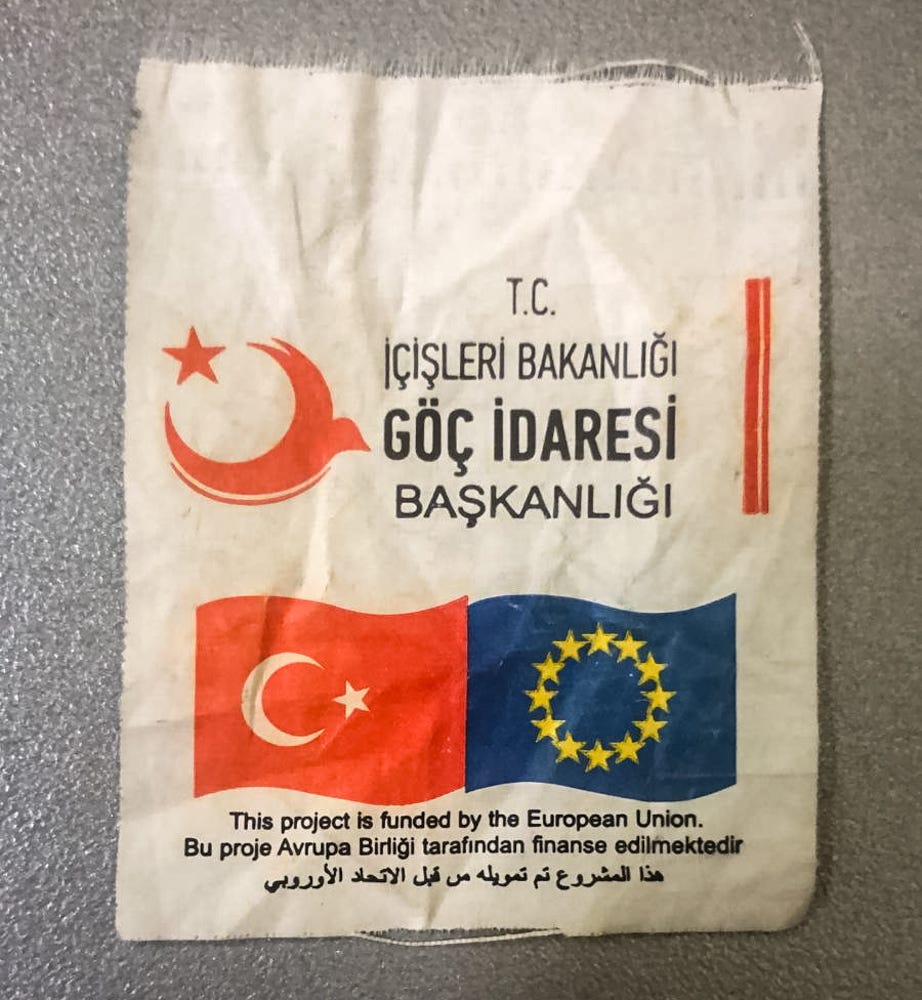
Saeid H. spent some weeks at another deportation center outside Istanbul, notorious for its poor conditions. He said the food was inedible, and those kept there were often mistreated. Saeid H. also noticed EU flag logos everywhere stating that the facility was partially funded by the EU.
“After the protests, if I had been deported, I wouldn’t even get a proper execution,” Saeid H. told Turkey recap by phone. “They would have just shot me on the spot.”
To avoid deportation to Iran, Saeid H. agreed to be sent to a third country, Azerbaijan. He is not as optimistic as other dissidents. He doubts regime change could be enacted only through bombardment and targeted assassinations.
“Let’s say only 10 percent of the population supports the regime, even though it is more. That is 9 million people. They are all armed. If protests start again, they will go and shoot everyone. Now, this is war, they won’t even need courts anymore,” he said.
Saeid H. is a leftist, not a monarchist. He feels he would not have a place in Iran even if Reza Pahlavi were installed by the US and Israel.
“Pahlavi would be a dictator [too],” he said. “They want to get rid of a supreme leader and bring back a king. It is the same crap. With the Islamic Republic, I can go to Europe and feel safe. Under Reza Pahlavi, I will have to go to Mars to feel safe.”
Turkey recap is an independent, reader-supported newsletter that helps people make sense of the fast-paced Turkey news cycle. Contact us: info@turkeyrecap.com.
Subscribe here on Substack (or on Patreon for discount options). Paid subscribers get full access to our recaps, reports, members-only chat and news tracking tools.
We are an affiliate of the Global Forum for Media Development and aim to produce balanced news that strengthens local media by supporting journalists in Turkey.
Diego Cupolo, Editor-in-chief
Emily Rice Johnson, Deputy editor
Ceren Bayar, Parliament correspondent
Yıldız Yazıcıoğlu, Parliament correspondent
Günsu Durak, Stüdyo recap editor
Demet Şöhret, Social media and content manager