

Letter from the editor: Five opportunities for young journalists
AI slop is about to trigger a reconvergence of news media

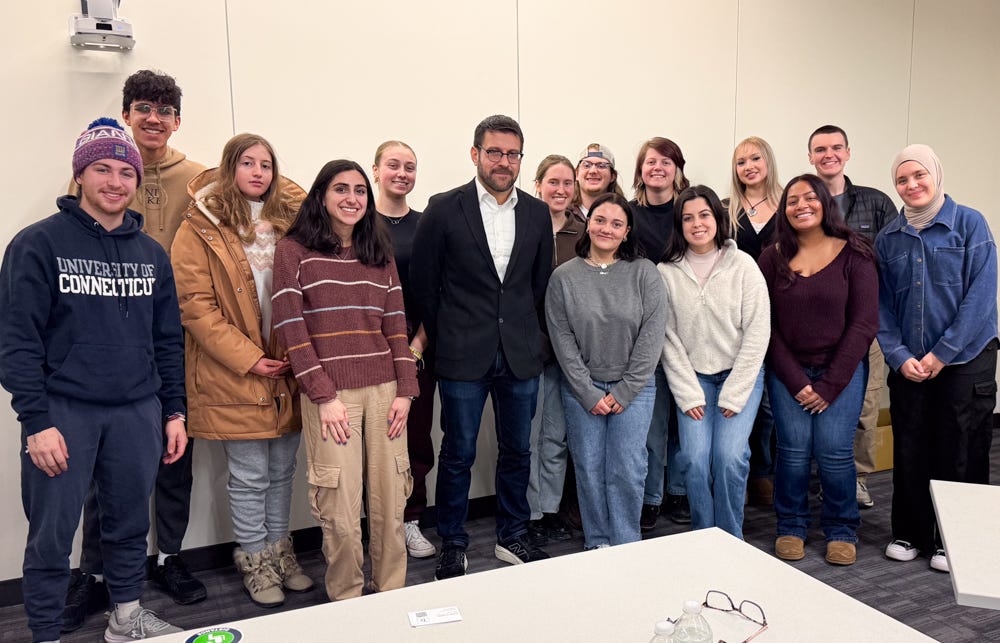
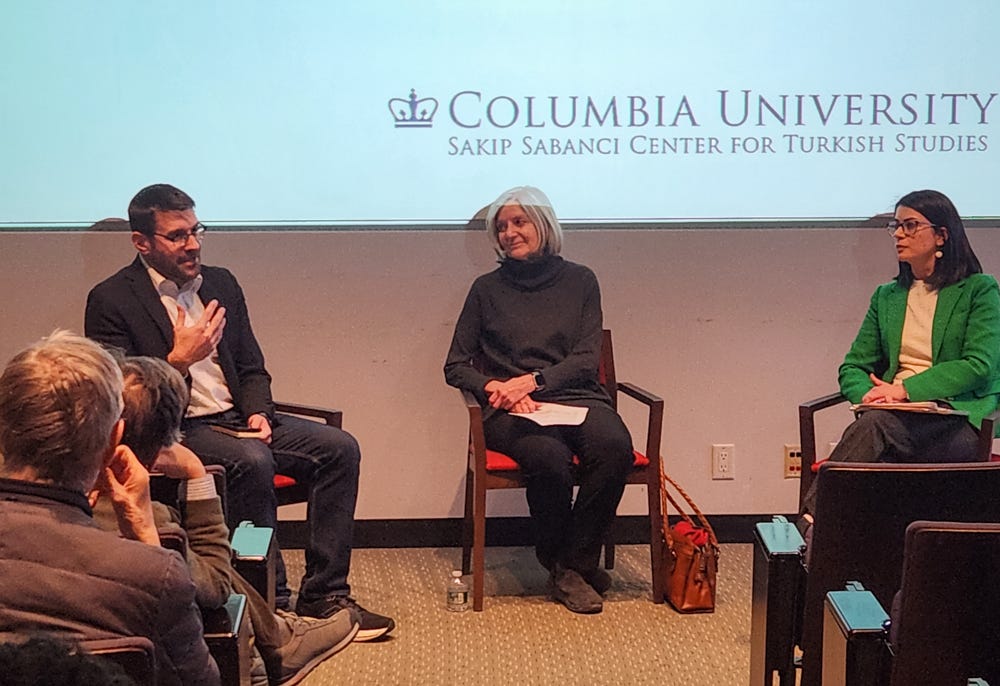
Over the last few weeks, up and down the east coast of the United States, I’ve had the privilege of meeting with officials, think tanks, colleagues and—most of all—journalism students.
Trend lines appear bleak for the profession, but the sheer determination of these journalists-in-training gave me hope not just for better business models, but also for better methods to distribute, curate and verify information, which is the core purpose of journalism.
This post outlines five opportunities for young journalists who are ready and willing to carry the profession into the future.
Rewind: My +20-year career in journalism spanned the early internet, when news outlets didn’t really know what to do with web pages, and the resulting mass layoffs and buyouts, which turned my editors’ hair gray as they mulled career options in the newsroom, with family portraits on their desks.
A great dispersion of information sources followed. Social media produced new voices, venues and revenue models, Substack included, allowing some people to succeed and innovate where legacy media had not. This came with mixed results for the quality of information produced, but it was the least bad option for many reporters and expanded the range of news coverage globally.
Fast-forward: We’re now entering an era I’ll call the “great reconvergence”, in which the innovations of the last two decades get reapplied by journalism institutions to great effect, and create new jobs.
I may be wrong, but the collapse of a so-called “town square” social media, the growth of information silos (like WhatsApp group chats) and the spread of AI-generated content, will make news institutions more valuable than ever because the one-person news brands of the 2010s simply cannot handle what’s coming.
Only trained teams and/or news agencies can really verify AI-produced videos, photos and content. I know, because I struggle with this issue when operating alone and just faced it during recent clashes in northern Syria. How can I verify videos in real time of Islamic State fighters escaping prisons? That requires a team.
Opportunities: The above is one example of a big problem in our information environment, and one that needs fixing. People are willing to pay for that. They’re also willing to pay for curation and distribution methods that fit their needs and interests.
Counter to common narratives about the news industry crumbling, the coming period is packed with opportunities for young journalists, who will need entry-level jobs—and they will exist if you know where to look. Here are some leads:
1. An AI verification industry is coming: As mentioned above, no single person can verify AI content at the speed it’s being produced. This will spawn or expand existing verification teams in news agencies and surviving legacy media outlets.
If they don’t have in-house staff, they’ll outsource to digital forensics companies offering similar services. Both groups will need entry-level hires and will provide excellent training grounds for young journalists. View it as fact-checking for new media.
2. Newsletters as the front page of niche topics: This one is from our playbook at Turkey recap, but it can be replicated with any subject. People have many interests and there is too much information online. Add to that social media streams and now flood the zone with sh…AI-generated content. Someone needs to curate, and that’s a job.
I partially link rising political apathy and declining news engagement to information overload. The front page of newspapers used to show people what was important and invite them to the inside pages if they wanted more details. Newsletters with links to articles can provide the same service—along with sustainable business models for their teams.
3. Rethink the article: Different people want information in different ways, and the centuries-old news article is not always the most efficient medium for relaying what readers need.
Examples: Newcomers to a subject need context. Experts in a subject need just the latest update or quote. Many others need to know what the news means for them or their area of interest. Meanwhile, decision-makers need all the viewpoints on a subject to, yup, make decisions.
These components of a news report can be remixed and shuffled. That applies to text, video and audio news. At Turkey recap, we label some sections with headers like “What happened”, “Analysis” and “What comes next”, allowing readers to spot what they want and get on with the day. Journalism is a service industry. Serve people what they want, how they want it.
4. Rebuild trust with radical transparency: Semafor has also experimented with separating the components of articles, at times presenting the news, expert arguments and counterarguments—as well as the reporter’s opinion on the matter.
The argument-counterargument sections help to foster honest debate on polarizing subjects, trusting readers to judge the viewpoints on their own terms. Adding the reporter’s point of view goes a step further because, despite what we’re told to do or say in journalism school, everyone is biased.
Acknowledging that we have viewpoints allows readers to know where we stand, builds trust and makes us human. Same for conflicts of interest. Disclose them. Many journalists have strong opinions and deliver balanced news. These realities can coexist.
But no one believes journalists are unbiased as individuals and even hinting at it or taking “professional distance” in heated debates just feels disingenuous. Public trust is vital to the future of the media profession. Be genuine, not god-like, and remember journalists can show bias through what they don’t cover.
5. Report, report, report … on new subject areas: Until AI-powered drones can observe events, interview people and spit out accurate news stories, the world is going to need human reporters. The issue for young reporters is finding the stories older reporters are not already covering. There are always opportunities and the best path to a full-time job runs through the coverage gaps.
I got my start as an environmental journalist at the Newark Star-Ledger when interest was high following Al Gore’s 2006 movie, ‘An Inconvenient Truth’, and no one in the newsroom was covering the beat at the time. I was interested in the topic, pitched the editors and soon after got my first front page clips—which I laminated and still keep today.
After climate news took off, other young reporters made careers in covering social media, which many established journalists didn’t touch, leaving a wide gap for newcomers. The same happened later with the crypto boom and it’s happening now with AI-related news and drone warfare.
Editors know that people engaged with new topics and new technologies are better suited to cover them. But don’t expect them to find you. Instead, you have to find them, call out their coverage gaps and fill them. Report, report, report. Same as always.
I hope this is helpful. I told the young journalists I met in the US that I want them to succeed, and I meant it.
The consolidation of power erodes societies. The consolidation of information is equally corrosive to the worlds we know and don’t know. Journalists can continue to bridge information landscapes by focusing on distribution, curation and verification in the coming period.
The students above showed real initiative. They’ll build the infrastructure of 21st-century journalism and they left me inspired. This post is my attempt to relay that inspiration to you, the reader, and hopefully other young journalists, too.
Someone’s going to need to report the news. So, as we like to say at Turkey recap: Meet the momentum.
Turkey recap is an independent, reader-supported newsletter that helps people make sense of the fast-paced Turkey news cycle. Contact us: info@turkeyrecap.com.
Subscribe here on Substack (or on Patreon for discount options). Paid subscribers get full access to our recaps, reports, members-only chat and news tracking tools.
We are an affiliate of the Global Forum for Media Development and aim to produce balanced news that strengthens local media by supporting journalists in Turkey.
Diego Cupolo, Editor-in-chief
Emily Rice Johnson, Deputy editor
Ceren Bayar, Parliament correspondent
Yıldız Yazıcıoğlu, Parliament correspondent
Günsu Durak, Stüdyo recap editor
Demet Şöhret, Social media and content manager