

Op-ed | Hedging defined Turkish foreign policy in 2025. Next year may require a new approach.

When we look back at Turkish foreign policy in 2025, what stands out is not a major shift or a sudden change of direction. Instead, it is a sense of consolidation. The way Ankara engages with the world has become more structured, more predictable in its logic, even if outcomes remain uncertain.
Turkey operated in an international environment defined by fragmentation rather than clear blocs. The war in Ukraine continued to reshape European security. US commitments felt less certain and more transactional. Regional crises increasingly overlapped.
In this setting, Turkish foreign policy was less about choosing sides and more about managing risk exposure, preserving flexibility and maintaining relevance across multiple theaters. This approach is often described by concepts like strategic autonomy or hedging.
In 2025, these were not just slogans, they were methods of operation. Looking ahead, however, the space may narrow for the type of hedging displayed by Ankara. As conflicts harden, alignments become more demanding and expectations for consistency grow.
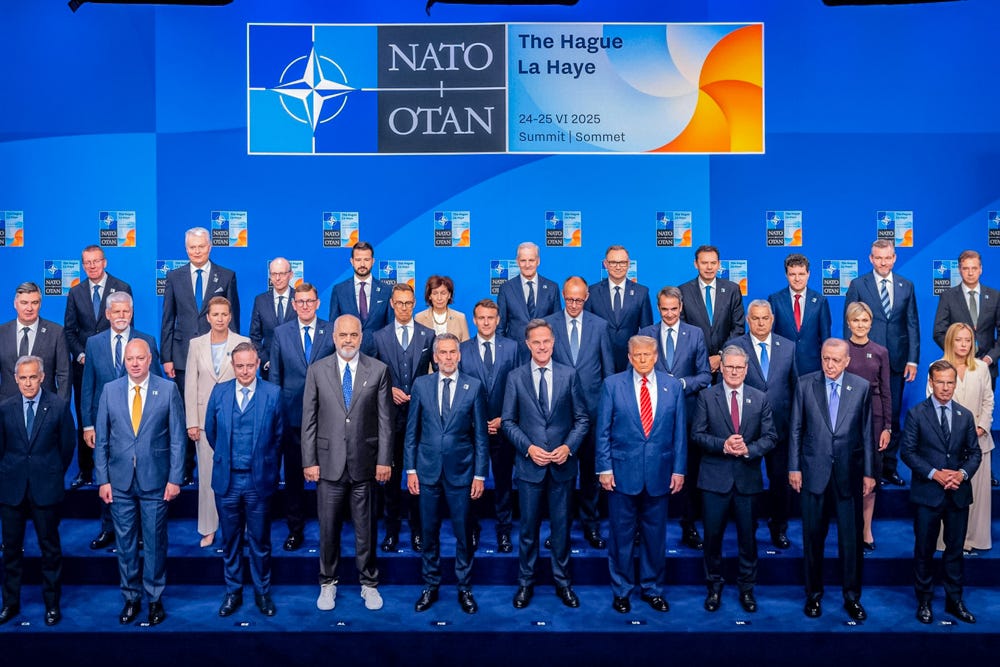
These dynamics unfolded against the backdrop of continued NATO commitments and an increasingly transactional relationship with Washington, further narrowing the space for ambiguity.
This means maintaining flexibility without clear positioning may become increasingly difficult for Turkey in 2026.
Europe’s security debate and Turkey’s awkward centrality
One of the most important developments this year was the acceleration of Europe’s security debate. Rearmament, defense production and new cooperation tools moved from abstract discussions to concrete planning. As Europe sought partners, Turkey appeared both central and politically uncomfortable.
On the one hand, Turkey brings military capabilities, operational experience and a growing defense industry. On the other hand, political tensions, concerns about the rule of law, the arrest of Istanbul mayor Ekrem Imamoğlu and Turkey’s stalled EU accession process continue to limit deeper integration.
Turkey’s response was pragmatism. Rather than seeking political reintegration, Ankara focused on functional cooperation, often through bilateral rather than multilateral platforms. Defense and security were major entry points. The message was clear: Turkey wants to be part of Europe’s security conversation, but on practical terms rather than through a broader political framework.
In this sense, Turkey’s position felt “peripheral” only on paper. In practice, it was increasingly central.
Defense partnerships as tools, not symbols
Another clear trend in 2025 was the evolution of industrial defense cooperation as a foreign policy tool.
This is not unique to Turkey, but for Ankara, such ties have become a central instrument for advancing pragmatic engagement in the absence of deeper political alignment. They no longer just represent a sale of equipment; they create long-term interdependence and signal strategic intent.
This dynamic was especially visible in Turkey’s defense cooperation with European partners. The Italy-Turkey relationship, in particular, stands out as a telling example of how pragmatic, interest-driven engagement can translate into deeper integration in practice, even as broader Turkey-EU relations remain politically constrained.
Similar patterns emerge in Turkey’s defense ties with other EU countries, suggesting that functional cooperation can advance despite unresolved normative and political questions—a tension that may become more consequential over time.
Beyond Europe, Turkey’s expanding defense cooperation with Egypt illustrates how strategic pragmatism is reshaping regional relationships. Joint production and technology development mark a significant shift from years of political tension toward a more interest-based partnership—one that also intersects with wider regional files, including Gaza and Eastern Mediterranean security.
Here too, defense cooperation operates as both a confidence-building tool and a platform for broader strategic coordination.
This approach is mirrored in Turkey’s cooperation with Gulf partners, where defense projects are closely linked to efforts to diversify partnerships, localize production and reduce reliance on a single external provider.
Across different geographies, defense cooperation has become a key instrument through which Turkey manages autonomy and navigates a fragmented strategic environment.
These partnerships are not only about ideology or bloc politics. At the same time, they carry risks. Interdependence can support autonomy, but it can also create new vulnerabilities if politics enter the equation.
Mediation, Ukraine and the limits of balance
Turkey’s role as a diplomatic actor, particularly in relation to the Russia-Ukraine war, remained important in 2025. Ankara’s ability to maintain open channels with Moscow while engaging Western partners continues to lend it visibility and relevance.
Beyond mediation, Turkey has also positioned itself with an eye to the post-war phase, signaling interest in reconstruction and economic recovery efforts when conditions allow.
Yet, this role is becoming increasingly difficult to sustain. Mediation requires credibility, not just access. As the war continues and positions harden, Turkey’s balancing act is increasingly scrutinized. Flexibility still matters, but ambiguity has limits, especially in a polarized environment where expectations of alignment are rising.
How Turkey translates diplomatic access into a meaningful role in reconstruction will be a key test once the war eventually enters its endgame.
Gaza, regional escalation and Turkey’s stabilization aims
The Gaza war and its regional repercussions also shaped Turkey’s foreign policy in 2025. Ankara played an active role in diplomatic ceasefire efforts and signaled its intentions to participate in post-conflict stabilization arrangements.
This posture reflects a familiar Turkish approach: combining strong political positioning with initiatives to take part in diplomatic and security mechanisms on the ground. Gaza reinforced Turkey’s drive for recognition not only as a vocal regional actor, but also as a contributor to stabilization and crisis management.
At the same time, the Gaza crisis exposed the constraints of Ankara’s influence in a highly polarized environment. Relations between Turkey and Israel remained tense in 2025, limiting direct coordination and narrowing diplomatic space.
How this tension evolves will matter well beyond Gaza, particularly in Syria, where overlapping security concerns, military presence and post-conflict arrangements require some degree of indirect or mediated coordination.
Turkey’s regional role, therefore, remains visible and politically resonant. However, its ability to shape outcomes increasingly depends on managing strained relationships and working through multilateral or third-party frameworks rather than relying solely on bilateral channels.
Syria, domestic peace efforts and the Kurdish question
Syria remained one of the clearest stress tests for Turkish foreign policy this year. The post-Assad context highlights the gap between influence and capacity. Military presence alone does not produce stability. Governance, legitimacy and coordination matter just as much.
What became more apparent in 2025 was the growing link between regional developments and domestic politics. The Kurdish question is central to this connection. Developments in Syria have a direct impact on Turkey’s internal debate, not only in security terms but also politically.
Against this backdrop, renewed domestic discussions on a possible peace process are not occurring in a vacuum. They are closely related to changing dynamics in Syria and the broader region. In this sense, domestic peace efforts and regional strategy are increasingly intertwined. Progress or failure in one arena will shape the other.
The Caucasus, peace talks and connectivity
Another file likely to gain prominence in 2026 is the South Caucasus. The evolving peace process between Azerbaijan and Armenia, as well as discussions surrounding new connectivity routes linking Turkey and Azerbaijan through Armenian territory, carry significant strategic implications.
For Turkey, this is not only about its close partnership with Baku. It is also about regional integration, trade corridors and long-term stability in a space where Russia’s role is changing and other actors, mainly the EU and China, are seeking greater influence. If managed carefully, the Armenia-Azerbaijan track could become a rare example of conflict de-escalation producing tangible regional connectivity.
At the same time, the process remains fragile. Political will, domestic constraints and external pressures will determine whether this opportunity translates into durable outcomes. This will be a crucial test case for Turkey’s ability to translate diplomatic leverage into lasting regional benefits.
Europe’s dilemma, Turkey’s leverage
Looking back, a recurring theme in 2025 was the tension between Europe’s growing security needs and its discomfort with Turkey as a political partner. Cooperation is increasingly felt to be necessary, but trust remains limited. The result is a relationship that works in practice but struggles politically.
This transactional dynamic sets clear limits. For Turkey, it creates leverage but also a ceiling. For Europe, it creates dependence without clear influence. Neither side seems fully satisfied, yet both continue to engage.
What sustains this relationship is strategic necessity rather than a shared vision. Security cooperation, migration management and economic interdependence keep channels open, even as democratic backsliding and misalignment in foreign policy have narrowed EU-Turkey relations to a largely transactional space, leaving the accession framework formally intact but politically hollow.
Fragmentation within the EU further complicates this dynamic. Diverging priorities among institutions and member states produce uneven signals, especially on defense cooperation and Turkey’s role in Europe’s security architecture.
At the same time, there is a growing recognition that sidelining Turkey may be counterproductive, given its role in Black Sea security and regional diplomacy. The result is a form of managed pragmatism: necessary, functional and structurally limited.
Domestic politics and foreign policy sustainability
Underlying many of these dynamics is a domestic reality that cannot be separated from foreign policy. Economic pressures, electoral competition and governance challenges shape the space in which Turkish diplomacy operates.
Pragmatism abroad is, in part, a response to constraints at home: limited economic room to maneuver, growing social pressures and a political environment in which foreign policy often functions as a tool for managing risk and projecting control.
Foreign policy activism helps signal strength and agency in an uncertain international environment, but it also raises expectations, both externally and domestically. Diplomatic visibility and regional engagement can generate short-term leverage, yet they also require follow-through.
Over time, sustaining credibility abroad depends increasingly on coherence, institutional capacity and political legitimacy at home.
In 2025, this connection, and at times disconnection, between domestic politics and foreign policy became more visible. External partners paid closer attention to internal developments not only as a normative concern, but as an indicator of Turkey’s ability to deliver and sustain long-term cooperation. Even if rarely stated openly, domestic dynamics are an integral part of how Turkey’s foreign policy credibility is assessed.
Looking ahead to 2026
If 2026 continues along similar lines, the key question will not be whether Turkey remains relevant. Geography and capability ensure that it will.
The real question is sustainability. Can Turkey continue to turn flexibility into influence without eroding credibility? Can pragmatic or strategic autonomy deliver long-term outcomes, not just short-term relevance across multiple theaters?
Last year clarified the logic of Turkish foreign policy. The next will test how far that logic can go—and at what cost.
Turkey recap is an independent, reader-supported newsletter that helps people make sense of the fast-paced Turkey news cycle. Contact us: info@turkeyrecap.com.
Subscribe here on Substack (or on Patreon for discount options). Paid subscribers get full access to our recaps, reports, members-only chat and news tracking tools.
We are an affiliate of the Global Forum for Media Development and aim to produce balanced news that strengthens local media by supporting journalists in Turkey.
Diego Cupolo, Editor-in-chief
Emily Rice Johnson, Deputy editor
Ceren Bayar, Parliament correspondent
Yıldız Yazıcıoğlu, Parliament correspondent
Günsu Durak, Stüdyo recap editor
Demet Şöhret, Social media and content manager