


Election season is here. At least in Amasya, where a beekeeper made beehive frames with political party logos. Whichever one gets the most honey wins.
The best part is the beekeeper’s stated goal aligns with ours: To bring “a sweet taste to politics.” We’re open to a merch partnership if anyone has this guy’s contact info.
In this week’s recap:
PKK peace process shifts gears
US Turkey and Syria envoy busy in Iraq
Ankara treads carefully amid US-Iran talks
Domestic and diplomatic wraps
Scientists develop tomatoes for moon farms
Also from us this week:
Amy Austin Holmes outlines post-ceasefire dynamics in Syria on Recap radio
DEM’s Gülistan Kılıç Koçyiğit discusses the peace process on our Turkish podcast
Emily Rice Johnson dropped our “This day in Turkey: March” edition, now available for news tracking tools subscribers
With its report filed and The Smurfs set to broadcast in Kurdish, the parliamentary peace commission mandate has come to an end. Now the real work begins.
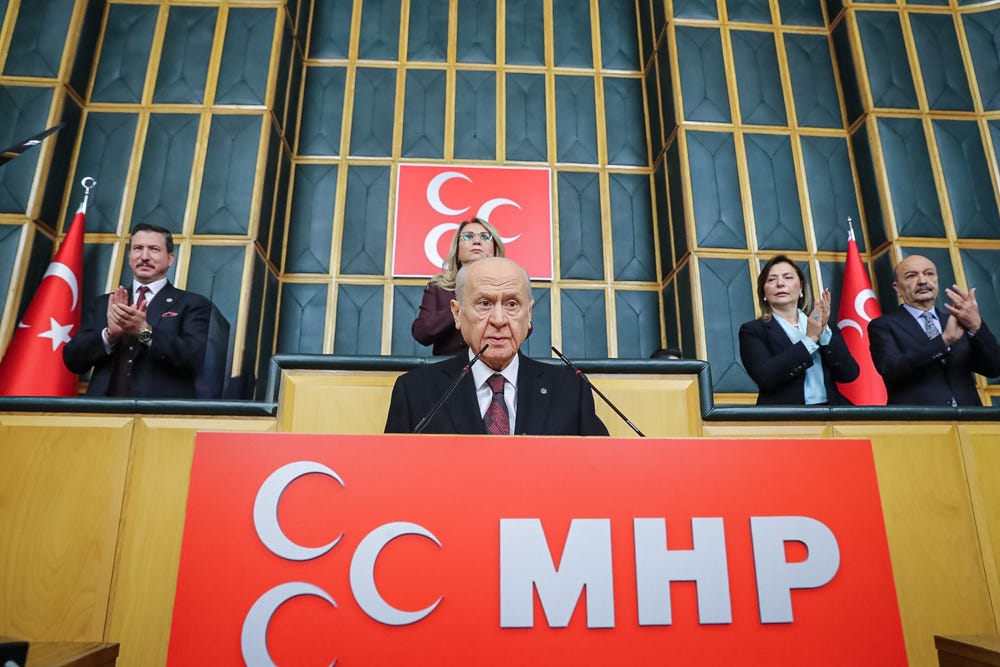
But the next steps in the Turkey-PKK peace process* remain unclear after various hints at possible openings and obstacles for the road ahead—as is characteristic of most statements by MHP chair Devlet Bahçeli, including the one he delivered Tuesday.
*Disclosure: This is your regular reminder that my wife is a DEM Party MP.
What happened: In his party’s parliamentary group meeting, Bahçeli simultaneously introduced three areas for progress and three areas for problems in advancing the peace process. Here’s a breakdown of what he said:
Legal regulations should be implemented “swiftly and transparently.” Though only after a “criteria” for monitoring the PKK disarmament is established, which may not be so swift.
The “two Ahmets” should be reinstated after a “re-evaluation” of the trustee system—in reference to Mardin Mayor Ahmet Türk and Esenyurt Mayor Ahmet Özer, who were removed from office on investigations that have since concluded.
The “status” of PKK leader Abdullah Öcalan should be “addressed”. He did not define what this means, but added the Kurdish rights movement’s umbrella organization, the KCK, must also dissolve as part of the peace process.
Pres. Erdoğan also weighed in during his AKP group speech Wednesday, stating the parliament would take a driving role “in the new phase” of the process and that no nation should “give us a lesson in minority rights”. See above: The Smurfs.
Response: Clarifying some of the above, veteran DEM politician Ahmet Türk told the BBC that Öcalan doesn’t expect to be released from Imralı, but improved prison conditions such as increased contact with “his organization” would “contribute to a permanent peace.”
“The important thing is for the government’s thoughts on the solution to the Kurdish issue to come to light. There is no need to twist or bend this matter,” Türk said.
“The government has a majority in parliament. If they wish, legal arrangements can be made, brought to the parliament’s agenda and the appropriate steps can be taken.”
A Milliyet report Wednesday potentially offered more clarifications, citing draft legislation that would first redefine “effective repentance” laws for PKK members involved in crimes and, second, issue a new regulation on prison sentences that would apply to PKK members.
Analysis: Speaking to Turkey recap this morning, Seren Selvin Korkmaz, co-founder and co-director of the IstanPol Institute, said the public has high expectations for tangible steps in the process, according to survey data and her own recent fieldwork in Diyarbakır.
“The initial cautious optimism has gradually shifted into cautious pessimism,” Korkmaz said. “What could restore trust are visible and implementable measures.”
Potential steps include the implementation of European Court of Human Rights (ECHR) and Constitutional Court rulings, as highlighted in last week’s recap. Ending the trustee practices and reinstating elected mayors could also serve as “concrete actions” to strengthen public confidence in the process, she said.
“While broader legislative reforms or return mechanisms may follow, rebuilding trust through these immediate steps is the primary requirement for sustaining societal backing,” Korkmaz said.
Regarding Bahçeli’s role in the process, she added he tends to introduce “politically sensitive ideas” to test public reactions and “expand the boundaries of debate,” but:
“His statements should be read less as isolated provocations and more as calibrated signals—potentially preparing the ground for subsequent steps,” Korkmaz told Turkey recap, stating the moves suggest a deliberate “role-sharing” within the ruling bloc.
“However, this does not resemble a pluralistic or broadly participatory peace architecture. Instead, it appears to be a tightly managed process conducted primarily among Erdoğan, Bahçeli and Öcalan, with political recalibration unfolding accordingly.”
Up next: DEM Party will mark the one-year anniversary of Öcalan’s Feb. 27 disarmament call by releasing a new statement from the PKK leader tomorrow.
This follows a meeting Tuesday between Parliament Speaker Numan Kurtulmuş and DEM Party leaders. Kurtulmuş has now met with all major parties to discuss the next steps. More details on those next week, inshallah.
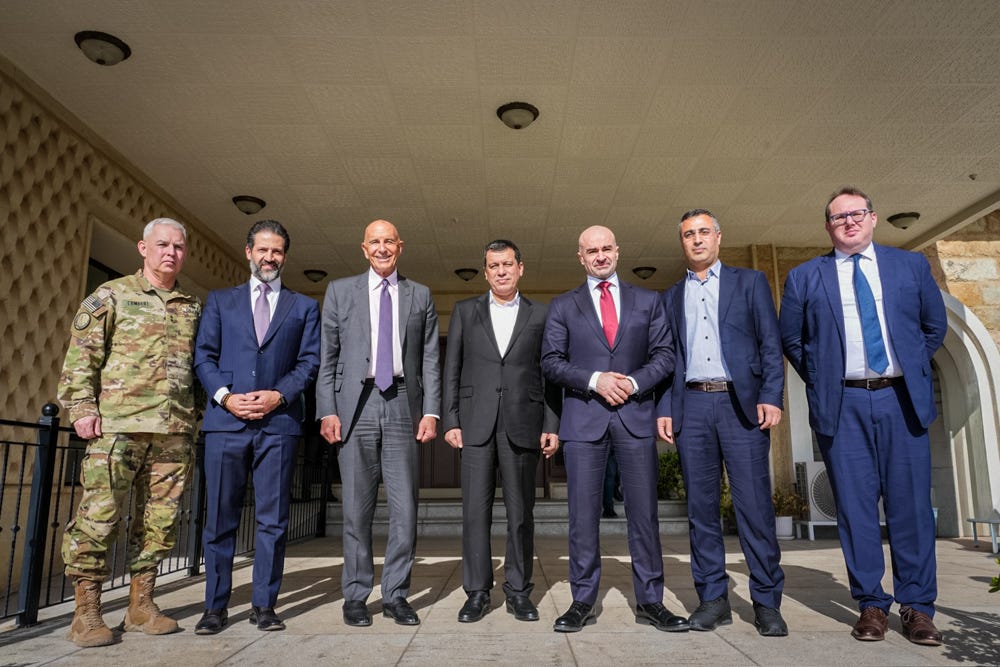
Barrack around Iraq: US Turkey and Syria envoy busy in Iraq
