


106 years ago today: Turkey’s first Grand National Assembly opened with great aspirations.
47 years ago today: TRT’s first International Children’s Festival aired with great disco gyrations.
Happy National Sovereignty and Children’s Day from Ankara! (and Şanlıurfa!!)
In this week’s recap:
Rutte visits Ankara, von der Leyen tests ties
US envoy scorned for anti-democratic comments
More CHP mayors removed from office
Domestic and diplomatic wraps
Sheep joins wild goat herd, owner bids farewell
Also from us this week:
Alan Makovsky gauges Ankara’s diplomacy pivot and US-Turkey ties on Recap radio
Yıldız Yazıcıoğlu on ‘absolute nullity’ and possible developments for the CHP
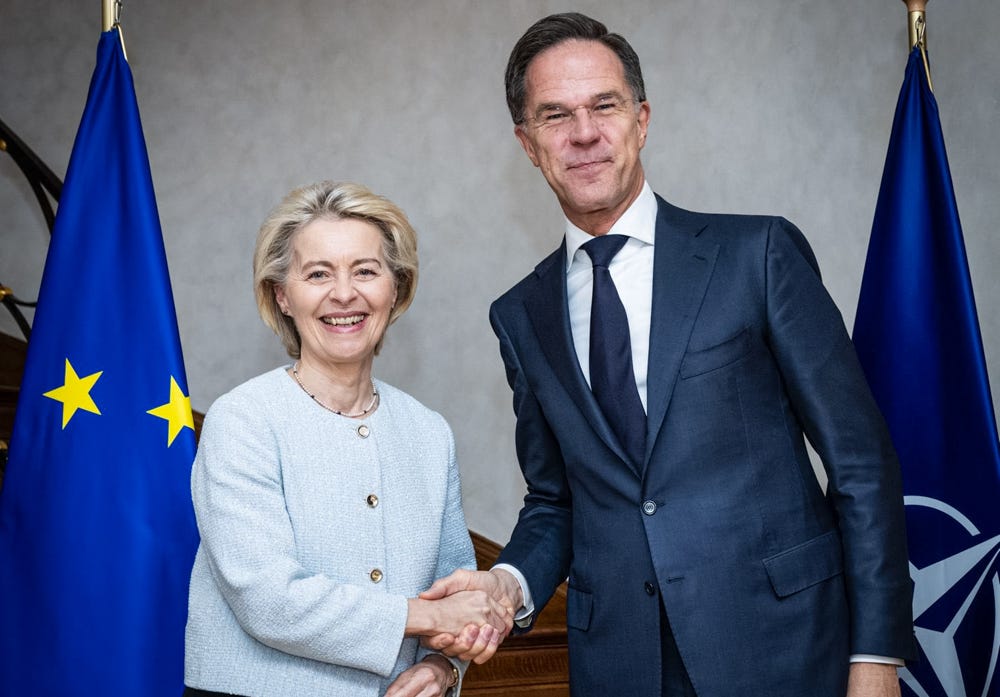
EU leaders are supposed to praise Turkey publicly and exclude it privately. European Commission Pres. Ursula von der Leyen broke protocol and put the NATO chief in a rut during his visit to Ankara this week.
In a conversation with Germany’s Zeit newspaper published Sunday, Leyen said:
“We must succeed in completing the European continent so that it is not influenced by Russia, Turkey or China. We must think bigger and geostrategically.”
The unusual language for an official EU candidate country comes as European nations seek to deepen defense cooperation with Turkey to help deter Russian threats amid ambivalence from Washington on transatlantic security guarantees.
To call it awkward timing does not begin to describe the polarizing effects in Brussels, where the spotlight returned to the EU’s inconsistent messaging and lack of unity on Turkey as NATO Sec. Gen. Mark Rutte was in Ankara … to bolster the Western alliance with Turkey.
Reactions: Damage control duties first fell on Paula Pinho, von der Leyen’s chief spokesperson, who tried to clarify the remarks with variations of this quote:
The Turkey reference was a “recognition of its geopolitical clout, size and ambitions — not least in the Western Balkans — and not meant as a comparison with any other country,” Pinho told Bloomberg.
In response, AKP deputy chair and spox Ömer Çelik issued a long list of criticisms for EU leaders in this interview with Anadolu Agency Wednesday.
“Turkey’s Balkan vision is based on peace, opposed to the divisive policies we call Balkanization and is more based on values. For von der Leyen to include Turkey among the countries she positions as opposed to the EU is a truly grave mental and political contradiction,” Çelik said.
Von der Leyen’s comment also did not pair well with statements by Marta Kos, the EU Commissioner for Enlargement, who Monday said: “We need Turkey in light of the changing geopolitical realities in Europe and the Middle East.”
Nacho Sánchez Amor, the European Parliament’s rapporteur on Turkey, was also critical. When asked if he thought the statements were intentional, he told Turkey recap:
“I don’t think von der Leyen purportedly wanted to depict Turkey as a threat on the same level as Russia and China, but if it is simply a misstep and not a mistake, it’s very enlightening about the attitude of von der Leyen — always dismissing and forgetting Turkey as a candidate country,” Amor said in a phone call Wednesday.
Rutte in Ankara: Local news channels covered the episode on a split screen as Rutte visited the Turkish capital this week in preparation for July’s NATO summit in Ankara — which got a new logo with the presidential palace on it, in what may be another unintended political message that offers deep insights on Turkey’s western partners.
While in town, Rutte met with Pres. Erdoğan, FM Hakan Fidan, Defense Min. Yaşar Güler and visited the facilities of Turkish defense giant Aselsan, where he praised the nation’s young engineers and ‘defense industry revolution’.
Analysis: Putting it all together, Turkey appears to be hedging on Europe by cooperating with Russia and China. Meanwhile, Europe is also hedging by both working with Turkey and taking precautions, said Dimitar Bechev, director of the Dahrendorf Programme at St. Antony’s College and author of the upcoming book The Scramble for Europe.
Bechev told Turkey recap that Ankara is pursuing “soft revisionism” with the end goal of having more power to modify the institutions and rules governing Europe. He noted this does not mean Ankara poses an existential threat to Europe.
“It [Turkey] seeks equal status and is against scrutiny into its domestic politics,” Bechev said, referring to the jailing of Istanbul Mayor Ekrem Imamoğlu and other political repression. “The EU’s response is to offer incentives for cooperation. Not fight back. Especially after Russia invaded Ukraine.”
He summed up the EU approach as an attempt to “Co-opt Erdoğan. Not contain him.”
Cooperation vs. candidacy: Asked to comment on what this all means for Turkey-EU defense cooperation, Nacho Sánchez Amor told Turkey recap:
A defense partnership “is convenient and could be important, but this idea that we need Turkey is exaggerated and it’s not depicting the real thing. Turkey has not been allowed to enter SAFE and nothing happened,” he said, referring to the EU defense program.
“Sometimes, we exaggerate … to compensate for the lack of commitment to the accession process,” Amor continued. “The more we underline the partnership … the less we underline the accession process and the status of Turkey as a candidate country.”
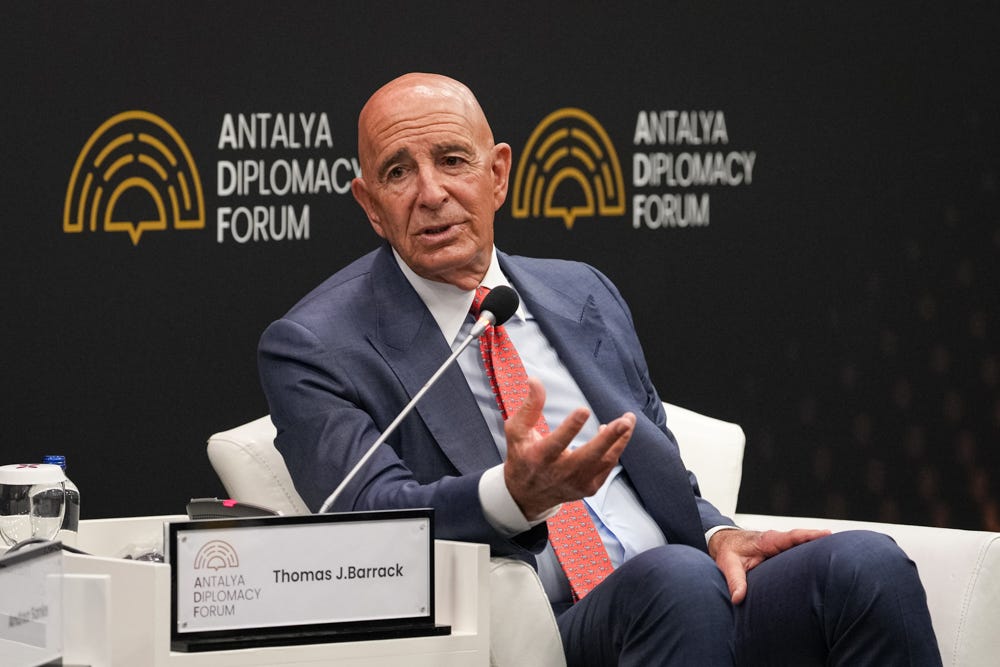
Show him the conquista-door: US envoy scorned for anti-democratic comments
