


Five years ago, European Commission Pres. Ursula von der Leyen couldn’t even get a chair in Ankara. Yesterday, she and other world leaders got personally engraved handguns. Reis-pect earned?
In this week’s recap:
Uncertainty lingers for US-Turkey jet deals
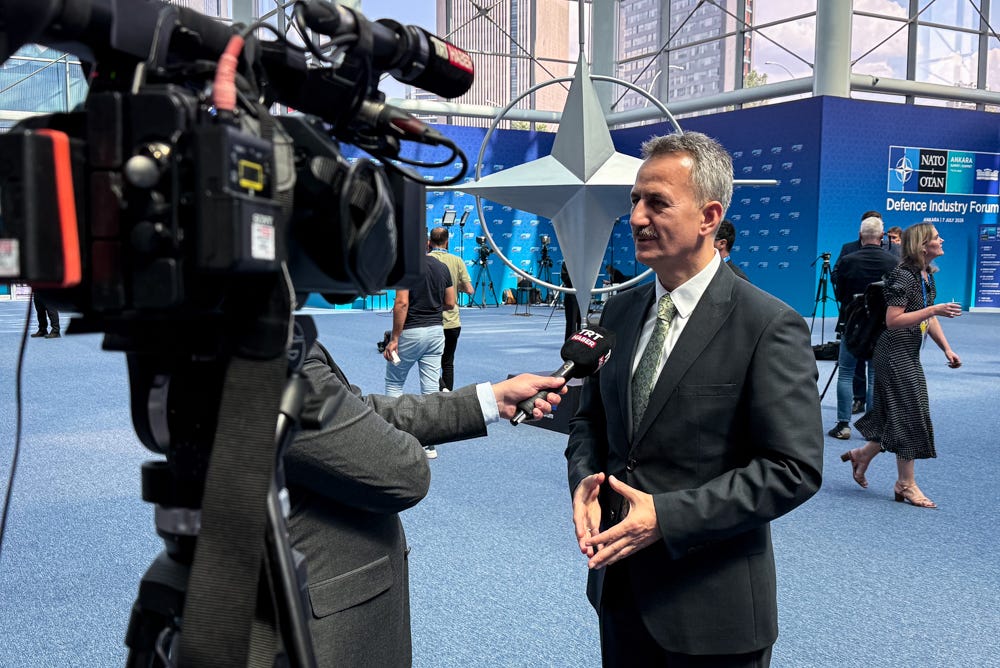
Turkish defense industry courts global partners
Domestic and diplomatic wraps
Everything else that trended during the summit
When he arrived at Tuesday’s Defense Industry Forum, a jet-lagged US Sen. Lindsey Graham ducked behind a staircase, took his shoes off and put his feet up on a chair, baring his dark blue socks to the Ankara NATO summit around him.
Reading this as an invitation, I asked if he expected any breakthroughs on a US jet deal with Turkey following news of possible engine sales and US Pres. Donald Trump’s tease about making Turkey “very happy.” Graham said not yet.
“We’ll have to see what Trump can do and how Congress reacts,” Graham told Turkey recap.
An apparently more caffeinated and more vertical version of the senator later told local media he was “open” to delivering F-35s to Turkey, a message echoed by other visiting US Congress members who expressed optimism with the usual, long-standing conditionalities on Turkey’s S-400 missiles and CAATSA sanctions.
Key discussions: A much-promised path for Turkey’s return to the F-35 fighter jet program remains clouded by uncertainties following a much-hyped Trump visit to this week’s Ankara NATO summit. While international focus was on the revived Iran conflict, alliance cohesion and increased defense spending, Turkey watchers awaited news on jet deals that have yet to materialize.
“I haven’t totally made up my mind,” Trump said in a press conference Wednesday, a day after saying, “We’re going to be taking the sanctions off [Turkey],” while sitting with Pres. Recep Tayyip Erdoğan, who gave a thumbs up.
Following Trump’s inconclusive speech, Erdoğan was asked to provide further details on the F-35 talks in a press conference last night. He dodged the question, stating, “Watch this space” or “Stay tuned” before adding Trump would follow through on his “promise” while answering a separate question.
Notably, Erdoğan said he’s still looking to secure US jet engines for the F-35’s domestic competitor, the KAAN warplane—which needs to be finalized now that Ankara’s Air Force Memorial Forest has been replanted in the shape of the national jet.
Separate from all of the above, there are ongoing talks concerning the export of the SAMP-T air defense systems to Turkey, according to French Pres. Emmanuel Macron.
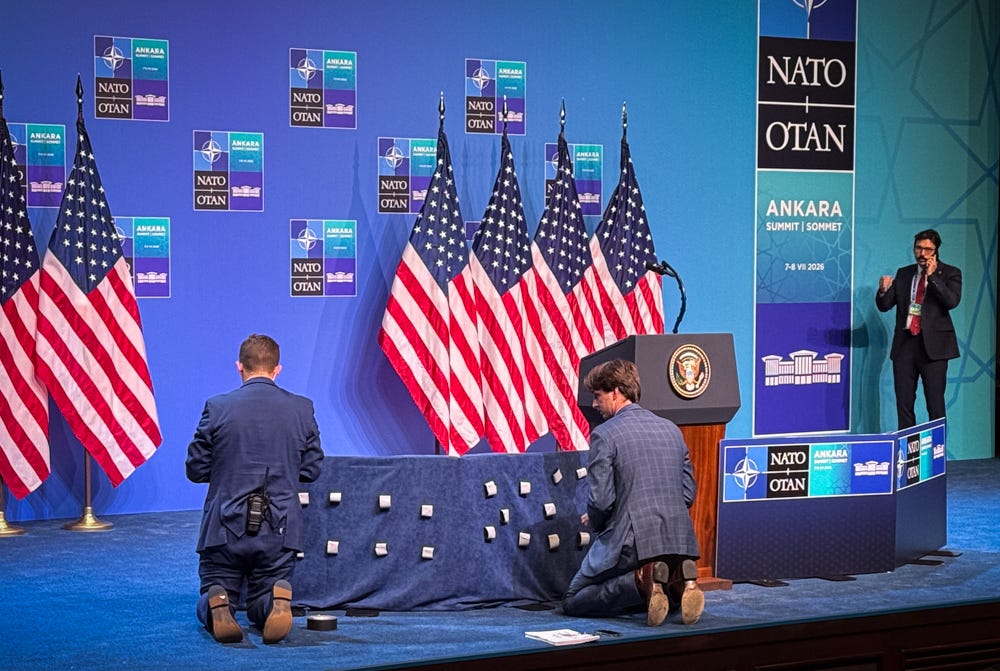
Key takeaways: Apart from the tarmac exhibition of Trump and Erdoğan’s personal ties, the Turkish takeaways from the summit included the exhibition of Ankara as a power center and Turkey’s participation in many of the announced NATO defense projects.
“Turkey, as a NATO country, is taking part in most of the announced projects, underlining its role as a top contributor to the alliance’s goal of expanding defense capacity,” a Turkish foreign ministry official told Turkey recap. “We are happy with the general outcome of the summit so far.”
The Ankara Summit Declaration text can also be interpreted as a boost for the inclusion of Turkey into more programs as leaders agreed to work on eliminating “defense trade barriers among allies.” Caveat: NATO Sec. Gen. Mark Rutte repeatedly insisted F-35s are a “bilateral issue.”
My takeaway: While the NATO family photos will transmit what happened in Ankara to the world, the police officers on nearly every Çankaya street corner and the endless billboards advertising music concerts and F1 racing transmitted another message to visitors:
The Turkish state is a capable partner and normal things happen here, too—just like in your country—despite the headlines about arrested opposition leaders, journalists and suspected dissidents. The billboards covered more than the cityscape.
Interview with Haluk Görgün: Turkish defense industry courts global partners
