


DIYARBAKIR—The signs of conflict are visible in Diyarbakır, the regional capital of the Kurdish-majority southeast of Turkey. The city’s distinctive black walls, built from volcanic basalt, bear the marks of bullets and shrapnel. In the skies, fighter jets and military helicopters still roar overhead several times a day.
Against this backdrop, the government introduced a peace bid in October 2024. Initiated by Devlet Bahçeli, Pres. Recep Tayyip Erdoğan’s key ally, the so-called “Terror-free Turkey” process, aims to finally end a 40-year insurgency.
But the peace negotiations between the Turkish state and the Kurdistan Workers’ Party (PKK) are faltering. More disagreements are surfacing that look increasingly insurmountable.
First and foremost is the fate of the Syrian Democratic Forces (SDF), a PKK-linked coalition that is currently fighting forces loyal to Pres. Ahmed al-Sharaa, who is backed by Ankara. Other issues include amnesty for PKK guerrillas, the release of Kurdish prisoners and the enshrinement of Kurdish cultural and political rights in the constitution.
Yet, even if politicians in Ankara and PKK guerrilla leaders manage to bury the hatchet for good, are the people ready to move on?
The PKK conflict has been the bloodiest and most polarizing in modern Turkish history. The violence has led millions to view the Kurdish struggle for rights as essentially terrorism and separatism. On the other side, millions view the Turkish state as an oppressor.
As the government in Ankara tries to force an end to the fighting, the people on the frontlines remain hesitant. The deep wounds of the last decade have left citizens on both sides unconvinced by the new initiative. Worse, they often have completely contradictory ideas of what has happened and the way forward—regardless of the outcome of ongoing clashes in Syria.
Scars of the fighting
Diyarbakır and the wider region offer a grim reminder of the cost of failed peace negotiations. A previous peace process was launched under Erdoğan in 2013. When negotiations broke down in 2015, heavy fighting erupted—this time not in the mountains, but in urban centers. By the time the Turkish army emerged victorious, the death toll was around 2,000.
“In 2015, there were very heavy clashes in Sur [Diyarbakır], Cizre and Nusaybin,” Ercan Yılmaz, head of the Human Rights Association’s (IHD) Diyarbakır bureau, told Turkey recap. “This resulted in a serious division between the Turkish and the Kurdish communities.”
He said existing tensions were amplified by the conflict’s high death count, which included civilians, PKK members, soldiers and police officers.
“From the perspective of the Turks, the loss of soldiers and police officers increased hatred towards the region,” Yılmaz continued. “On the Kurdish side, serious anger towards the state began to form over the civilians who lost their lives there.”
He went on, stating the dead ranged from 3-year-olds to elderly people aged 73 or 74. Bodies were at times left in the streets amid live clashes.
“Law enforcement officers tied the bodies of some PKK members to cars and paraded them through the streets,” Yılmaz said. “The trauma of all this is still very fresh. This is also true for the Turks. They lost loved ones in the clashes here.”
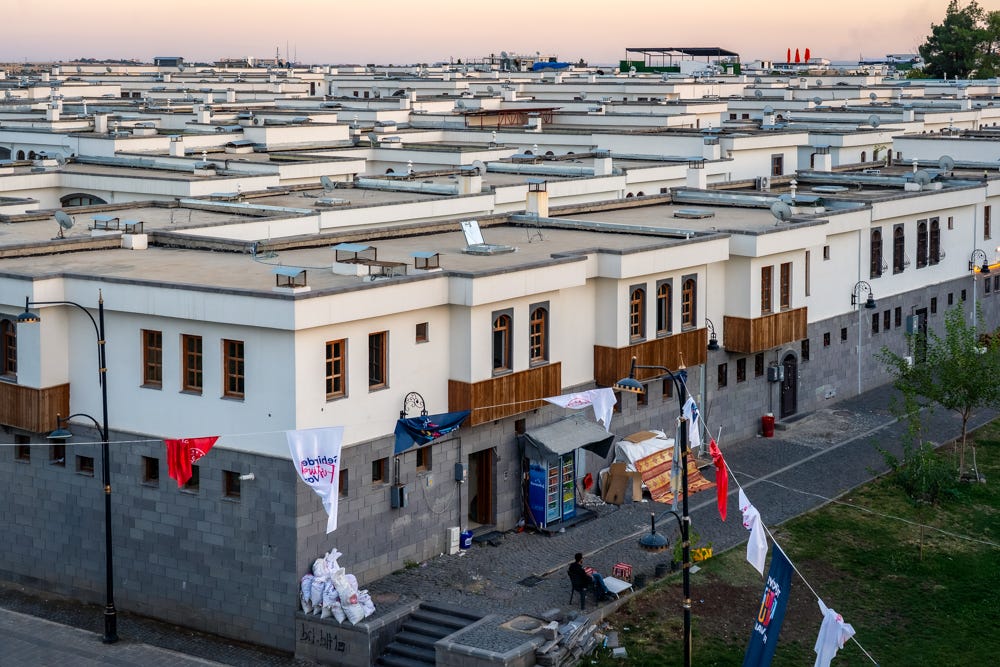
Parts of Sur, the old town in Diyarbakır, were heavily damaged in the fighting. What was left was bulldozed and replaced by faux historical buildings. Most locals talk of this neighborhood bitterly, often comparing its aesthetics to a prison.
‘An insult to the security forces’
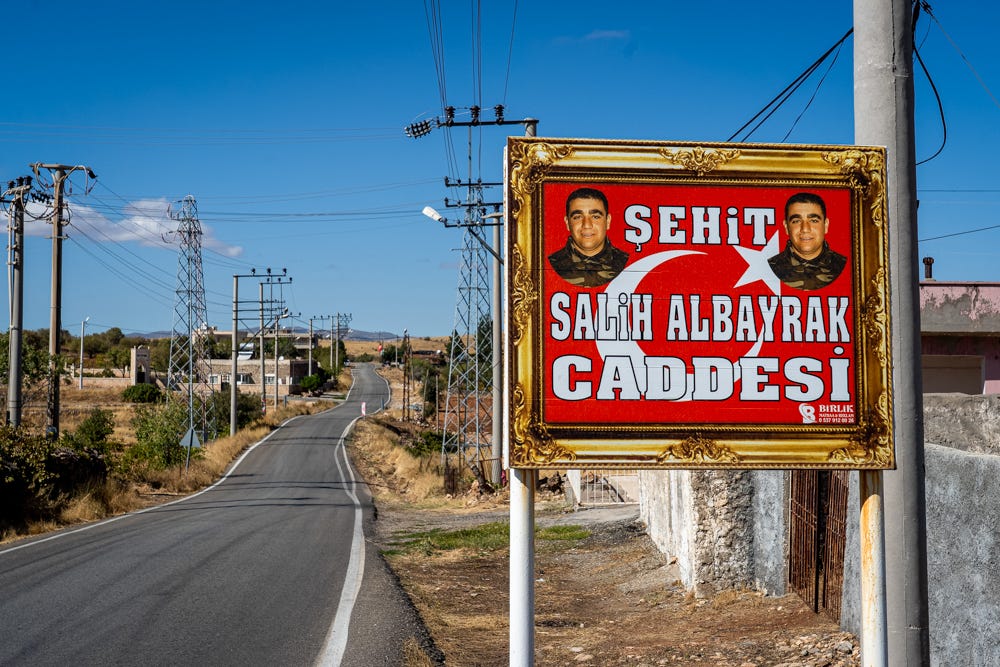
The point of view from the Turkish state is very different. Orkun Özeller is a retired colonel who served 27 years in the Turkish Armed Forces (TSK). He spent much of his service in counterterrorism operations against the PKK and was personally involved in the fighting that broke out in Diyarbakır in 2015.
“The urban warfare experienced during that period was unprecedented in the world,” Özeller said. “Neither the army nor the police forces had any experience with it. They found themselves in a new model of conflict.”
He continued, “However, if during the clashes security forces were to mistakenly kill a civilian on the street, the public could react and potentially start an uprising against the state. The Turkish military and police achieved the impossible: they succeeded by showing the utmost care and attention to prevent civilian casualties.”
Özeller is vehemently against the new peace process. He was even arrested for criticizing Bahçeli’s initiative in kickstarting the negotiations. Özeller spent 57 days in prison before his release in November last year.
“This discourse [of a ‘Terror-free Turkey’] put forward by politicians is actually like an insult to the security forces who have been fighting for 40 years,” Özeller said. “It is particularly unjust to the Turkish Armed Forces, who have been struggling with great sacrifice and devotion for 40 years, paying a heavy price to end terror in Turkey.”
“Which honorable state sits down at the table with a terrorist organization? As someone who has been involved in counterterrorism since 1993 and has personally witnessed and experienced peace processes on the ground, I do not believe it is correct for the state to engage in talks with a terrorist organization like the PKK.”
Empty villages
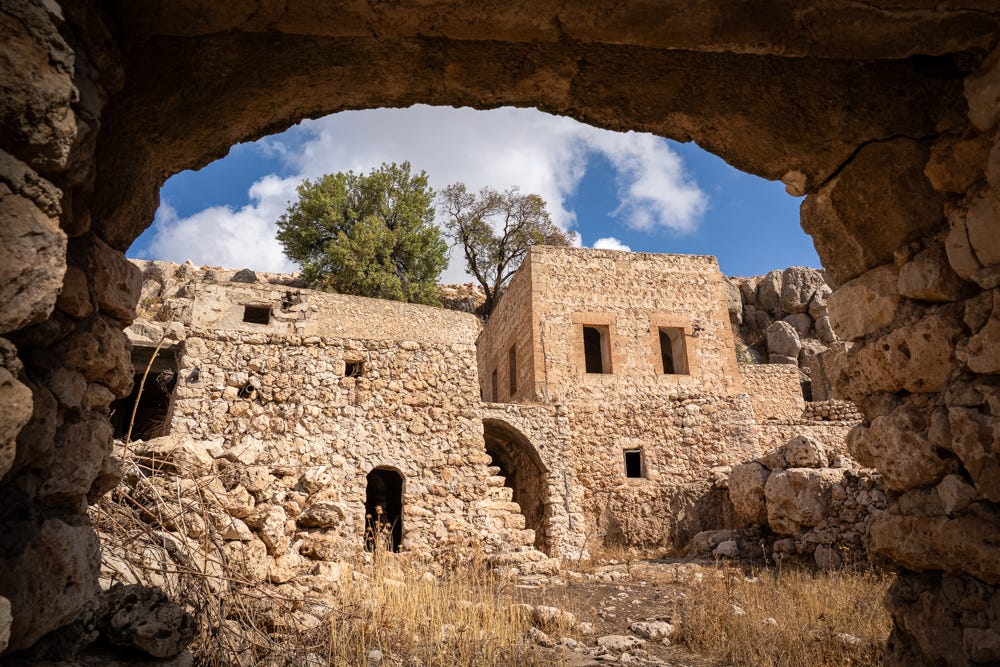
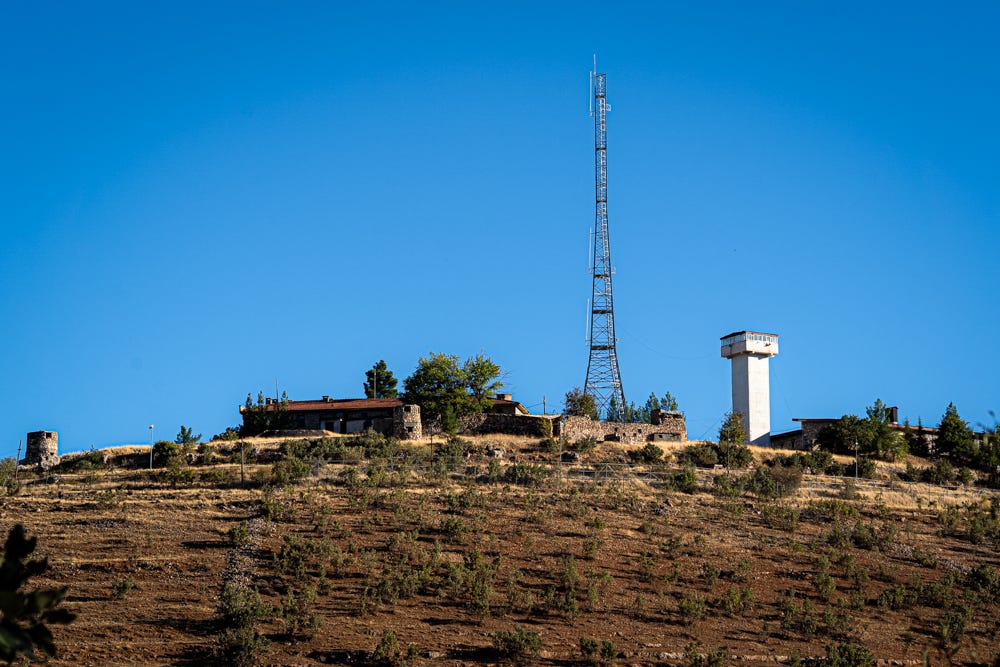
The countryside also bears the heavy marks of fighting. The region is littered with villages that were forcibly emptied by security forces on suspicion of aiding the guerrillas.
Over the past two decades, people slowly started to move back, but it is mostly the elderly looking for a quiet place to retire. In such villages, the skeletons of stone buildings outnumber renovated or newly built houses.
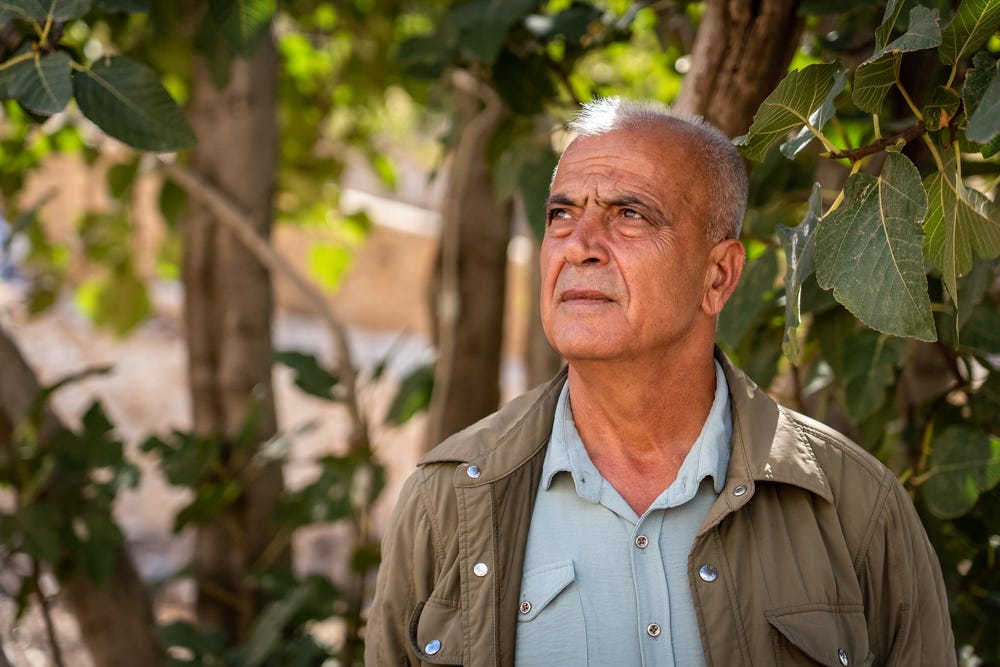
“Our village was emptied in the 1990s,” said Seyfi Tuncel from the village of Mağaraköy in Şırnak province. “We are Yazidis, we are a minority even here. No one protected us.”
Tuncel moved to Germany, where he lived for over three decades. He eventually returned to his village and rebuilt his house. But the rest of the village remains mostly abandoned.
“Germany is a good country to live in. There is democracy, there are human rights. But my grandparents’ graves are here. I missed those the most,” Tuncel told Turkey recap. “My kids say: ‘Why would we come back here? There are only stones.’ It is true that there is no work here. There are no factories left.”
“We love our state, and we have trust in it,” Tuncel replied, almost robotically, when asked about the peace process. “We are hopeful. We want peace—and want it very much so.”
Tuncel is not alone. Surveys conducted by IstanPol and Rawest research showed growing public support for the peace process, with 64 percent of participants backing the initiative in May 2025.
Those who paid the heaviest price
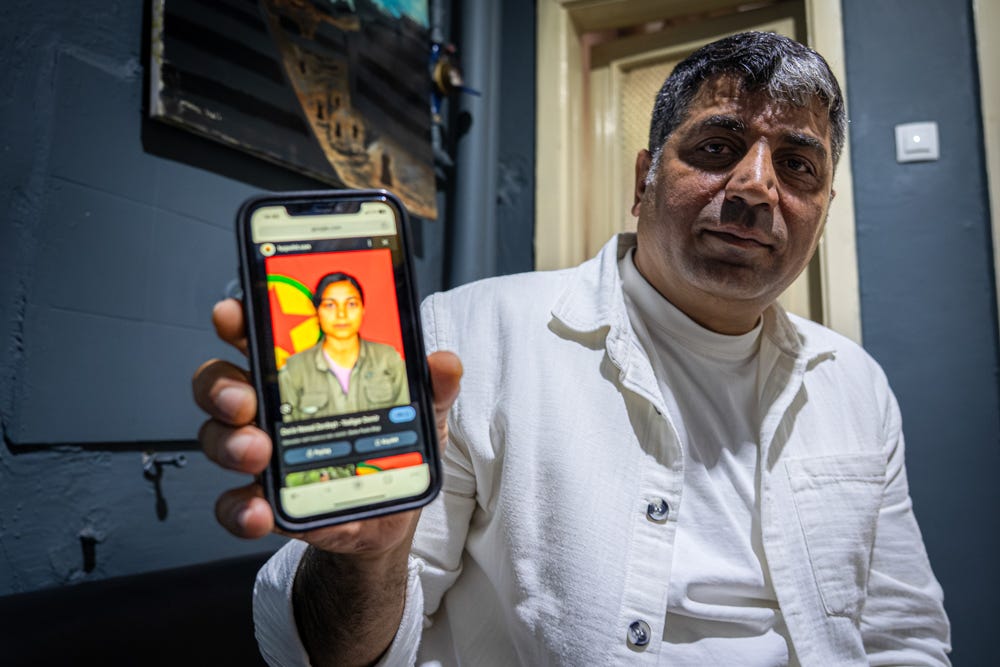
The deepest wounds left by the fighting were not on the land and buildings, but on the people. Siyabend Demir had three siblings who joined the PKK and died fighting. While Demir never joined the PKK, his political life is defined by his membership in Turkey’s pro-Kurdish DEM Party.
“I still see them in my dreams, that they return,” Demir said. “At some point, we knew they wouldn’t come back as we saw their bodies. But even if all their friends who lived there, who stayed there, were to return, it would be incredible news for us. They would be, so to speak, balm for our wounds.”
Demir’s trauma with the state goes back decades.
“They took my father during a raid on our house in 1993. They made us all lie down on the ground. We were children. Right before our eyes, they pressed a gun against my father’s back and took him away. I prayed so much that my son would not have to go through this. I prayed so much that my son would not see what I saw.”
“But last year, on November 27, they raided my house again, using the PKK’s founding anniversary as an excuse,” Demir told Turkey recap. “They took me away and held me for four days. They laid my son on the ground with me and pressed a gun against his back. I told my son, ‘Don’t be afraid, son. There’s nothing, nothing at all, don’t be afraid. These are all your brothers, your uncles; they were just told to go do this.’”
When asked if he is ready to forgive and reconcile with the state after his experiences, Demir replied positively:
“I never resent the police, not even the officers who arrest me or raid my home … I know they are not the ones to blame. It is the laws, rules and regulations approved in Ankara that put them there. If those laws are amended, they will accept me, too.”
He added, “I wholeheartedly believe in peace, brotherhood and how we can live together. Those who lose the most can win the most.”
Still, he stressed that both sides need to admit their mistakes, and the Kurdish people must be given cultural and political rights. He is skeptical regarding the state’s willingness to compromise, yet is certain that one way or another, the armed struggle will turn into a peaceful, political one.
“The constitution of the Republic of Turkey states that everyone living in Turkey is Turkish,” Yılmaz said back at the IHD office. “This is a lie, a huge lie. I am not Turkish, I am Kurdish. My mother and father are Kurdish. My grandparents are Kurdish.”
“No one in my family belongs to the Turkish identity,” he continued. “When I look at my family tree, I am a member of a family that has lived in Diyarbakır for 800 years. But the constitution defines me as Turkish. This is unacceptable. Serious reform is needed on these issues.”
Some are not ready to forgive
While Yılmaz and Demir argue for political reform and reconciliation, others cannot envision peace with a group they view solely as murderers.
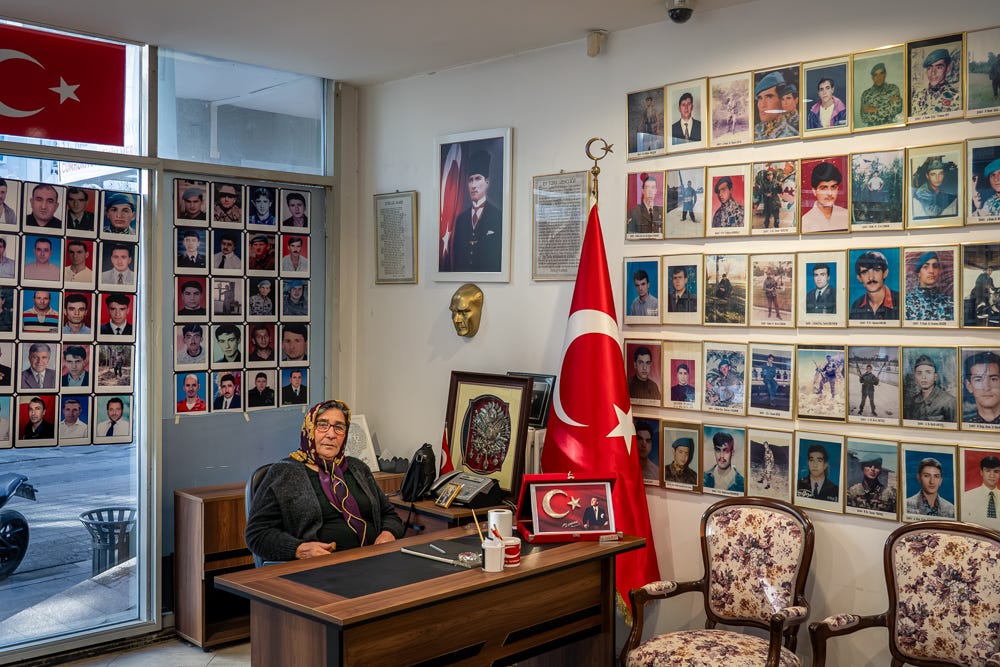
Among them is Pakize Akbaba, for whom time stopped moving 33 years ago, when her son, Ayhan, was struck by seven bullets while fighting the PKK. She still breaks down in tears when talking about her fallen son.
Akbaba leads the Martyrs’ Mothers Association in Istanbul. Their office, where she spends her days, is like a museum dedicated to all the fallen soldiers.
“Now I can no longer see his face,” Akbaba said while quietly weeping. “I will never see my child again. You want to talk, but you cannot hear his voice. You want to hug him, but you cannot reach him. You can only imagine him through the scent you smelled in the past, or the moments you spent with him in your mind.”
“No one can forgive the murderer of so many martyrs. No one has the right to do so!” she continued, her grief shifting into anger. “There cannot be such injustice in any country. A mother cannot forgive her child’s murderer, the murderer of her baby. It is impossible. I will not accept it.”
She hates the PKK’s leader, Abdullah Öcalan, with a passion, referring to him only as the “baby killer.” For long years, it was the term pro-government media constantly used for Öcalan and anyone slightly sympathetic to his cause.
Then, with the initiative of the ultranationalist Bahçeli, the narrative shifted from “baby killer” to “the founding leader of the PKK, Mr. Öcalan.” This naturally created some confusion in nationalist political circles.
“If those bullets had been fired at your child, would you have accepted it? Were those bullets fired at Bilal [Erdoğan]?” Akbaba continued. She asserted that all the other mothers of fallen soldiers she knows are equally against this process.
“I am 70 years old, I have seen many governments, but I have never seen an official or a party that has done as much harm to Turkey as this one,” she said, referring to Erdoğan and the AKP.
However, on the issue of Kurdish rights, she sees no problems.
“When Atatürk founded the Republic of Turkey, he granted equal rights to all citizens living in the Republic of Turkey. We have been experiencing and witnessing this for a hundred years. For example, we have married off our daughters to Kurdish citizens. We cannot condemn this. We cannot view it with hostility.”
Turkey recap is an independent, reader-supported newsletter that helps people make sense of the fast-paced Turkey news cycle. Contact us: info@turkeyrecap.com.
Subscribe here on Substack (or on Patreon for discount options). Paid subscribers get full access to our recaps, reports, members-only chat and news tracking tools.
We are an affiliate of the Global Forum for Media Development and aim to produce balanced news that strengthens local media by supporting journalists in Turkey.
Diego Cupolo, Editor-in-chief
Emily Rice Johnson, Deputy editor
Ceren Bayar, Parliament correspondent
Yıldız Yazıcıoğlu, Parliament correspondent
Günsu Durak, Stüdyo recap editor
Demet Şöhret, Social media and content manager