



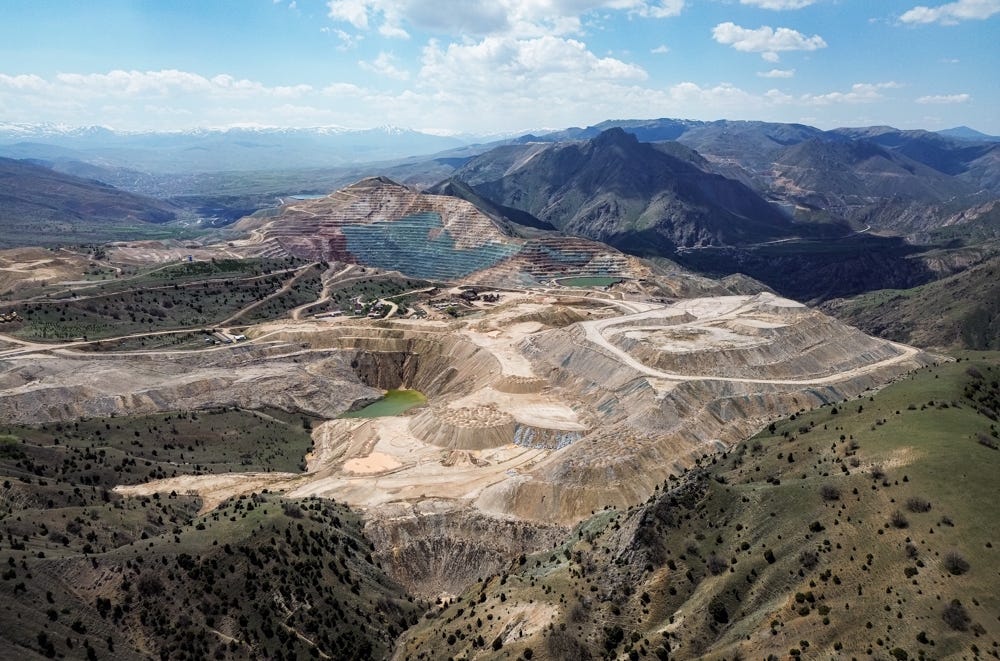
SOMA—Drive out of any city in Turkey, and you will soon encounter whole chunks of the landscape missing. Hilltops, ravines and gorges are violently carved away for their limestone, marble and gravel to fuel the country’s construction sector. Elsewhere, some of Anatolia’s most iconic natural areas have turned into toxic open pits to extract high-demand gold and rare earths.
Such scenes will multiply across Turkey following sweeping overhauls of the country’s mining legislation over the past year. Previously protected forests, farmland and villages have now been opened for companies to locate and extract lucrative minerals.
Officials in Ankara claim this rush is necessary to attract foreign capital, boost exports and breathe new life into Turkey’s stalling economy. But environmentalists and activists warn that an era of unsustainable extraction has been unleashed, which could pose severe harm to Turkey’s remaining natural landscapes and rural economies.
“If things continue at this pace, a huge share of Turkey’s mineral resources will be depleted by 2050,” said Levent Büyükbozkırlı, a researcher with the environmental group Polen Ecology Collective, which tracks Turkey’s mining activities. “This will erase villages’ livelihoods and inflict massive, irreversible damage to nature.”
Buried wealth
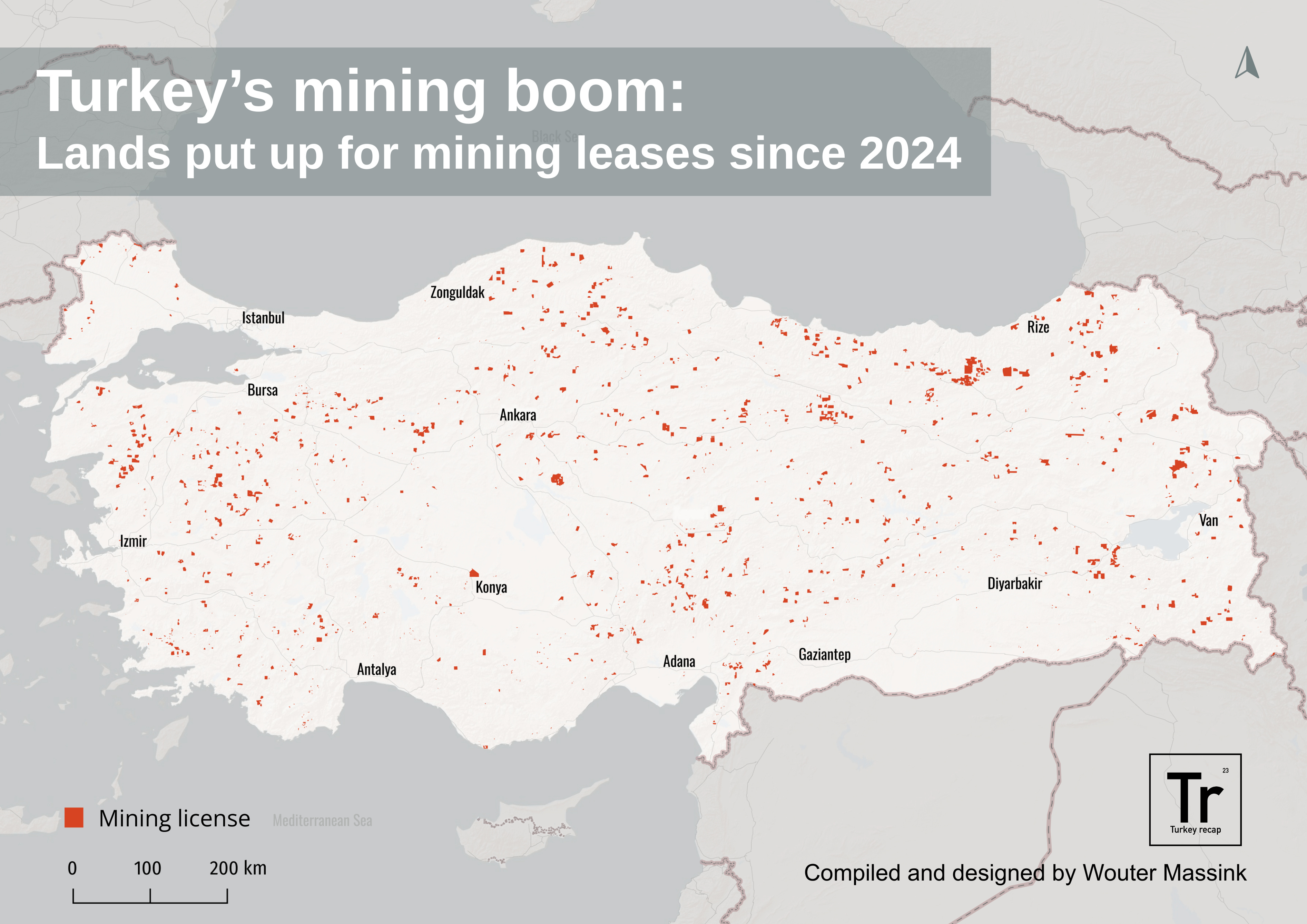
Turkey ranks among the most mineral-diverse countries in the world. Some geological surveys estimate $3.5 trillion in mineral wealth remains buried. To tap this potential, over 1.4 million hectares of mining area have been put up for tender since 2024, Turkey recap calculated based on government data.
This equates to 1.5 times the size of the entire island of Cyprus and excludes the sprawling number of illegal or non-tendered mining operations. Companies purchased licenses for mining activity across about half of this territory, Büyükbozkırlı told Turkey recap.
These tenders come in the wake of a controversial 2025 law and ongoing amendments that have fast-tracked mining operations by stripping back environmental regulations and centralizing decision-making within the presidency.
“While drafting the law, we said that we needed to make it attractive for investment,” Turkey’s Energy and Natural Resources Minister Alparslan Bayraktar said during a budget meeting in November 2025.
Lobbyists argue these reforms are accelerating mineral exports, which are projected to cross $10 billion in 2026, nearly double the 2024 level. This growth would help narrow Turkey’s chronic trade deficit, with energy and mineral imports accounting for roughly 40 percent of the imbalance.
To close this gap, Turkey intends to triple gold production from 28 tons to 100 tons annually, “without compromising human health and the environment,” Bayraktar stated. The country is also trying to position itself as a major extractor of rare earths—minerals in high demand for their use in electric cars, the defense sector and clean energy. Some, however, remain skeptical of the potential.
“Rare earth elements are an urban legend,” economist Mustafa Sönmez told Turkey recap. “If something like that really existed, why would they have waited until now to go after it? In short, there’s nothing but empty talk. What you actually have is massive environmental damage being done in the name of mining.”
Environmental threats
Almost all mining areas auctioned this year fell into groups that include stone quarries and metallic ore extractions. About 500 Group IV mining licenses, which include gold and rare earths, were put up for sale in 2026 for an area covering roughly the size of Istanbul province.
Group IV contains Turkey’s most valuable minerals, but their extraction involves intense water usage, open-pit mining and tailing ponds to store toxic slurry. Cyanide is also used to recover gold from massive amounts of low-grade ore that would otherwise be impossible to process.
“[Cyanide] poses a grave threat to the environment, nature and every living creature,” Başaran Aksu, a representative of Turkey’s Independent Miners’ Union, told Turkey recap.
Aksu further noted that these dangers are compounded by Turkey’s substandard occupational health and safety regulations and environmental inspections.
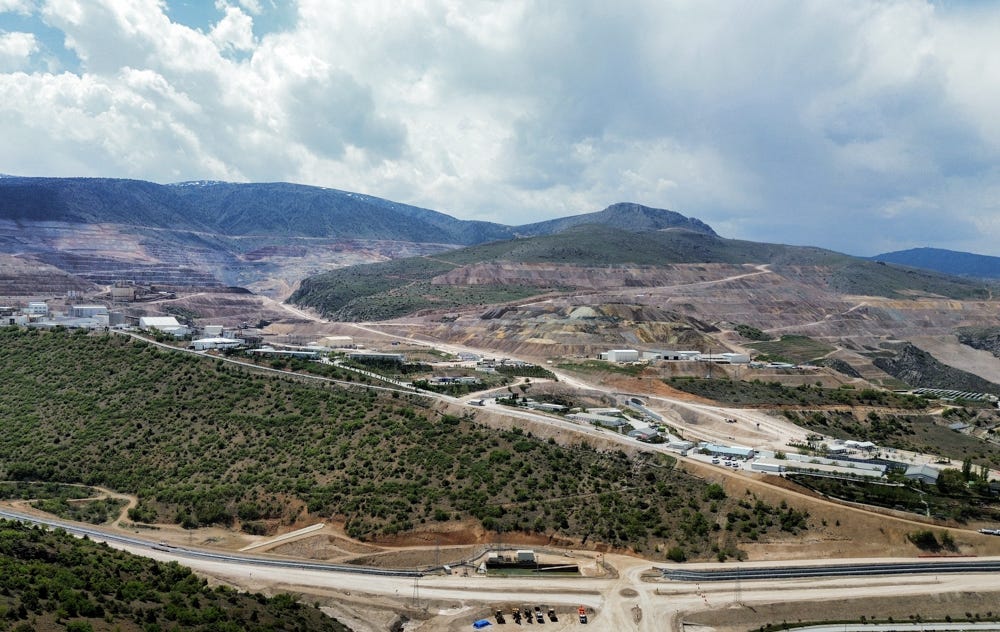
In 2024, at a gold mine in Iliç, Erzincan, a heap leach collapse killed nine workers and sent an estimated 10 million cubic meters of cyanide-laced soil toward a tributary of the Euphrates River. A few months before the disaster, a routine government inspection failed to detect flaws in the heap-leach pile.
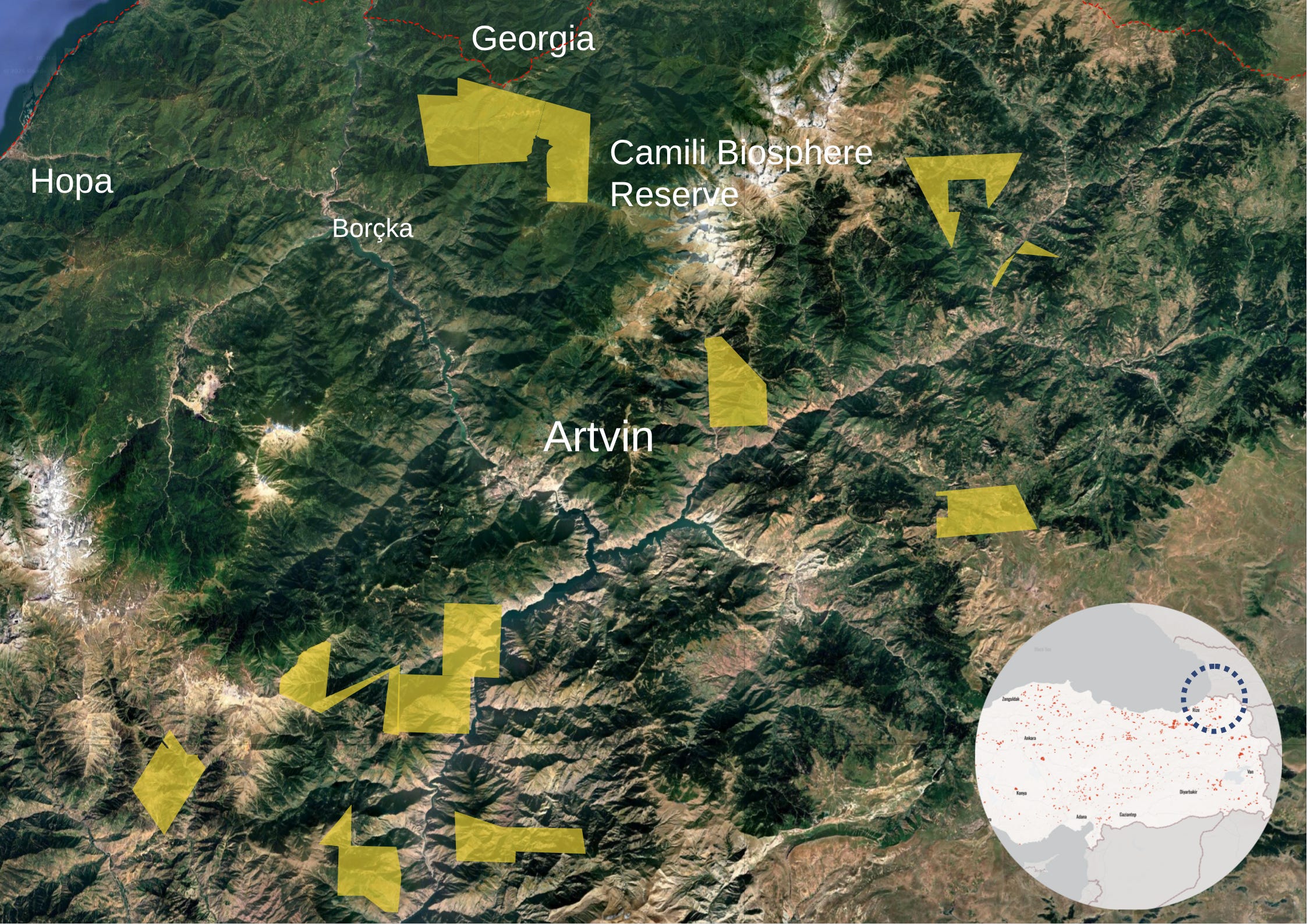
Many of the sold-off parcels encompass rivers, agricultural land, pastures and olive groves. Several are also only a stone’s throw from major residential areas, and numerous villages that fall directly within the zones could soon face expropriation.
In Mount Ida (Kazdağı), Ahlatcı Holding, one of Turkey’s main gold exporters, acquired a mining license last month for an area the size of nearly 3,000 football fields. The group is owned by Ahmet Ahlatcı, whose nephew is ruling Justice and Development Party (AKP) lawmaker Yusuf Ahlatcı.
Besides being a place of great natural beauty, it is also here that in Homer’s Iliad, Zeus and the fellow gods watched the events of the Trojan War in the nearby Çanakkale province.
Yusuf Ahlatcı voted in favor of last year’s deregulation bill to pave the way for mining in protected areas. This new law further sidelined Turkey’s Environmental Impact Assessment (EIA) system by skewing the process to guarantee positive reviews.
“I do not think the current mining policy will be sustainable because every place is being opened to mining with unsupervised, recklessly granted permits,” environmental lawyer Arif Ali Cangı told Turkey recap.
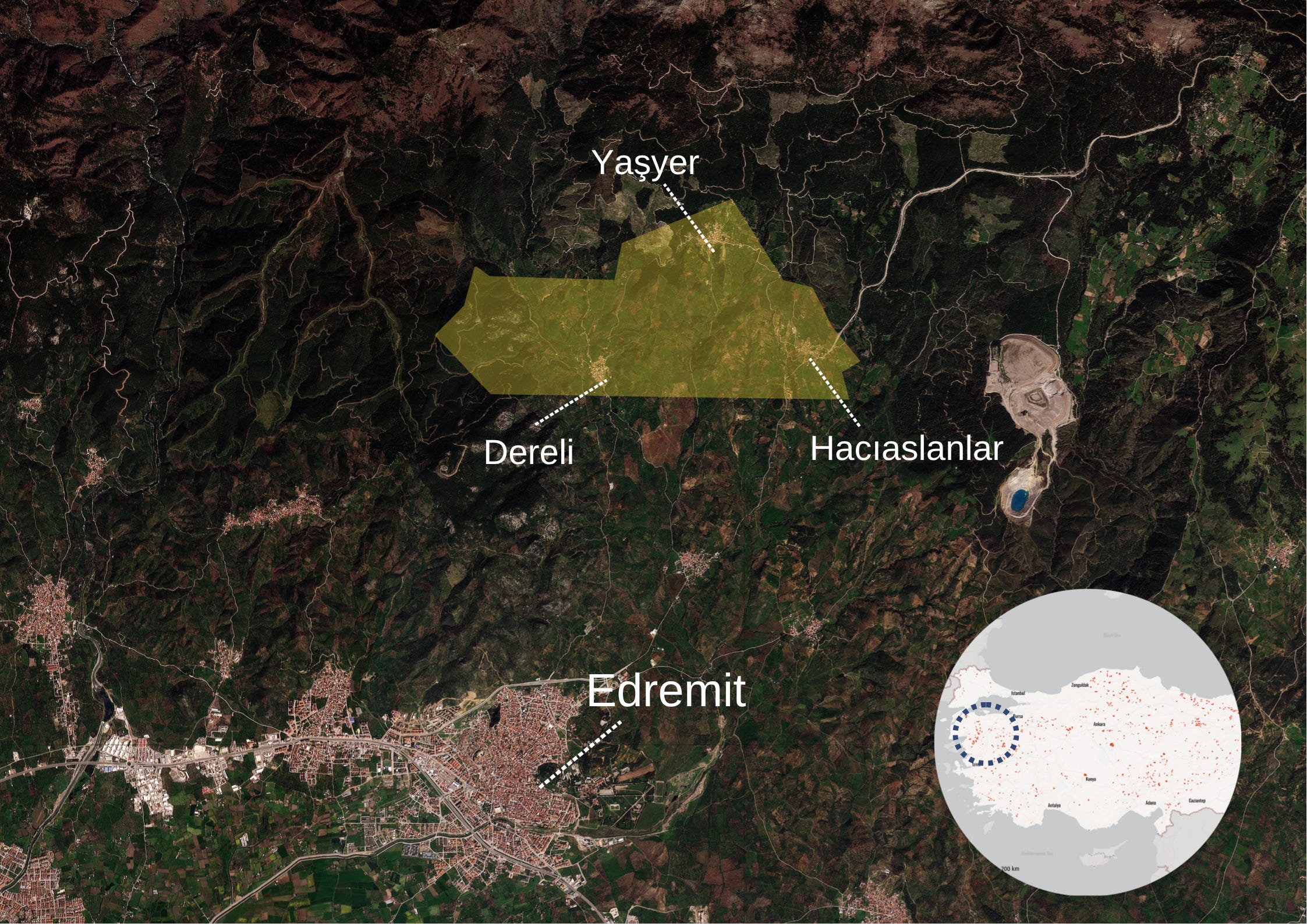
Meanwhile, halting these mining ventures through the court is also becoming more futile, Büyükbozkırlı argued.
“We still win cases initially, but then the companies appeal, go around the rulings, bypass them,” Büyükbozkırlı said. “The system has developed all sorts of new mechanisms to get around these obstacles.”
This includes exempting mines from EIA requirements entirely, a loophole that allows corporations to proceed without proper scientific evaluation. Data from Polen Ecology Collective show that a majority of Turkey’s mines do not hold an EIA.
“[These] projects are moving much faster without public participation, democratic oversight or proper consideration of their environmental impacts,” Derya Sever, a fellow researcher at Polen Ecology Collective, told Turkey recap.
Last month, the government’s anti-disinformation unit denied allegations that vast swathes of land had been licensed for extraction. It said that mining operations account for only 0.18 percent of the country’s surface area, and that this work is done according to the principle of “people first, then the environment, then value-added mining.”
“Currently, there isn’t practically any investment or activity at this level of intensity of licensing,” Aksu said. “Permits are being granted to companies for mining operations over a very widespread area. However, the practical implementation of this—drilling and establishing production facilities—such investments are more limited.”
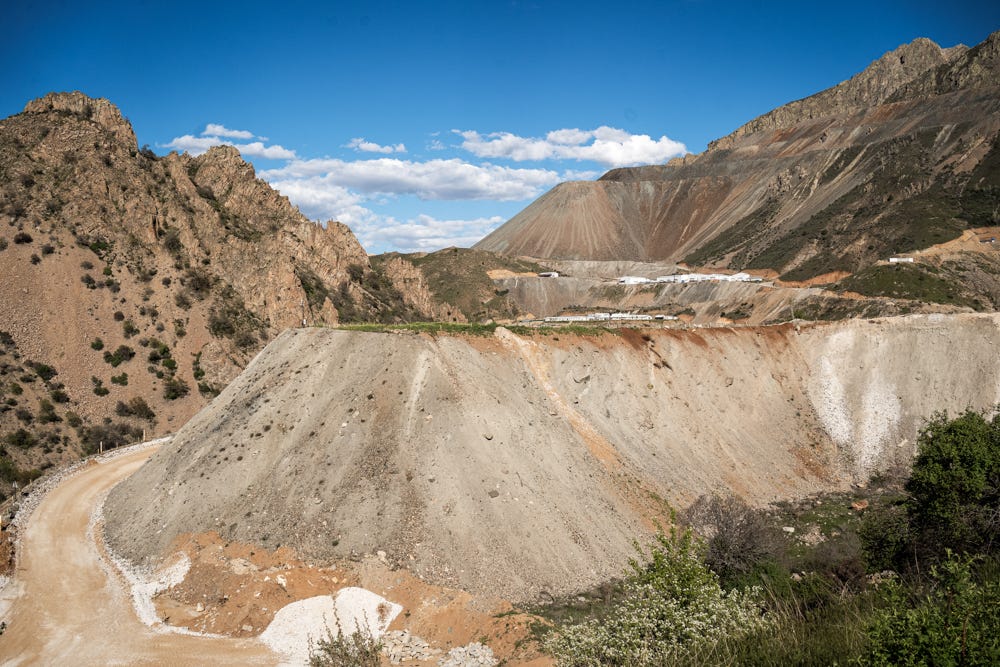
Implications on the ground: Soma
One of the regions that knows the cost of mining extraction is Soma. The small town nestled in the hills near the Aegean coast was once famed for its Turkish tobacco plantations.
“Nobody wanted to become a miner,” explained Süleyman Çetin. Like the generations before him, he was destined to become a tobacco farmer. But when, in the early 2000s, the appetite for foreign tobacco blends took over, and the coal pits got privatized, he, like many other men, had nowhere else to go.
“Once we stopped earning a living, we were systemically turned into miners,” 40-year-old Çetin told Turkey recap. Instead of growing crops, he is now operating a 35-ton machine deep underground, cutting out blocks of coal 6 meters wide.
Çetin has little hope for Soma’s future. Coal fueling the nearby thermal power plant pumps out toxic ash, ravaging local crops and causing cancer rates to skyrocket, locals claim. The regional hospital lacks the specialists required to treat respiratory illnesses plaguing retired workers.
“The biggest physical toll on miners are occupational diseases like pneumoconiosis,” recently retired miner Durmuş Olgunsoy told Turkey recap. “As far as I know, we don’t have a single case officially certified by a doctor.” He added that they write it off as “lung problems.”
Coal in the region is slowly running out. In the past, miners had to walk 500 meters in underground tunnels to get to the extraction site. Now it is 3 to 5 kilometers. The lower they descend, the harder and more dangerous the work becomes. Vast expanses of groundwater have to be pumped out each hour. Levels of methane gas also increase with depth.
In 2014, the worst happened. On May 13, a fire broke out in the Eynez coal mine of Soma. Hundreds of miners were trapped in the smoke deep underground. Olgunsoy was supposed to be working there that day, but decided to take a leave the day before.
“I heard that something happened around 2:30 pm. I immediately went straight to the mine. When I got there, the place was in total chaos—smoke was coming out of the chimneys,” Olgunsoy said.
“We evacuated our friends who were in the area without smoke,” he continued. “We couldn’t reach our friends in the smoke-filled area. We tried to establish underground contact by phone, but it didn’t work. In the late afternoon, we went in with masks and saw our friends’ bodies there, let me put it that way. We left them and tried to search for the living.”
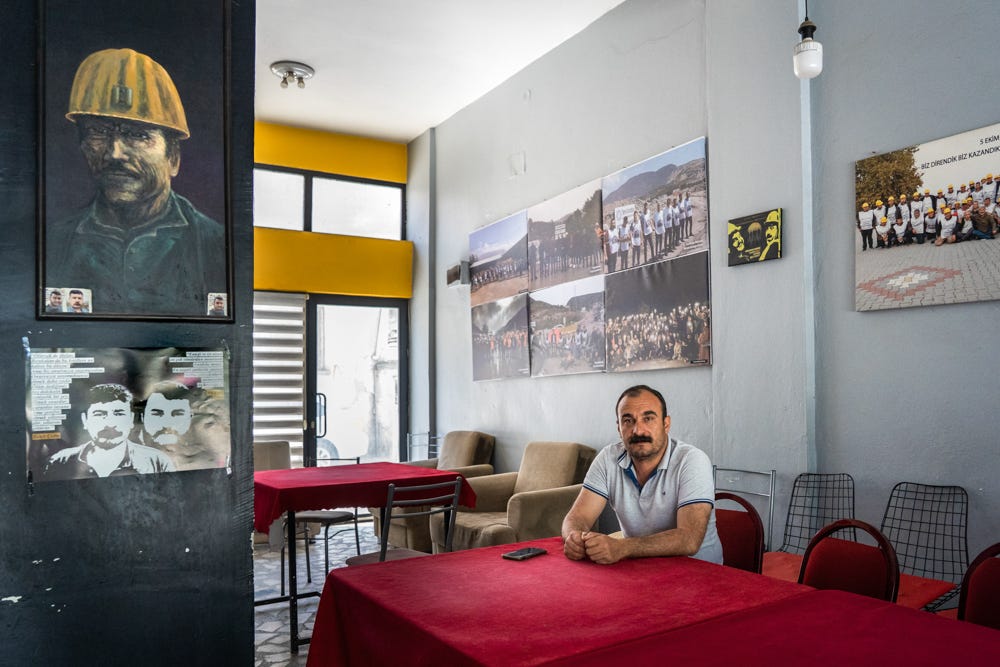
That day, 301 miners died in the shafts. The accident became a symbol of corporate negligence and poor government oversight in contemporary Turkey. It was followed by widespread public anger and political unrest. Protestors, marching with placards saying, “It was not an accident, it was murder,” were met with teargas and water cannons. In March 2026, public officials implicated in the disaster saw their charges dropped after the statute of limitations ran out.
Also in Soma, new plots have been opened for licensing, and expansions are ongoing. But better working conditions remain lacking, Olgunsoy argued, as companies are solely interested in profit and try to cut back on labor costs wherever they can.
“The companies buying [new sites] are like, ‘these minimum wages and labor costs are way too high for us,’” Olgunsoy said. “They’re trying to run things with the fewest workers possible.”
Following the Soma disaster, new legislation guaranteed underground workers a salary of at least twice the gross minimum wage. Yet those earnings are frequently delayed or denied entirely. “It seems there isn’t a single mining operation that’s completely trouble-free,” Aksu said, who was detained last month during Turkey’s largest mining protest in recent memory over withheld pay.
“I used to love my job because of the production,” Olgunsoy said. “I thought we were receiving the state’s support, and that we were supporting the state in return,” he continued. “We felt proud of ourselves, proud of our profession. We could have had better conditions, but well—let’s just say this is how much value the state placed on us.”
Turkey recap is an independent, reader-supported newsletter that helps people make sense of the fast-paced Turkey news cycle. Contact us: info@turkeyrecap.com.
Subscribe here on Substack (or on Patreon for discount options). Paid subscribers get full access to our recaps, reports, members-only chat and news tracking tools.
We are an affiliate of the Global Forum for Media Development and aim to produce balanced news that strengthens local media by supporting journalists in Turkey.
Diego Cupolo, Editor-in-chief
Emily Rice Johnson, Deputy editor
Yıldız Yazıcıoğlu, Parliament correspondent
Hilmi Hacaloğlu, Political correspondent
Gözde Ocak, Stüdyo recap editor
Demet Şöhret, Social media and content manager
This article is part of a series of reports focusing on Turkey’s climate governance produced with support from the Heinrich Böll Stiftung Turkey Office, and in no way reflects the views of the Heinrich Böll Stiftung.