



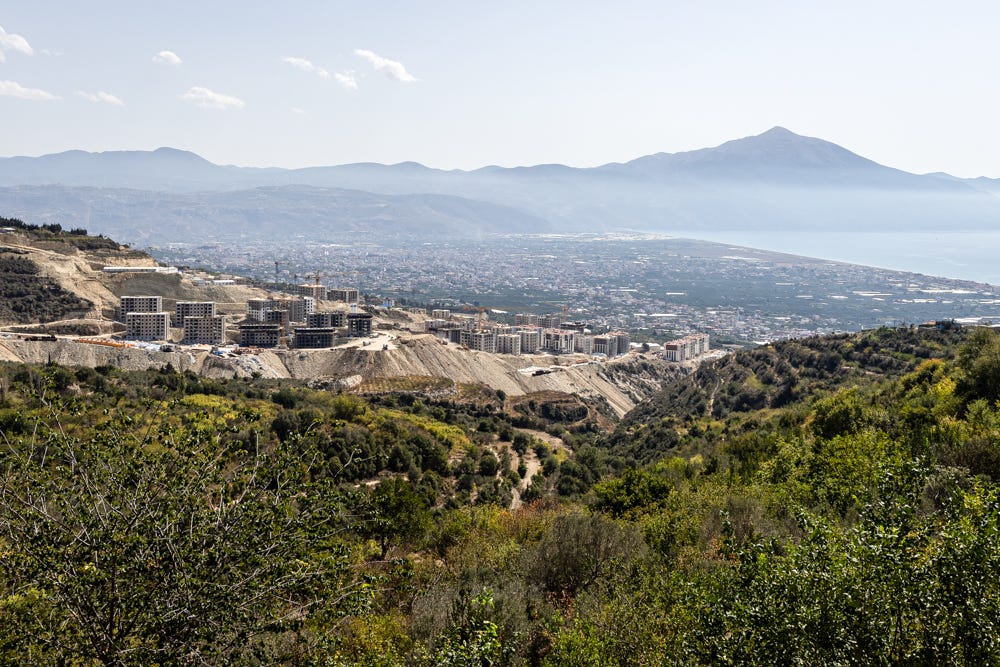
SAMANDAĞ—From a restaurant on the road that links Antakya and Vakıflı, the views towards Mount Musa are spectacular. You can also see the Mediterranean in the distance. However, this landscape is changing rapidly.
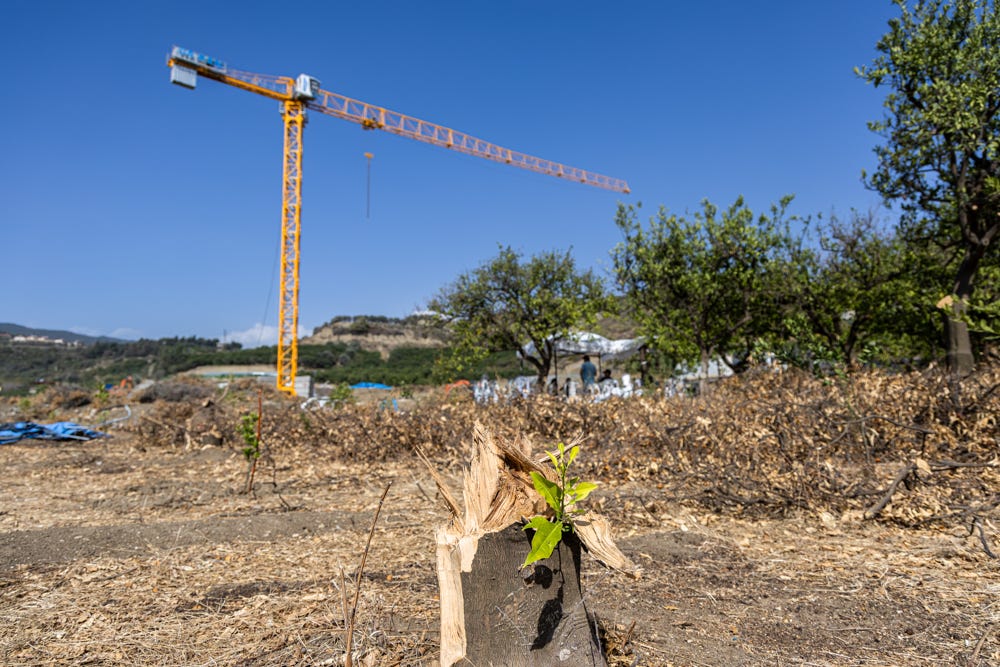
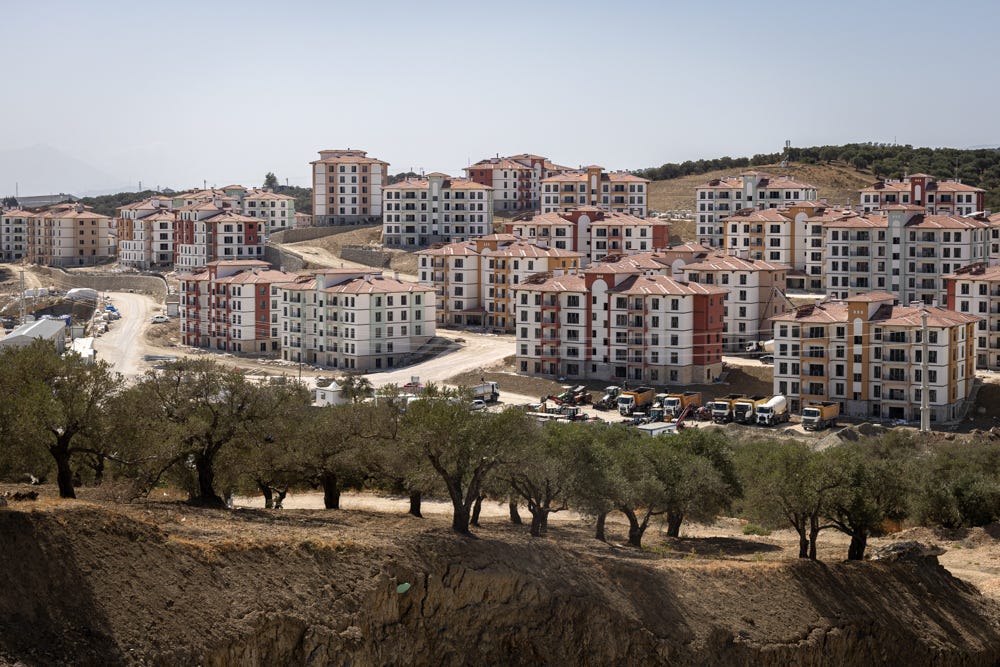
Following the devastating twin earthquakes in 2023, reconstruction efforts have given rise to new apartment blocks throughout affected areas. Excavators and cranes dot the region, building roads to link the new buildings, many of which have yet to be linked to utilities or public services.
“This site was purchased through a tender, but everything has been ruined. Nature and the livelihood of the local people have been destroyed,” said Ecevit Alkan, a lawyer defending the owners of the lands that have been turned into building plots through expropriation.
Villagers in Hatay have historically been engaged in agriculture. Yet, land expropriations carried out by the state to build housing for displaced people are resulting in not only a loss of the land, but also a way of life for some locals.
“When you give money to farmers and buy their means of production, there is no profit to be made, and in this case, moreover, the state has paid very little,” Alkan adds.
TOKI projects
The Housing Development Administration of Turkey (TOKI) is responsible for building homes on public land for those affected by the earthquake, although it outsources services through tenders to private companies.
TOKI was established in 1984 as a state-owned construction company, with the aim of managing social housing. In 2004, however, following a legal change, the company became the nation’s largest public landowner, outsourcing the work to private construction firms.
Since its creation, the architecture of its buildings has consisted of impersonal-looking housing, constructed in a uniform style and disconnected from the regional identity.
Over time, the agency has become the leading force in urban planning throughout the country. Economic gain has become a key factor, fueled by ties between construction companies and political leaders.
“Through this national agency and laws allowing the expropriation of land, the Turkish government now has a monopoly on the reconstruction of the region,” wrote Sevinç Ünal, a Swiss researcher of Turkish-Kurdish origin.
TOKI has become the only authority responsible for public land and the only one with the power to requisition public and private properties in the name of seismic risk. Representatives at TOKI did not respond to requests for comment for this report.
Researchers Fatma Özdoğan and Cassidy Johnson also agree that “reserve zones” have become the legal tool enabling the state to expropriate land for redevelopment under the pretext of post-disaster recovery.
In their recent research, the pair argued: “This process has often led to forced displacement, particularly in areas with high land values or where redevelopment aligns with broader political and economic interests.”
Without prior notice
Following the road that passes through Vakıflı—a majority Armenian village—one eventually arrives at Kurtderesi, one of the districts of Samandağ that includes a rural area.
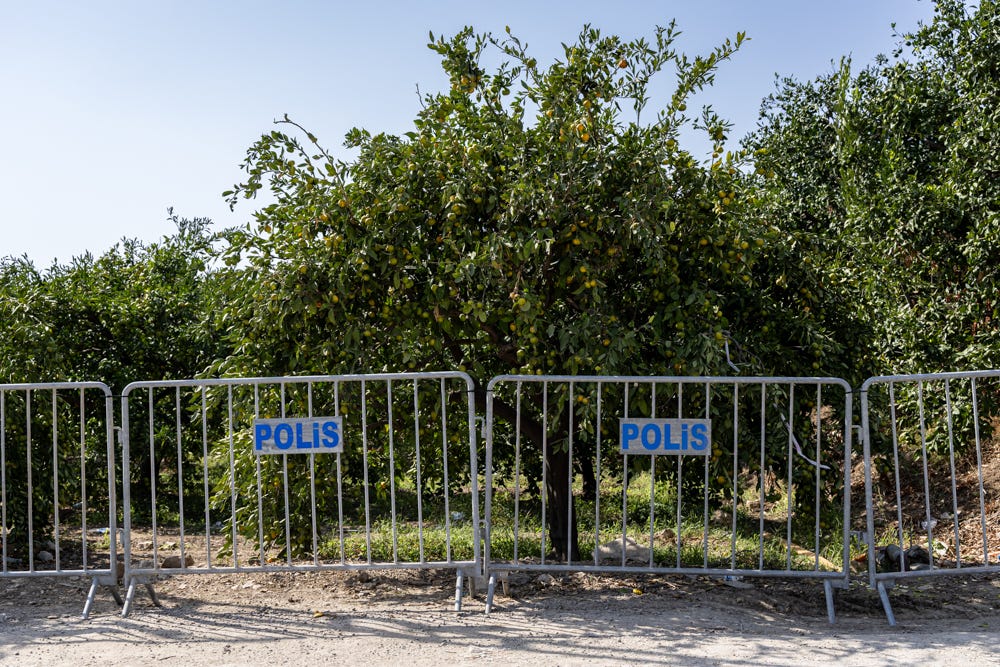
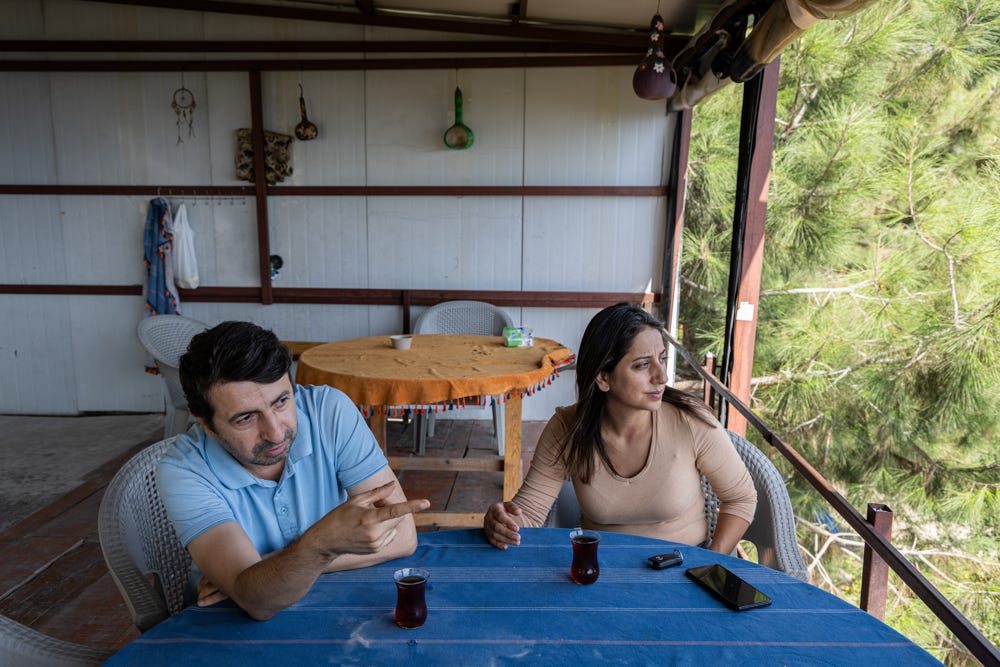
Next to the construction machinery and the fences bearing the word “Polis” that block the way to the fruit trees, the Berrak family is making tea while waiting for Ecevit Alkan, their lawyer, to arrive.
“We never received any notification. We no longer have anything in our name. This was our livelihood and we had everything here. We are farmers,” said Bedia Berrak.
Landowners across Hatay complain of numerous expropriations without prior notice or with delayed notice, by which time the bulldozers had already entered the plots and uprooted the olive trees.
In Kurtderesi, “urgent expropriation” orders were first issued in August 2025 for a TOKI housing project. Despite legal attempts by local residents to stop the work and demonstrations by about 30 families, construction companies have continued operations with the support of police, who have carried out “dawn raids” on private properties.
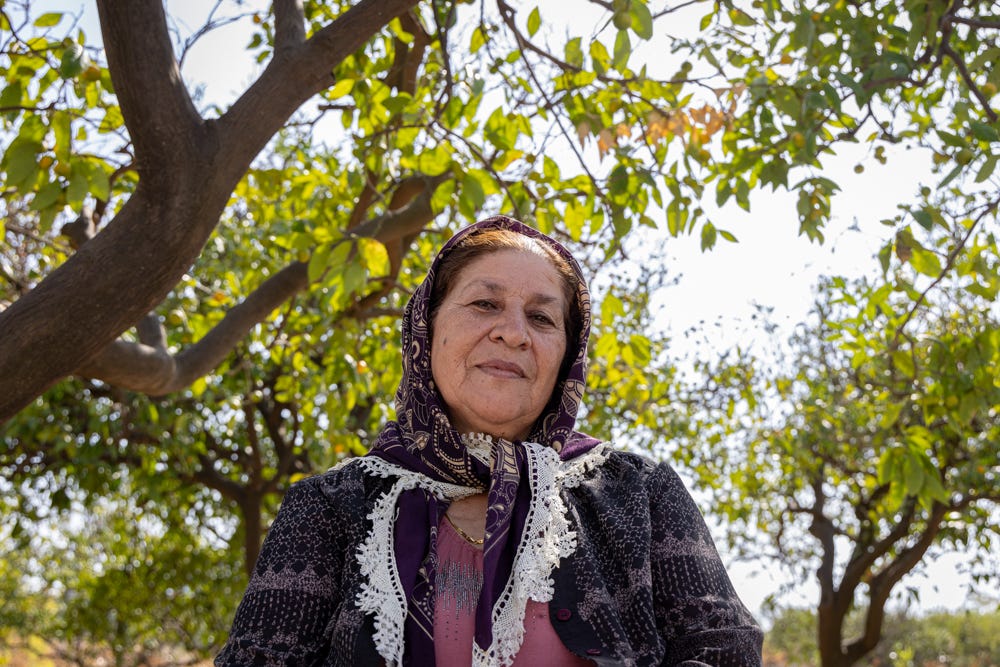
“My uncle and my father have been working these lands for 35 years. And now the state is buying them from us. The money isn’t enough and this land belongs to us,” insists one of the Berrak family members.
“This is illegal. They say expropriation is normal because it’s been done for those affected by the earthquake, but there must be compensation if there is an expropriation, and the citizen must accept the price or take the matter to court to contest the compensation amount,” he adds.
The situation and discontent of the population is repeated in other districts of Samandağ, such as Mağaracık and Hıdırbey, but also in areas of Antakya.
Dikmece was a village of 4,000 inhabitants living in single-family houses of one or at most two stories high, generally with a courtyard where lemon, fig and orange trees were planted. The TOKI plan aimed to expropriate 80 percent of the land and build 1,415 new homes.
Neighborhood mobilization
A month after the earthquakes, heavy machinery began working in one of the Dikmece areas.
“At first it was said that the new homes for the earthquake victims would be built on state-owned land. We were very happy,” explains Meryem Kutlu, a Dikmece resident.
A few weeks later, without being consulted, the neighbors realized that machines were entering their land.
“They decided to build on our farmland, on our olive groves,” Kutlu continued. “No one asked me, ‘Meryem, I’m going to do this on your land, what do you think? Do you agree?’ That’s how it began.”
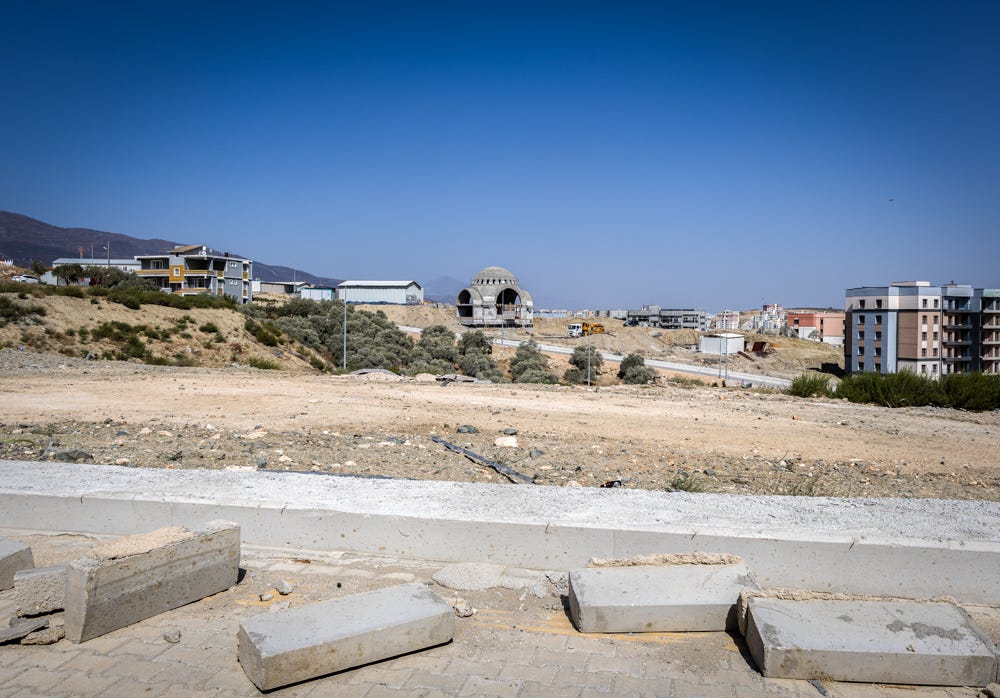
The land at Dikmece isn’t zoned for construction either, explains Meryem: “It makes no sense for them to be building here. It’s an area prone to landslides and further damage could occur if there are more earthquakes.”
Here, too, local residents have been campaigning for the past three years, led by the women of the village. They have filed three complaints against TOKI regarding its illegal activities: they are calling for the expropriations to be annulled on the grounds that the project is not in the public interest, but rather harms the local community.
To date, they have won some court rulings and have managed to get the construction companies to halt part of the project, explains Meryem, who now also provides legal support to the other affected communities mobilizing against the construction of TOKI buildings.
One of the later stages, which involved the redevelopment of the school area, has been suspended.
“The residents are facing a very difficult task because the construction companies hold a lot of power. So every small victory is a huge one,” she argues.
Still, in the southern part of Dikmece, the scenery has changed and the landscape increasingly resembles an urban area with blocks of flats. Sunni mosques have also been built in an Alawite Arab majority community.
Assimilation concerns
Meryem suspects the TOKI project in an Alawite Arab area is no coincidence. Prior to Dikmece, land expropriations were ordered in another village in the region, Gülderen, and subsequently spread to places such as Serinyol and Samandağ, most of which are municipalities with significant Alawite Arab populations.
“Between Dikmece and Gülderen there is another village, Oğlakören, which has a Sunni Muslim majority, but no land has been expropriated there,” Meryem said.
Alawite Arabs represent five to seven percent of Turkish society, and the government does not recognize them as a distinct religious group. One example is that their shrines and places of worship are classified as “cultural institutions”.
Perihan Koca, an MP for the left-wing, pro-Kurdish DEM Party, also publicly denounced the inequalities surrounding the expropriation of land for the construction of new housing and the problems faced by the Alawite Arab population, asking: “Is the aim to force the Alawite Arab community to migrate?”
She also criticized the lack of access to accommodation and sanitation facilities, water and basic foodstuffs, as well as the demolition of buildings containing asbestos without any safety precautions and the confiscation of their living spaces through hasty expropriations.
Suspicions regarding attempts to relocate communities, divide them and, consequently, assimilate minorities after earthquakes are not without precedent.
Following the 2011 Van earthquake, some locals viewed the state’s perceived inaction in some areas as an intentional attempt to force Kurdish families out of the region and bring about demographic change.
Likewise, members of the Berrak family in Kurtderesi said they believed the government was actively trying to disperse their community after the 2023 earthquake.
“Ninety-four percent of the population in our neighborhood is Arab. We believe these projects will serve to assimilate us following the earthquake,” a Berrak family member said, asking to withhold their name.
Turkey recap is an independent, reader-supported newsletter that helps people make sense of the fast-paced Turkey news cycle. Get in touch at info@turkeyrecap.com.
Subscribe here on Substack (or on Patreon for discount options). Paid subscribers get full access to our recaps, reports, members-only chat and news tracking tools.
We are an affiliate of the Global Forum for Media Development and aim to produce balanced news that strengthens local media by supporting journalists in Turkey.
Diego Cupolo, Editor-in-chief
Emily Rice Johnson, Deputy editor
Yıldız Yazıcıoğlu, Parliament correspondent
Hilmi Hacaloğlu, Political correspondent
Gözde Ocak, Stüdyo recap editor
Demet Şöhret, Social media and content manager