


Heads will roll. Unless they’re in jars. Like this collection of 5,000 doll heads in Kocaeli that a man stockpiled because “Babies always smile.”
That’s what he said, and if you need a break from politics right now, the backstory is jarring.
In this week’s recap:
Amor keeps hope alive for Turkey’s EU bid
US Envoy says S-400 solution in sight
Syria marks one year since regime change
Domestic and diplomatic wraps
Provocateur detained for anti-muslim statue
Also from us this week:
Nimet Kıraç on why young Syrians in Adana hesitate to move back to Syria
László Szerencsés details the ties that bind Orbán and Erdoğan on our podcast
Tomorrow: Emily Rice Johnson covers the rate cut in our Economy recap
And remember to discount your blessings with our holiday sale. Buy now, save later.
Mark this moment: With two weeks left in 2025, Turkey had its first slow news week of the year.
And all it took was annual budget talks that keep politicians locked up in parliament for a 14-day marathon of full-body fiscal exertion and some heavy drinking, we’re told.
That means Turkey correspondents like me got to breathe, to notice the change of seasons and got to look deeper into current events—pretty much like Thoreau looks into a stream and notes the surface “slides away, but eternity remains” just below it.
Yes, that’s a reference to Turkey’s eternal EU accession bid: the grievance behind all EU-Turkey grievances and the base of many discussions in Ankara these days.
As the Russia-Ukraine war drones on and Washington reevaluates historic alliances, European security is in the spotlight and so are EU-Turkey defense ties.
This new urgency on European-Turkey cooperation has surfaced the limits imposed by Ankara’s stalled accession, as underlined in recent discourse on Turkey’s inclusion in the bloc’s SAFE program.
Likewise, as Turkish FM Fidan said in Germany last month, EU accession is based on a criteria of democratic and governing standards, which are not being met according to the latest statement from the Council of Europe Commissioner for Human Rights.
Still, in the same speech, Fidan also maintained full membership in the bloc remains a “strategic goal” for Ankara—a phrase echoed by Pres. Erdoğan Monday.
So, to get a sense of where accession stands today, I spoke with Nacho Sánchez Amor, the European Parliament’s rapporteur on Turkey, who was recently in Ankara on a reporting visit.
Amor’s approach on Turkey has changed since the 2023 general elections, when he was pushing for a new “format” for EU-Turkey ties that would not be based on a “cynical” accession process, as he told Turkey recap at the time. Today, Amor has reverted to supporting for Turkey’s EU bid, stating:
“I received a lot of pressure from the civil society saying that if the European Union kills the accession process, it is never going to be resuscitated and that means killing the hope of many millions of Turkey’s citizens,” Amor said.
He added: “I was convinced that the accession process is, in a way, leverage and is an incentive for many people in the country to continue considering Europe as a goal.”
When asked about Turkey’s inclusion in EU defense programs, like SAFE, Amor said “it’s important to have Turkey” on board, but noted security cooperation would face barriers as long as Greece faces threats of war from Ankara, known as ‘casus belli’.
He also pointed to Turkey’s acquisition of Russian-made S-400 missiles as another stumbling block for stronger EU-Turkey defense ties.
“I think Turkey has to go to Brussels regarding SAFE and offer some solution for the S-400,” Amor told Turkey recap. “Whatever the solution, a technical solution, storing it, reselling it … I think it’s good to get rid of this old, let’s say, irritant.”
The other irritant “is the lack of alignment in foreign policy,” he added, before moving to domestic politics and human rights infringements.
His main tagline for the government might have been that Turkey’s constitution is “not a menu” for authorities to pick and choose from when applying laws to different members of society.
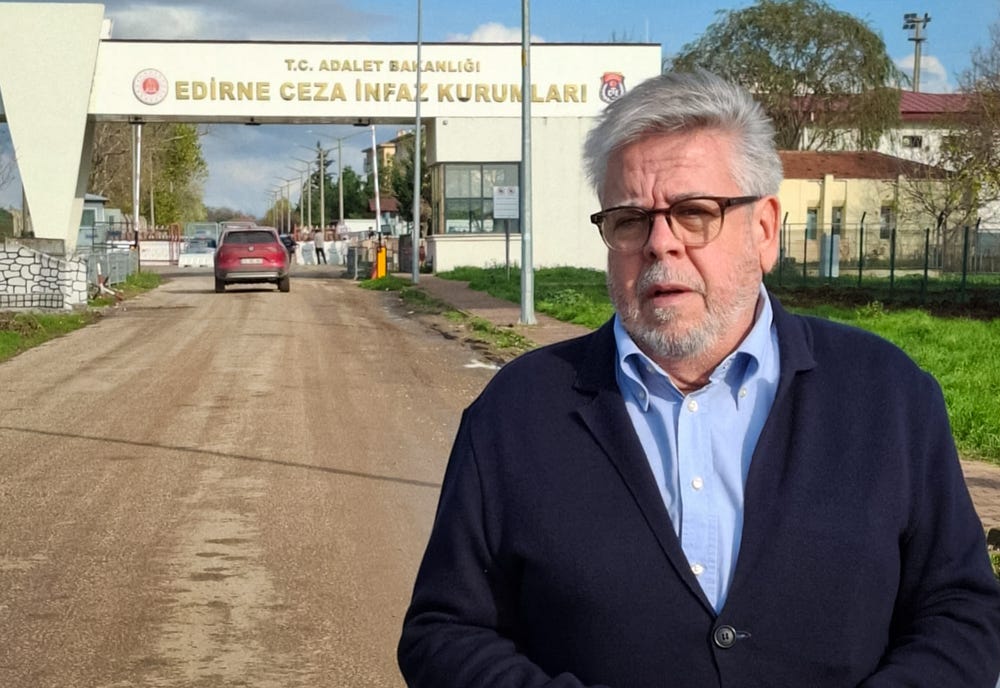
Last week, Amor met with politicians and political prisoners, including Selahattin Demirtaş in Edirne prison as well as Ekrem Imamoğlu, Osman Kavala, and Can Atalay in Silivri prison.
He cited a long list of shortcomings with judicial independence, emphasizing Turkey is a founding and “respected member” of the Council of Europe while also noting “nobody obliged Turkey to be a member”, which requires compliance with institutional decisions, he said.
Despite his many frustrations since assuming his post in 2019—we did not get “one single piece of good news coming from human rights, rule of law and the judiciary,” he said—Amor retains hope for Turkey’s future accession prospects.
“It’s going to take a lot of time,” he said, but “there were periods in the country’s history [when people were] really committed to the idea of becoming a democracy.”
Amor added the current “environment is not very appealing. Every corner of the world is subject to this authoritarian trend. But there are some bright spots, and I would like to see Turkey as one of those cases.”
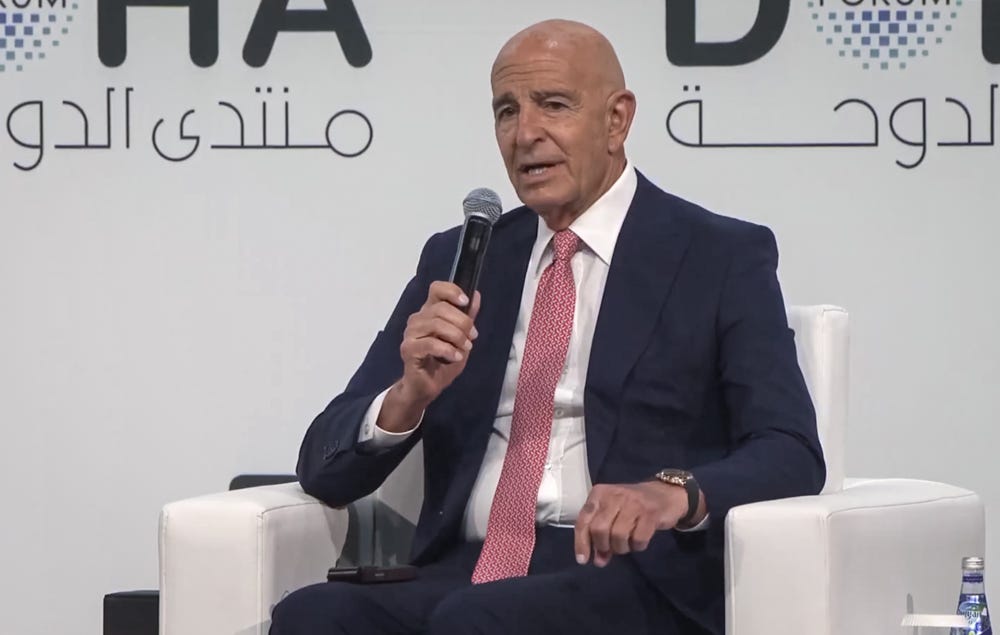
Eye on the fighter: US Envoy says S-400 solution in sight
