


Today’s title is brought to you by Danny Wallace. Game recognizes game.
Announcement: Emily and I are hosting a Q&A podcast to mark the first anniversary of Recap radio! Send us questions using this anonymous form and we’ll respond soon.
In times of crisis, UNK principles advise us to talk it out.
In this week’s recap:
Iran war impacts and scenarios for Ankara
Defense concerns in Turkey
Kurdish incursion may upend PKK talks
Domestic and diplomatic wraps
Trump’s self-proclaimed Turkish daughter makes news again
Also from us this week:
Report: Daniel Thorpe on how Iranians in Turkey are experiencing recent events
Podcast: Hürcan Aslı Aksoy on the war’s implications for the Turkey-Israel rivalry
Tomorrow: Emily Rice Johnson on the Turkish market effects in Economy recap
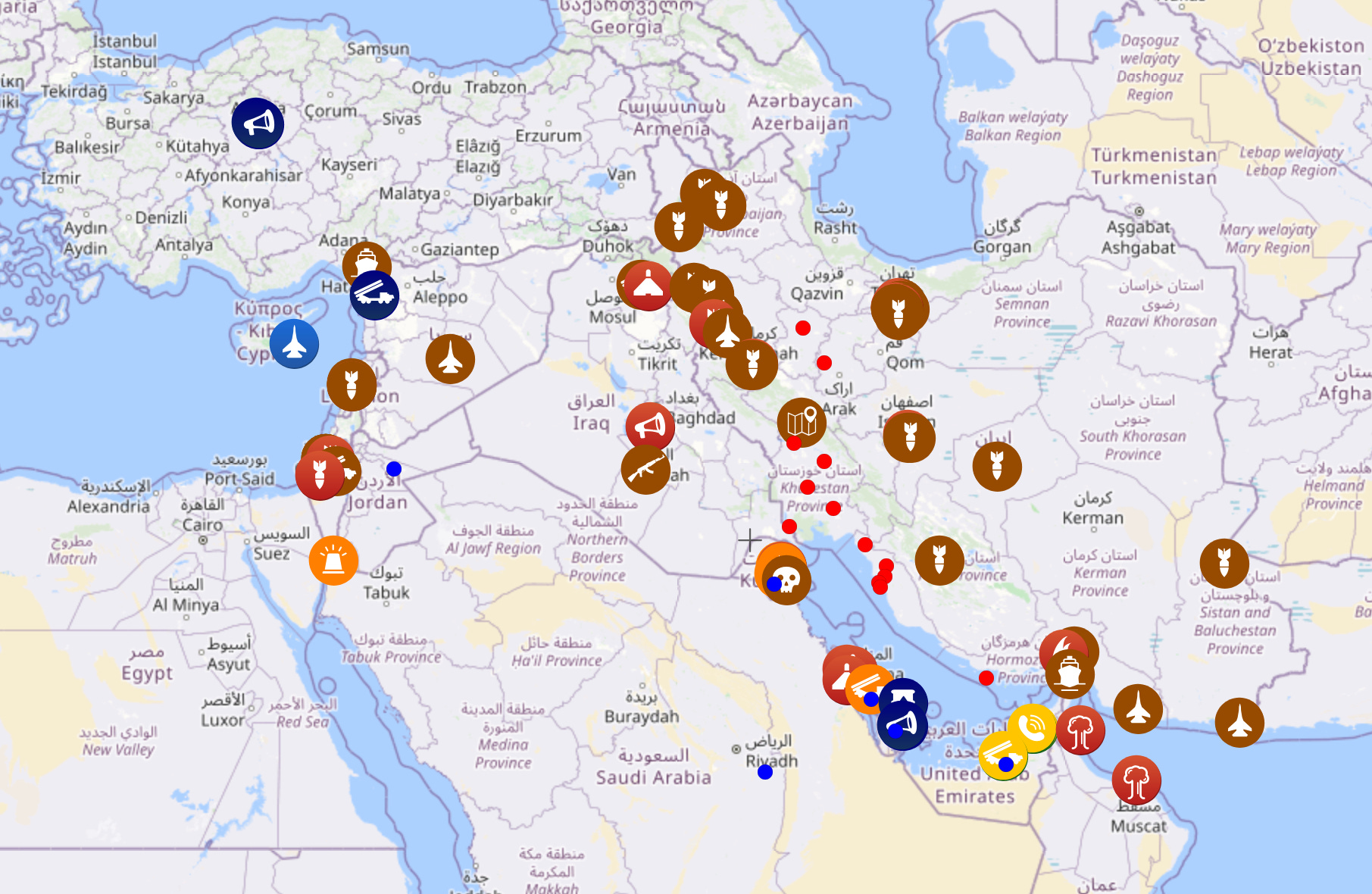
It’s been a while since we had this kind of war. The fog is real and social media—like high beams—can make things worse. Here’s a useful AP guide of what happened in each impacted country.
The following is a breakdown of Turkey-related news, prospects and implications stemming from the Iran war:
Official statements: Turkish Pres. Erdoğan Monday condemned US-Israel strikes as a “clear violation of international law”. The same day AKP spox Ömer Çelik offered more comments, stating recent US-Iran negotiations had been “completely abandoned” for a “ pre-planned attack.”
On Sunday, Erdoğan extended his condolences to the people of Iran following the death of Iranian Supreme Leader Ali Khamenei in airstrikes.
Border security: The three Turkey-Iran border gates have seen light traffic since the conflict began Saturday, according to news reports.
Noting there was “no extraordinary situation”, Trade Min. Ömer Bolat announced Monday that “same-day passenger crossings at all three customs gates have been mutually suspended.”
Speaking Tuesday, FM Hakan Fidan said Iran was not allowing its own citizens to cross the border. Then Wednesday, Interior Min. Mustafa Çiftçi repeated that claim, adding Turkish nationals in Iran—an estimated 20,000—and third-country citizens were allowed to exit Iran.
Çiftçi added that 5,010 people entered Turkey from March 1-3, and that tent camps would be prepared near the border if traffic increases in the coming period.
Airspace security: Unlike neighboring states, Turkey has reported just one near-airspace violation since Saturday. Analysts link this to the NATO umbrella, and the escalation risk carried by any strike on Turkey. (covered in detail below)
That said, an Iranian missile approaching Turkish airspace through Syria and Iraq was shot down by a US navy ship Wednesday, causing debris to fall in Turkey’s Hatay province without reported injuries.
A Turkish official told AFP the missile was “aimed at a base in Greek Cyprus but veered off course”. While a US official told the Wall Street Journal the missile was targeting Turkey’s Incirlik Air Base, which hosts US forces and nuclear weapons.
Before publication today, Iran’s military denied firing a missile at Turkey.
Analysis: Güney Yıldız, a senior advisor on geopolitics and strategic insights at Anthesis Group, has been covering developments for Forbes Magazine. In written responses to Turkey recap, he laid out three scenarios for Iran and Ankara:
Consolidation of the Islamic Revolutionary Guard Corps (IRGC), which Yıldız said is Turkey’s preferred outcome though its probability decreases daily. In this scenario, surviving IRGC members form a pragmatic government, Fidan maintains intelligence contacts, Turkey maintains energy contracts with Iran and Kurdish-populated border areas are managed bilaterally. The problem: “Every additional day of strikes thins the [IRGC] bench further,” he said.
Extended conflict and a degraded but surviving state. This is the most likely medium-term outcome, according to Yıldız. “In this scenario, Turkey faces a more expensive version of the status quo. The bilateral relationship becomes harder to manage, not because Iran is hostile to Turkey, but because there’s no single counterpart to manage it with … Ankara’s balancing act [with NATO] becomes harder to sustain but not impossible … [while] energy exposure is the most concrete problem.”
State fragmentation, the low probability-high consequence outcome. Yıldız wrote: “Iran’s governance fractures along provincial, ethnic and institutional lines. No single authority controls the border regions. Kurdish armed organizations, Azeri ethnic movements and IRGC remnants operate independently. The refugee scenario escalates to millions.”
“This is the scenario Turkey’s playbook was never designed for,” he continued. “It would require a fundamental rewrite of Turkish foreign policy from managing a rival state to managing a failing one. The Syrian template partially applies … but Iran is not Syria.”
In sum: Yıldız wrote Ankara plans for Scenario 2 while hoping for Scenario 1 and contingency-planning for elements of Scenario 3. Across all three: “Turkey’s interest in a coherent Iranian state doesn’t change.”
The writhing on the wall: Defense concerns in Turkey
