


Disclosure: Since I’m covering the PKK peace process today, this is your regular reminder that my wife is an MP with the pro-Kurdish DEM Party. She is quoted in this helpful article from Al-Monitor, which provides context for the updates below.
In this week’s recap:
Peace process draft law submitted
New party hit with old judicial pressure
Ankara seeks security role in Lebanon
Domestic and diplomatic wraps
Mohamed Salah joins Trabzonspor
Also from us this week:
Diego Cupolo on the risks and opportunities posed by Beylikova’s rare earth reserves
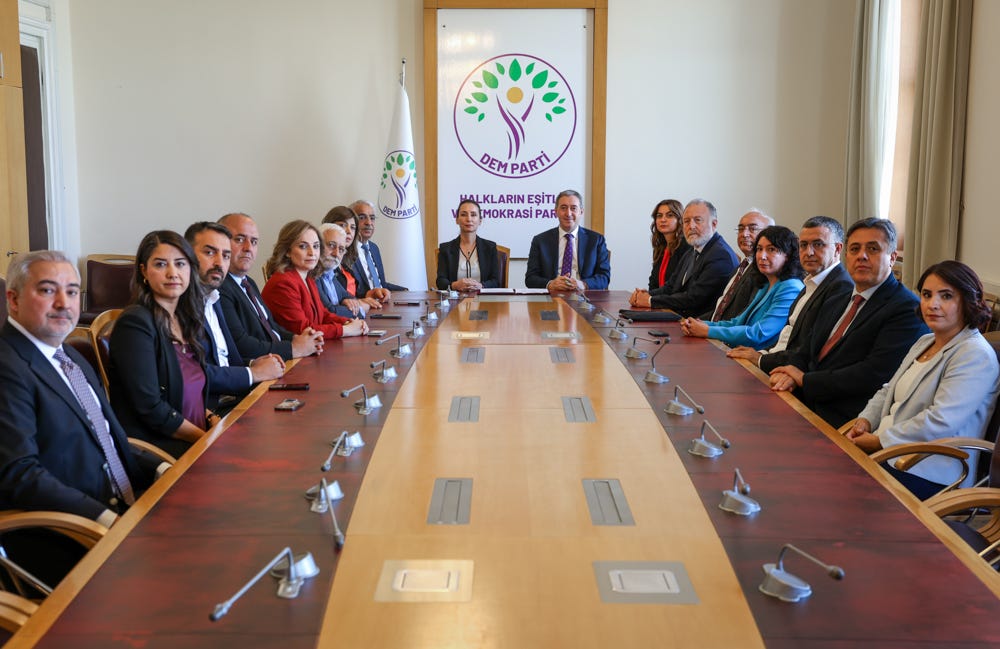
It came, they signed, they concurred. The Jenga tower of conditionalities that is Turkey’s much-awaited peace process “framework law” was submitted to parliament Wednesday with at least 360 signatures—just don’t ask lawmakers if they understand it.
Many AKP members allegedly signed blank documents after months of secretive negotiations, the result of which is a draft law proposing conditional amnesty for eligible PKK militants if the organization dissolves and surrenders all its weapons.
Officially known as the ‘Draft Law on Strengthening National Solidarity and Social Cohesion’ (full text here), the legislation provides a framework to guide the rest of the Turkey-PKK process. Remember, this is step one.
The proposal is expected to be discussed in the parliamentary Justice Commission on Friday before getting sent to the General Assembly (possibly on Sunday), where opponents will likely aim to slow down deliberations next week.
What happened: On Aug. 2, a DEM Party delegation visited Imrali island to convey the details of the draft law to PKK leader Abdullah Öcalan.
The next day, DEM Party released a positive statement from Öcalan, who said “not everything has been resolved,” but the law would contribute to regional peace and fully open the door to “a democratic republic.”
MHP Chair Devlet Bahçeli, who initiated this process with a handshake nearly two years ago, was among the first to sign the draft law Tuesday.
Reactions: After it was submitted Wednesday, Erdoğan shared a post on X, stating:
“I hope this step, which aims to permanently rid Turkey of the threat of terrorism, … will lead to auspicious outcomes.”
AKP Spox Ömer Çelik spoke directly to press, saying the framework law is:
“Actually, one of the greatest responses given to the imperialist and Zionist aggression that harbors ill intentions towards our region,” he said, meaning that by engaging with the PKK, Ankara can prevent adversaries from using the militants against Turkish interests.
Among opposition parties, Yeni Party will review the draft law today before publicizing its stance. Meanwhile, Yeniden Refah and IYI Party are more critical, often portraying the process as a betrayal of the soldiers and citizens who died in the more than 40-year Turkey-PKK conflict.
A separate law proposal amending the rights of “martyrs’ families and veterans” was approved by the parliament’s National Defense commission Wednesday.
What’s in the framework law: Article 1 of the draft proposal states the actual peace process begins only after the National Security Council (MGK) confirms—and publishes in the Official Gazette—that the PKK has completely ended its existence and handed over all weapons and ammunition.
Articles 3 and 6 suspend judicial proceedings—rather than issue immediate pardons—for eligible individuals who, depending on their charges, can see active trials put on hold or prison sentences suspended for a probationary period.
Crucially, Articles 3 and 6 state people charged with murder and other crimes requiring life imprisonment committed before Jun. 1, 2005, cannot benefit from the proposed measures—including Öcalan and the PKK senior leadership.
Article 5 establishes conditions for probationary periods while Article 7 calls for a board chaired by the vice president to track and evaluate the process activities.
Of course, there are many more details, but these are the core concepts of a self-proclaimed “Turkish model” for eliminating terrorism. However, some legal definitions remain overly broad, argues lawyer Gulcin Avsar, which risks leaving the application of the law to “the mercy of the judicial bureaucracy.”
Analysis: In written responses to Turkey recap, Özge Genç, a visiting fellow at the Middle East Council on Global Affairs who was involved in civil society work during the 2013-2015 PKK-Turkey peace process, cautiously said the draft law represents progress after months of negotiations.
While the proposal was repeatedly postponed this summer, requiring parliament to extend its legislative session into the August recess, Genç wrote:
“The [delay] reveals the government’s caution, its concern about electoral and nationalist reactions, and its preference for security verification before legal concessions. But it also appears to have allowed the parties to construct a negotiated minimum that is substantially more protective and workable than many expected.”
Genç also noted that public opinion surveys consistently show strong support for ending the conflict, but much weaker support for concessions associated with Öcalan.
So, the fact that PKK leadership was excluded from the current framework opens the legal avenues to address lower-level offenses, like membership, assistance and propaganda, which impact a larger share of people criminalized or jailed by anti-terror laws.
Next up: After the bill is adopted with ruling bloc and DEM party votes in parliament, the next phase will determine whether the proposal can become sustainable.
Because the draft law primarily focuses on criminal files and prosecutions, Genç said the bill cannot be expected to regulate every aspect of militants’ return and reintegration.
“These issues may, however, be taken up in the next phase through the Board’s coordination role, its subcommittees and the further administrative or legislative measures it is authorized to request,” she wrote.
Looking ahead, Genç said potential reintegration issues to be discussed include:
How PKK returnees will be identified in administrative and social security systems
Whether they will be protected from reprisals or repeated investigations
How they will access housing, income, employment and healthcare
How families will reunite
And whether they can participate in lawful political and civic life without being re-criminalized.
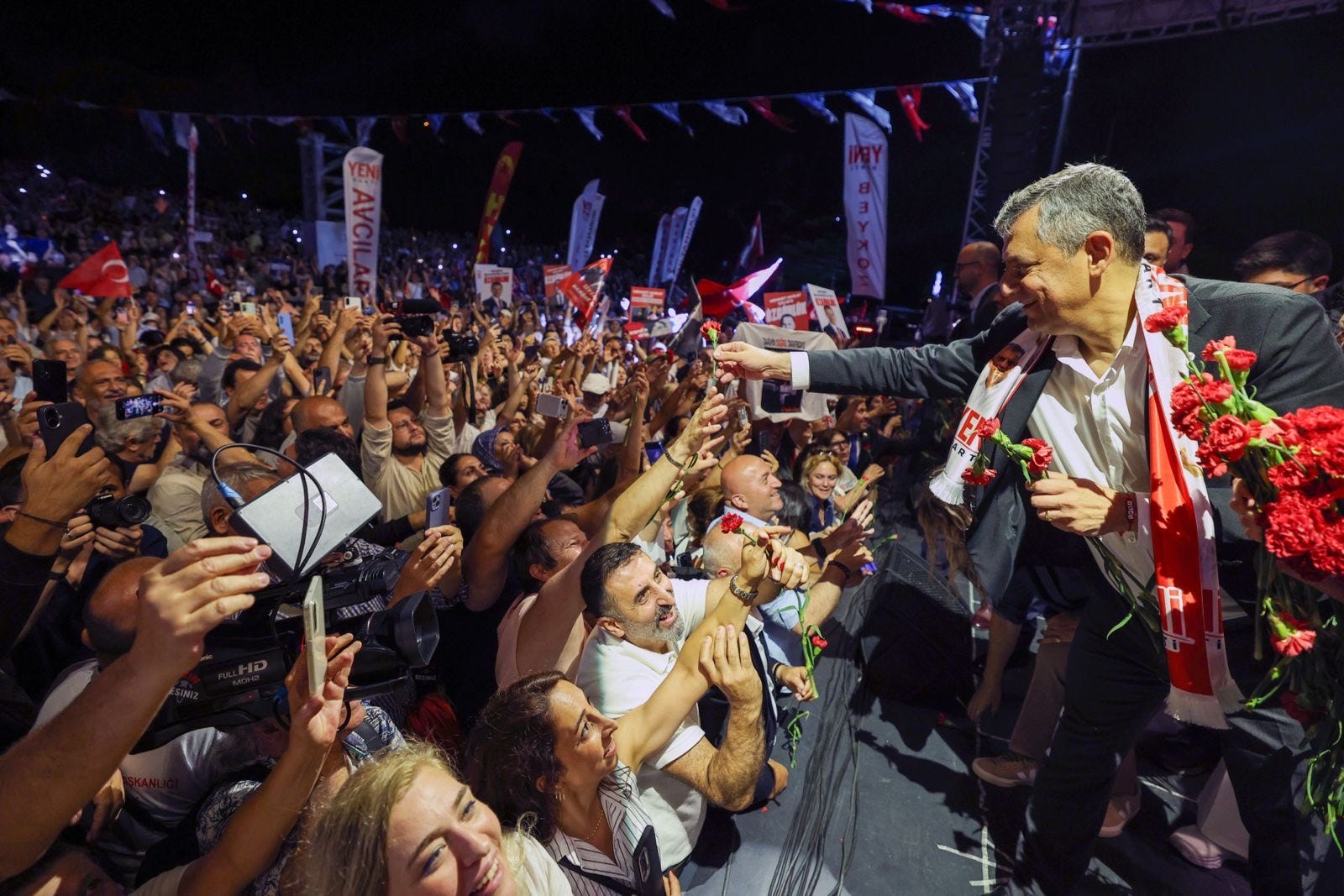
Yeni way you slice it: New party hit with old judicial pressure
