


Hello from New York! I’m here for a public panel at Columbia University this evening titled: “Journalism under authoritarian pressure: Reporting from Türkiye.”
If you’re reading this and within commuting range, you are personally invited.
In this week’s recap:
Humanitarian crisis mounts on Turkish border
Ömer Özkizilcik on IS transfers, border security
Implications for the PKK peace talks
Ankara mulls ‘buffer zone’ for refugees in Iran
Domestic and diplomatic wraps
Winter festivals for the rest of us
Also from us this week:
Saadet Party’s Bülent Kaya told Ceren Bayar where the PKK peace talks stand now
Bilge Yeşil outlines media strategy in the New Turkey on Recap radio
Emily Rice Johnson dropped the February edition of This Day in Turkey for news tracking tool subscribers. Enjoy!
The ceasefire is holding, for now. On and off clashes rattled but have not shattered the temporary truce between Damascus and remnants of the Kurdish-led Syrian Democratic Forces (SDF) after last week’s offensive.
Initiated on Jan. 20 and extended until Feb. 8, the ceasefire has seen violations from both sides, according to NGO reports, as negotiations keep everyone guessing what comes next.
In the meantime, a humanitarian crisis is unfolding in SDF-held areas along the Turkey-Syria border, where a winter storm Monday exacerbated conditions.
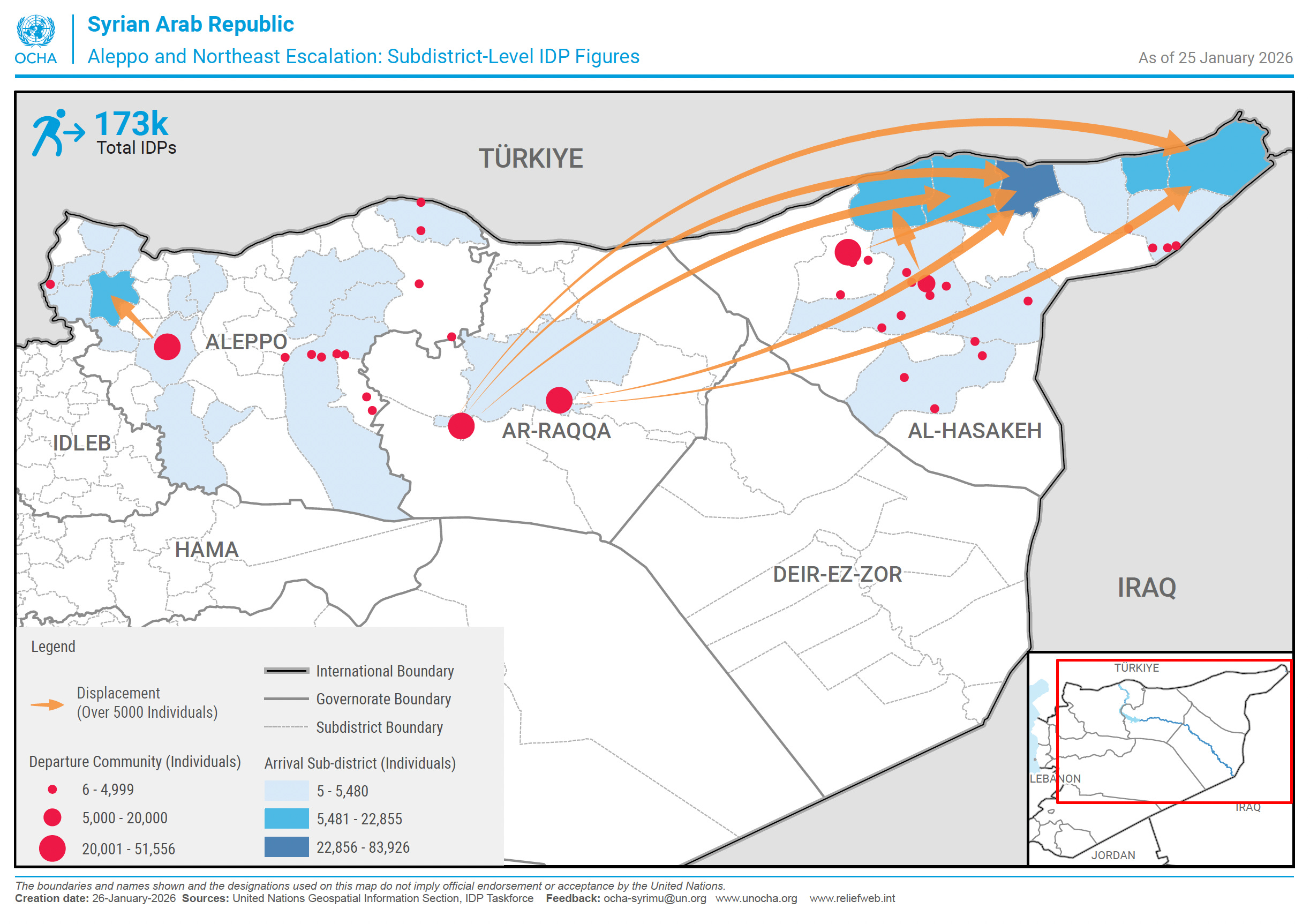
On the ground: An estimated 173,000 people were displaced by recent conflicts in northern Syria, the International Organization for Migration reported Sunday. (scroll down for map)
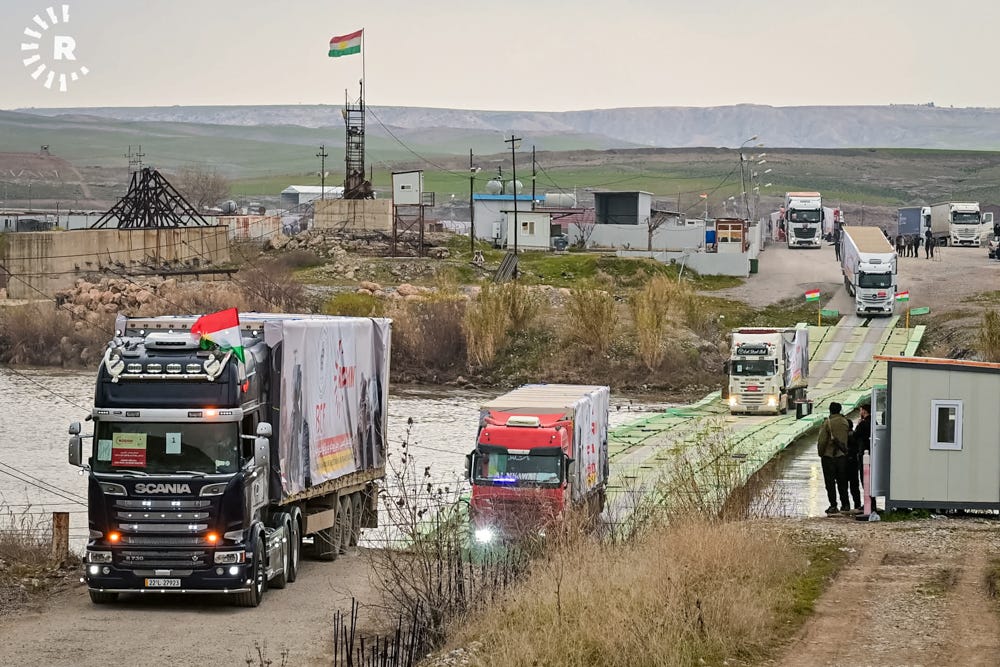
Aid convoys have entered Hasakah from Iraqi Kurdistan (pictured above) though supply shipments have been more limited in the now isolated Kobani enclave, according to Wladimir van Wilgenburg, an analyst and journalist who co-authored two books on Kurds in Syria.
“Despite the humanitarian corridor, not a lot of aid that has come and there’s thousands of people [in Kobani], so it’s difficult,” Wilgenburg told Turkey recap.
He was in northern Syria during the offensive and published his observations here. In his discussions with locals, Wilgenburg noted two points: Many feel betrayed by the US and many are considering their next move if the ceasefire collapses.
“Everybody’s really afraid and a lot of civilians want to flee,” he said. “They want to go to Iraqi Kurdistan, but the thing is there’s not really a road and also I don’t think that Iraqi Kurdistan wants the demography of the area to change.”
Pres. Recep Tayyip Erdoğan Tuesday said Turkish state agencies and humanitarian agencies were “reaching out to those in need in northern Syria and delivering aid.” In a joint statement the same day, CHP and DEM leaders called for Turkey-Syria border crossings to remain open for more aid deliveries.
On the politics: The situation remains fluid, though Ankara views a weakened SDF as a positive development for its regional security interests. The withdrawal of Russian forces from the northeast Syria base in Qamishli may also be viewed as positive for US regional interests.
Reporting by the Wall Street Journal suggests Syrian Pres. Ahmed al-Sharaa and his forces swept further into SDF areas than envisioned by negotiators, including US envoy Thomas Barrack, who originally sought SDF withdrawals west of the Euphrates as a “gesture of good faith”, according to WSJ’s Lara Seligman.
US officials are now debating measures to help protect Kurdish forces in Syria—who allied with Washington in anti-ISIS campaigns. Most notably, US Sen. Lindsey Graham Tuesday said he would propose a “Save the Kurds Act” that would “impose crippling sanctions on any government or group engaged in hostilities against the Kurds.”
Meanwhile, Washington’s stance remains ambiguous. In her analysis, Gönül Tol reported “Ankara coordinated with Barrack ahead of the offensive to ensure Israel would not intervene to protect the SDF,” according to a Turkish official.
What comes next in Syria, Tol wrote, leaves the SDF with several “grim choices”:
“If, after the two-week cease-fire deadline expires, it opts to resume fighting, Syrian forces are likely to overrun the remaining SDF-held territory, with Kurdish civilians caught in the crossfire and little prospect of meaningful international protection. If the SDF instead accepts Damascus’s terms, it will effectively be acquiescing to the end of the experiment in Kurdish autonomy in Syria.”
Interview: Ömer Özkizilcik on IS transfers, border security
