


This week brought shellshock to Syria and Shaq—of Shaq Fu fame—to Erdoğan. Buckle up, this issue is +3,000 words.
In this week’s recap:
Syria clashes redraw map, threaten mass migration
US regional policy centers on IS containment
Greek marine park and Israeli ties test Ankara
Domestic and diplomatic wraps
‘Marylin Monroe of Mardin’ arrested
Also from us this week:
Henri Barkey joined our podcast to discuss events in Syria and the PKK talks
Daniel Thorpe reports on the trust deficit behind the peace process in Turkey
Yıldız Yazıcıoğlu interviewed IYI Party deputy chair Selcan Taşçı on Stüdyo recap
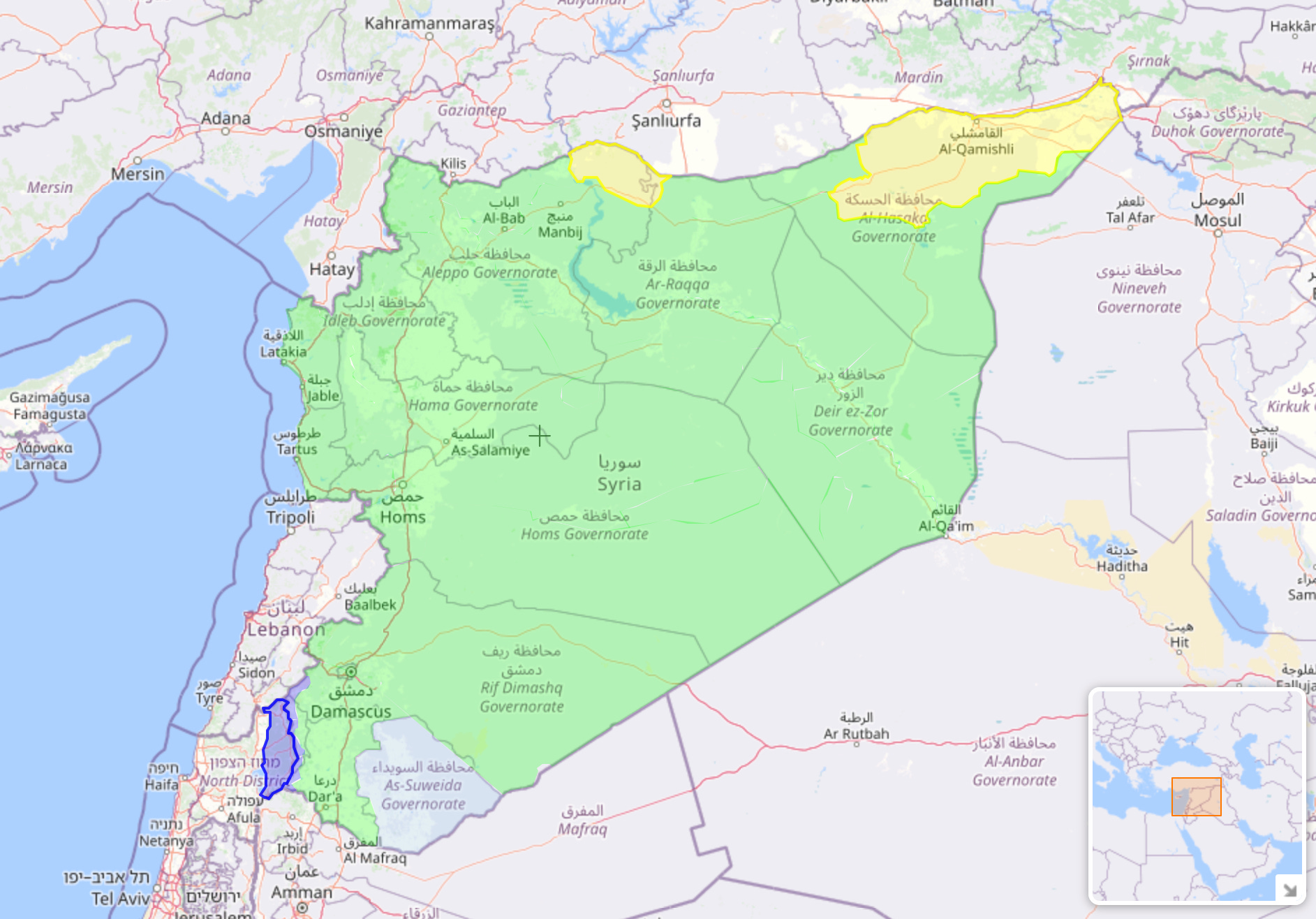
You know it’s bad when SDF Commander Mazloum Abdi gets called the Kurdish Kılıçdaroğlu.
The end of 2025 deadline for Damascus-SDF integration talks has passed. The Syrian Army and its proxies have taken control of 90 percent of land once held by the SDF, resulting in an estimated 1,000 deaths on both sides of the clashes.
And according to some analysts, the SDF has ceased to exist as affiliated Arab tribes have splintered off, leaving a core Kurdish fighting force to defend Kurdish-majority areas in Kobani, Hasakah and Qamishli—which constitute a “red line” Abdi has vowed to defend.
For context, the Syrian Democratic Forces (SDF) is/was a mixed force of mostly Kurds and Arabs led by the People’s Defense Units (YPG), a Kurdish militia with ideological ties to the Kurdistan Workers’ Party (PKK), though most people in Ankara would just call all of the above ‘terrorists’.
For more than a decade, the SDF allied with the US to defeat and contain Islamic State militants, a relationship that has now “largely expired” and is covered in detail below.
Views from Turkey: With the prospects fading for an autonomous Kurdish region in Syria, aka the “Rojava project”, a four-day ceasefire (effective Jan. 20) is mostly holding as Damascus and the SDF return to the negotiation table.
Pres. Erdoğan and coalition partner Devlet Bahçeli met Wednesday, issuing no press statement, though they likely discussed developments in Syria. Earlier that day, Erdoğan reiterated support for a centralized state in Syria that would be free of terror.
“With the recent developments in Syria, the future will be brighter than snow for Turks, Turkmens, Kurds, Arabs and all our other friends,” Erdoğan said at the AKP parliamentary group meeting.
Speaking Tuesday, Bahçeli said last week’s presidential decree on Kurdish rights in Syria was “in line with our thoughts and suggestions.” He added the roots of SDF and YPG forces must be “eradicated” from areas east of the Euphrates river.
“The security of Damascus is the security of Ankara,” Bahçeli told MHP lawmakers Tuesday.
Meanwhile, DEM Party officials framed recent events as attempts to remove Kurdish nationals and cultures from ancestral homelands. DEM led several protests in southeast Turkey and near the Syrian border, where demonstrators clashed with riot police.
A delegation led by DEM Party co-chair Tülay Hatimoğulları entered northeast Syria Wednesday for consultation meetings amid ongoing negotiations.
Analysis: Speaking to Turkey recap, Mohammed A. Salih, a non-resident senior fellow at the Foreign Policy Research Institute (FPRI), said a ceasefire collapse could trigger a humanitarian crisis and a mass migration out of remaining SDF pockets in Syria.
“A full-scale war would lead to tens of thousands of local Kurds being displaced, a lot of them probably moving toward Iraqi Kurdistan or some toward Turkey, if Turkey opens up the border crossings for them,” Salih said.
He underlined Kurdish civilians do not feel safe in jurisdictions held by government-aligned militias, some of which have been publishing graphic videos online of dead, decapitated, tortured or apparently kidnapped Kurdish fighters.
“People see this stuff and they have seen what has happened in Sweida and in the Alawite areas. So, they are very much justifiably and understandably fearful of what could unfold,” Salih told Turkey recap.
He added Kurdish nationals across the Middle East have mobilized to protest clashes in northeast Syria, adding there is potential for heavier fighting and casualties in the days ahead.
“There is a unanimous consensus among the Kurds in Rojava, across the region and in the diaspora, that this is an existential war … and that it is not going to stop there. It will most probably go to other places, like Iraqi Kurdistan,” Salih said.
This IS the end: US regional policy centers on IS containment
