


Hello from a transatlantic flight to Istanbul! This newsletter—and its typos—is brought to you by the strongest Turkish Airlines coffee brew.
And this Justin Bieber hairline gag is brought to you by the strongest Ryanair social media crew.
In this week’s recap:
Ankara pushes for US-Iran diplomacy
Syria ceasefire deal followed by energy deal
Turkey-PKK peace talks to move on
Domestic and diplomatic wraps
What the Epstein files say about Turkey
Also from us this week:
EP rapporteur Nacho Sánchez Amor discussed EU-Turkey ties on our podcast
Diego Cupolo on how AI slop will create new jobs for young journalists
As we face another war, US Pres. Donald Trump’s threats sound a lot like that Jace Everett song. Indeed, Trump wants to do “bad things” to Iran if a deal is not reached soon, and Turkey is uncomfortably close to the action.
US ships are amassing in the Middle East. Military strikes are in the cards if Tehran doesn’t accept US demands. Also, the US downed an Iranian drone Tuesday, meaning the US and Tehran are well down the path to escalation. And Ankara wants none of this because of the potential repercussions for the region.
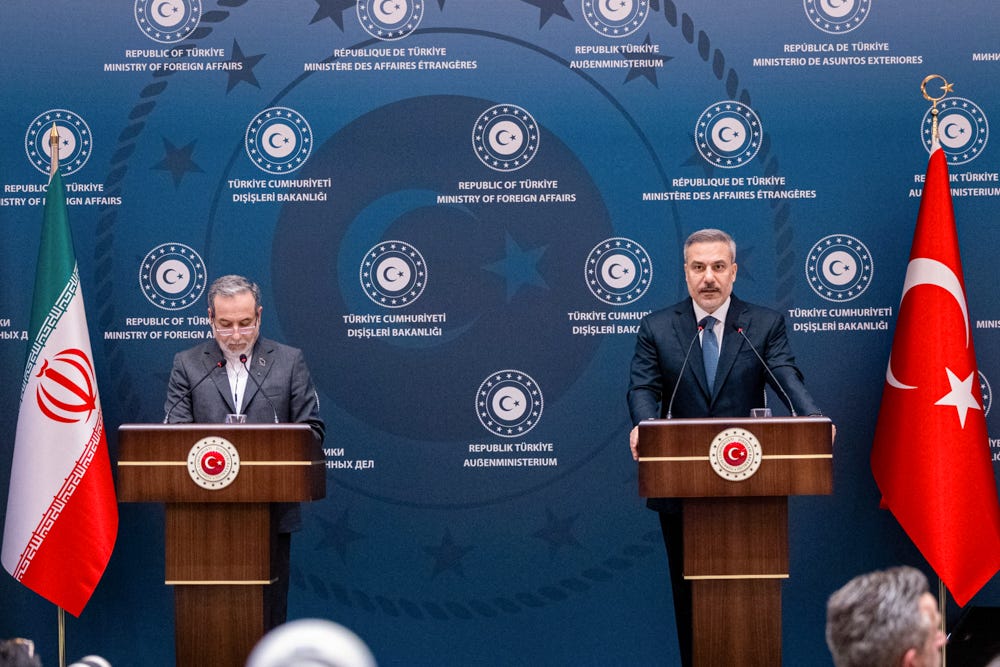
The view from Ankara: Turkey offered to moderate negotiations, and Istanbul was expected to host US-Iran talks Friday until they were moved to Oman. Top Ankara officials have been pushing for de-escalation for weeks, most notably FM Hakan Fidan, who hosted his Iranian counterpart last Friday while calling for diplomacy.
For his part, Iranian FM Abbas Araghchi appeared on CNN TÜRK the same day, delivering a message for peace in his own way:
“When I say we are prepared for war, it should not be interpreted as meaning we want war. On the contrary, our aim is to prevent war,” Araghchi said.
Speaking Wednesday from Cairo, Pres. Erdoğan made his anti-war stance clear, as well:
“Foreign interventions in our neighbor, Iran, will pose significant risks to the entire region. Solving the problems with Iran through diplomacy, including the nuclear dossier, will be the most accurate method,” Erdoğan said in a joint presser with Pres. Abdel Fattah El-Sisi.
Analysis: Maj. (res.) Alexander Grinberg, an Iran expert at the Jerusalem Institute for Strategy and Security, recently published a comprehensive look at Turkey’s calculations with Iran amid regional tensions, and what a weakened government in Tehran might mean for the Turkey-Israeli rivalry.
He argues the Turkey-Iran modus vivendi is fragile and Ankara’s capacity to “shape outcomes in its immediate neighborhood” is limited.
In light of those dynamics, Grinberg told Turkey recap Ankara had sought to gain leverage to shape fast-moving developments by offering to host US-Iran negotiations, but that didn’t work. One reason, he said, might have been security concerns with Turkey’s participation and MIT, its intelligence agency.
“Iranians, they fear Turks … and Oman is way more comfortable for the Iranians because it’s their own backyard,” Grinberg said. “I also suspect that the Iranians understand that MIT is a very serious organization. They would find it more difficult to keep all their secrets, and MIT would know [them if the meeting] was in Istanbul.”
What’s next: In the event of war, Grinberg framed concerns about mass migration to Turkey and the mobilization of Kurdish separatists in Iran as propaganda campaigns designed to draw support for Tehran’s leadership.
Yet, he also expects the US to carry out strikes. Grinberg said US forces are probably not getting moved for a “bluff or joke.”
“I’m sure that Trump, better than anyone else, understands very well what it means if you threaten and don’t really put it into practice,” he told Turkey recap.
“Second,” Grinberg continued. “There’s no way Iran agrees to American demands, because it’s simply … political suicide. Because it will be automatically interpreted by friends and foes as a surrender, so there’s no way.”
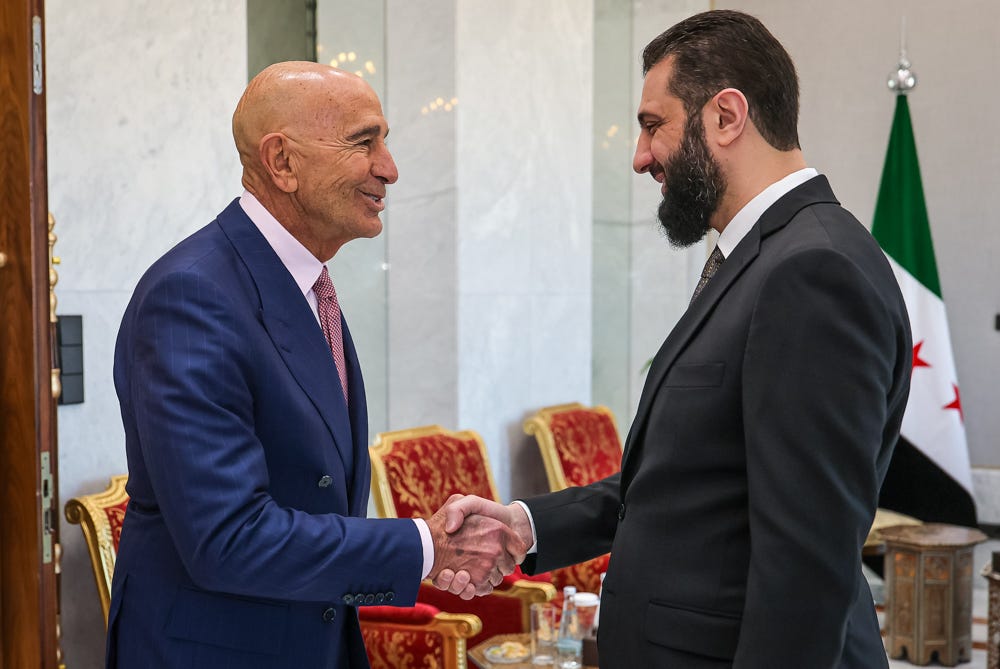
Lease and desist: Syria ceasefire deal followed by energy deal
