



A decade after the July 15 coup attempt, a clear account of the New Turkey’s defining event has yet to surface. There is no question, however, that more than 250 people died that night and countless individuals remain in jail on scant evidence of their involvement.
In this week’s recap:
US, Turkey explore F-35/S-400 solutions
New CHP purges, ‘New Party’ in the works
CHP Çankaya mayor arrested, removed from office
Domestic and diplomatic wraps
Turkey denies visa to Omar Souleyman without ‘Warning, Warning’
Also from us this week:
Soli Özel joins Recap radio to discuss the S-400 sale prospects and NATO summit
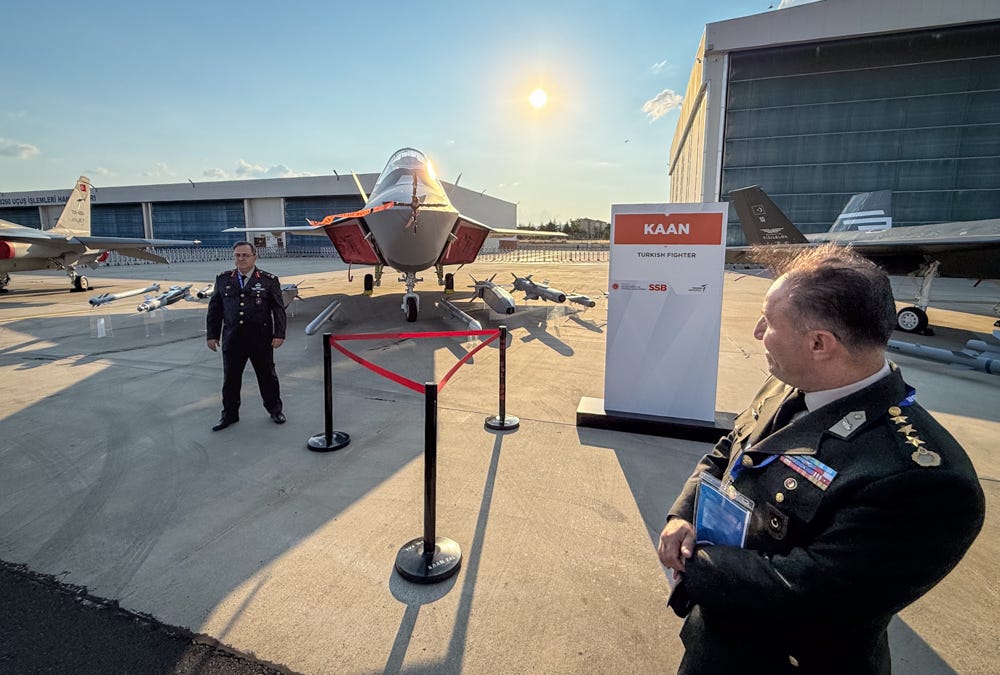
Today’s title is not a reference to the Amb. Tom Barrack’s X post (and its replies), but to the Trump administration’s gesture of good faith to the Erdoğan government in seeking to resolve the long-running F-35 issue.
In his visit to Ankara last week, Trump said he would “lift sanctions” on Turkey so the country could purchase F-35 fighter jets. But as recap readers know, this requires Turkey to get rid of its Russian-made S-400 missiles, as established in the 2020 and 2021 US National Defense Authorization Acts.
What’s new? Following the NATO summit, both US and Turkish officials have expressed the will to address the F-35/S-400 dilemma while also signaling potential pathways to a solution—including export options and technical workarounds.
One pathway is selling the S-400 to a third country, the announcement of which government-adjacent columnist Abdulkadir Selvi expected Friday.
Nothing happened, but Selvi repeated the claim Monday, praising a “new era in Turkish-American relations,” spearheaded by FM Hakan Fidan, intel chief Ibrahim Kalın and US envoy to Turkey Tom Barrack. (See above: Not that jet stir.)
Another pathway involves reading the fine print on the US CAATSA sanctions, which target Turkey’s Presidency of Defense Industries (SSB)—the government agency responsible for military procurements—and not Turkey’s armed forces. In short, the US can still sell weapons to the Turkish armed forces, as was the plan with the F-16 purchase that fell out of the news cycle.
What’s the problem? The US cannot transfer F-35 jets to Turkey as long as Turkey has S-400 missiles. That’s the fine print in the defense authorization bills that blocked the aircraft and imposed the CAATSA sanctions on Turkey.
“There was a mention of the CAATSA provision in the 2020 NDAA that barred Turkey from the F-35, but that’s not the reason Turkey was barred. The reason … was because of its purchase and ‘possession’ of the S-400,” Aaron Stein, president of the US-based Foreign Policy Research Institute (FPRI), told Turkey recap.
“So, even if sanctions are lifted or paused or whatever, that still doesn’t resolve the F-35 issue,” he added.
What about a waiver? In a recent commentary on this topic, Stein suggested a third pathway could see Turkey benefit from a sanctions exemption applied to India and Vietnam. Turkey did not originally qualify, he wrote, “because it was ramping up its relationship with Russia, rather than toning it down.”
Some analysts now argue Erdoğan taking is distance from Moscow, and this may work to Ankara’s favor in some US bilateral issues, but addressing the S-400s remains the starting point to the lengthy process of F-35 acquisitions for Ankara, Stein said.
“What has changed is that Trump took what was in the shadows and made it very, very overt,” he told Turkey recap. “While the ball has long been in Turkey’s court, there’s no denying that anymore. If they are willing to get rid of the S-400, they have a pathway to purchase the F-35 and have sanctions removed.”
What officials say: On live TV Friday, Fidan said the issue would “reach a conclusion soon.” He underlined that the Turkish government’s expectations were “actually being expressed by Mr. Trump.”
“From the very beginning, we did not want sanctions between allies in any way,” Fidan said, adding: “Elected political leadership—namely the congress, or in our case the parliament—should not play an obstructive role between allies in this regard.”
Speaking to CNN Sunday, US Amb. to NATO Matthew Whitaker said Trump would make sure “the right deal is cut” with Turkey on the F-35 without undermining US national security interests.
“What my tours through Turkey have shown is that they are a very capable ally,” Whitaker said, adding: “I think we should lean into that relationship with Turkey.”
Yet, Russia and its export controls on Turkey’s S-400 remain a decisive factor. Kremlin spokesperson Dmitry Peskov said it was an “extremely sensitive issue” and that contacts were ongoing between Ankara and Moscow.
Speaking on the possibility of a Russian green light for Turkey’s S-400 sale, Stein said:
“Why would they? This is a gift to keep two NATO allies apart and to keep the F-35 out of another country.”
The packing order: New CHP purges, ‘New Party’ in the works
