



Shout out to the Montreux Convention, which marked its 90th anniversary this week. Balancing military powers with a strait face since 1936.
In this week’s recap:
Ousted opposition leader to form new party
CHP probes weigh on transfer decisions
Key peace process law now imminent
Domestic and diplomatic wraps
Governor dismissed on cycling short notice
Also from us this week:
Wouter Massink on how Russia’s shadow fleet is getting scrapped in Turkey
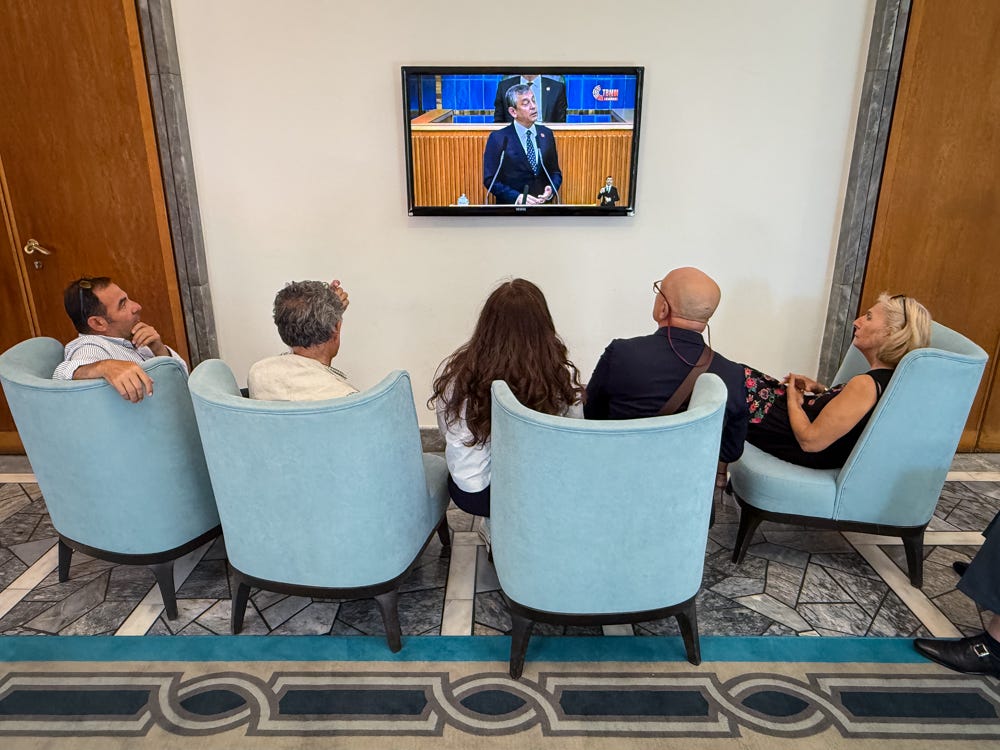
On Tuesday, Özgür Özel delivered the speech many have been expecting since his ouster from the CHP exactly two months earlier.
In an emotional appeal that drew both tears and roaring applause from attendees, Özel said he’d resign from Turkey’s main opposition party and establish a new party to challenge Pres. Recep Tayyip Erdoğan in the next election cycle.
“We will never accept being a controlled opposition. This is not a separation, this is not giving up,” Özel said in his final CHP parliamentary group speech. “We are not taking off our shirts in politics. We are all together putting on a fiery shirt in politics for the future of this country.”
At the time of writing: Özel held a closed meeting Thursday morning with CHP members that may resign en masse and transfer to his new party—which has yet to be named. Here’s what we know from initial reports:
Roughly 95 of CHP’s 135 MPs may join the new party, though the timing remains uncertain (read below)
The party name and logo are finalized. Formal application is expected next week
The party establishment date is expected in “August or September”
A rent agreement was made for a party HQ to be opened in October
A ‘back-up’ party is ready in case all the above fails
Noteworthy: MHP Chair Devlet Bahçeli chimed in today to say the new party should have access to treasury funds like all parties over the parliamentary threshold.
Reminder: This is all taking place after Turkey’s top court of appeals announced Friday that it would review the CHP congress case after the summer judicial break, which ends Aug. 31.
A delayed review of the appeal was a red line for Özel and his supporters, who seek to clinch electoral eligibility for the new party in case snap elections are announced this year.
New party considerations: Nearly all polls suggest the new party will surpass the Kemal Kılıçdaroğlu-led CHP in voter support, while some surveys place Özel’s party in close competition with the AKP.
A turbulent period lies ahead for Turkey’s opposition as various CHP officials have begun announcing whether they will stay with Kılıçdaroğlu or join Özel this week. Some CHP members are also remaining “independent” or resigning without choosing sides yet.
When it comes to CHP voters, a reported 220,000 have already renounced party membership. Among them is the “entire family” of Dr. Arife Köse, a political scientist at the University of East Anglia.
Asked if the new party might help restore the “competitive” part of Turkey’s “competitive authoritarianism,” Köse told Turkey recap:
“The regime may well try new steps against the new party to keep it from contesting the next elections. I don’t think the government will strip the immunities of the MPs and of Özel himself if they transfer to the new party—that will risk derailing the ongoing process with the Kurds, too.”
Analysis: A key concern remains the potential division of opposition votes between the CHP and the new party, diminishing both parties’ prospects for electoral success. Köse estimates the CHP will likely retain between 3 to 5 percent of the voters.
Still, she emphasized a rapid party establishment process is now necessary not just for electoral eligibility, but also to keep Özel supporters energized.
“What really matters now is whether Özgür Özel can turn his popularity into support for the new party itself,” Köse told Turkey recap.
“If he manages to mobilize people and build what he calls a ‘party of Turkey’—one where social democrats remain the backbone, but it reaches out to much wider sections of society—he can minimize that risk. Whether he wins over other opposition parties and their voters comes down to those same two factors.”
Crackdown chronicles: CHP probes weigh on transfer decisions
