


Hello! We crawled out of our sinkhole with news that Konya will launch an early warning system for those. You can stop worrying about the ground falling out from under you now.
In this week’s recap:
What Maduro’s capture means for Ankara
Turkey ready to support Damascus amid Aleppo clashes
Domestic and diplomatic wraps
Ankara woman claims to be Trump’s daughter
Also from us:
If you somehow missed it: Our 2026 predictions issue is a banger
Özgür Ünlühisarcıklı outlined Turkish foreign policy in 2026 and Daria Isachenko focused on Central Asia in our latest podcasts
Wouter Massink reported on drought and water mismanagement in Anatolia
This day in Turkey is back and better than ever thanks to in-house historian Emily Rice Johnson (available for news tracking tool subscribers)
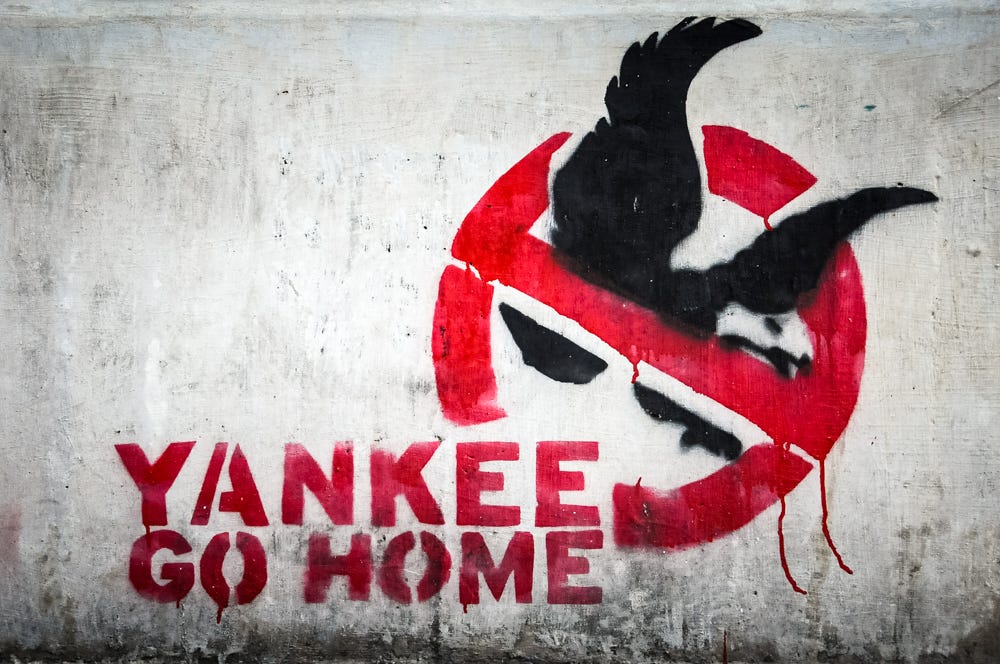
Anti-imperialism is the common bond of Turkey-Venezuela ties—if you discount the Ottoman empire.
To specify, it’s the shared anti-US sentiments that aligned Ankara with Caracas after the 2016 coup attempt, when Erdoğan dug in with decisions we’re still debating today and when Maduro needed allies.
There’s also populism. From Palestine to Paris, Erdoğan has long framed himself as the voice of the “oppressed” with rhetoric not far from that of Aló Presidente, the hours-long, unscripted TV show hosted by former Venezuelan Pres. Hugo Chavez.
That’s why the Turkish opposition called out Erdoğan’s silence in the immediate aftermath of Maduro’s capture by the US this weekend. Following years of warm Turkey-Venezuela relations—and gold refining schemes—a noticeable omission from Erdoğan’s speech Saturday was highlighted by CHP chair Özgür Özel on X:
“Your friend Trump … took your brother Maduro,” Özel wrote in a post with the first image of Maduro in US custody. “How tragic it is that you remain silent in the face of this photograph.”
For his part, Erdoğan held a phone call with Trump Monday and conveyed concerns “that Venezuela should not be dragged into instability”, he said in a speech the same day.
So, what now? Reports suggest Maduro rejected an ultimatum for a “gilded exile in Turkey”, a claim reiterated by US Sen. Lindsey Graham, but denied by Erdoğan when asked about it Wednesday (see the last line).
Meanwhile, Venezuelan VP Delcy Rodríguez is serving as interim president in Caracas. She is a prominent member of the government, and the implications of recent events remain to be seen.
Analysis: To understand what this might mean for Ankara, I contacted Imdat Öner, a former diplomat at the Turkish embassy in Caracas and current senior fellow at the Jack D. Gordon Public Policy Institute of Florida International University.
Öner has written extensively on Turkey-Venezuela ties, which he frames as an “alliance of convenience” built on the personal chemistry between Erdoğan and Maduro.
“Maduro trusted Erdoğan partly because Erdoğan was openly confrontational with the West, particularly in the tense period after the failed 2016 coup,” Öner told Turkey recap.
With Maduro now in US custody, Öner does not expect a major shift in Ankara’s approach to Venezuela, which Turkey sees as the political “gateway to Latin America”, he said.
Conversely, “Turkey is still viewed as a reliable partner by Delcy Rodríguez, who visited Turkey several times during her tenure as vice president, and that goodwill hasn’t vanished,” Öner continued. “But the decisive factor will still be Trump. He is likely to set clear limits on how far Ankara can go.”
Yet, bilateral relations were showing signs of strain before US warships amassed in the Caribbean. Öner noted Erdoğan did not congratulate Maduro following his 2024 re-election in a widely disputed vote.
Going back further, Turkish business ventures in Venezuela had also become increasingly constrained by US sanctions imposed on the Maduro government since the mid-2010s.
“Despite the political rhetoric, Turkey didn’t significantly expand its economic footprint in Venezuela after US sanctions,” Öner said. “Some Turkish firms had already signed energy and petrochemical deals with Venezuelan state companies, and others were exploring tourism and commercial opportunities, but nothing on a major scale.”
“Now Trump is pushing the new Venezuelan leadership to cut ties with China, Russia, Iran, and Cuba,” he added. “If Erdoğan plays his relationship with Trump well, Turkey could step into some of the space those countries may be forced to leave—opening the door to new investment opportunities.”
Turn of the Turkish century: Everything else that happened …
